and later i learned that george, of the jungle, was one of the testers… so instead of warning lights… it yells, “watch out for that car! or was that a truck?!”
Back in 4th grade I checked out a book from our the school library with the title “Cars of Tomorrow.” The pages were filled with illustrations depicting what the author believed would be in our driveways 30 and 40 years in the future. I hate to show my age, but that time has arrived so where are the Flying cars? I assume that at the time of landing on the moon, we were all guilty of over estimating the rate of progress and assuming by now we would have permanent bases on both the moon and mars. While George Jetson’s ride is still a long way off, Self-driving cars have taken a major step forward.
Google has been working on building a successful autonomous car, and to-date has seven custom-equipped cars, that they claim, combined, have traveled more than 200,000 miles on public roads without crashing. Or to be more accurate, without a crash they came is their cars fault. The system is based on using a GPS navigation system linked to Google maps in order for the car to “Know” where it is, and of course, where it’s going. Clearly that information alone would be insufficient, these autonomous cars must also be able to tell if the light is green or red as well as be able to detect obstacles in its path. As a parent teaching his son to drive, I am keenly aware of just how difficult it can be to drive and safely reach your destination. The auto in front of you can stop suddenly, children run into the street, cars cut over multiple lanes, some drivers run red lights; if fact the list of possible causes of accidents is long and complex.
Are there potential advantages of having cars drive them-selves, sure. Google states that their cars are safer than if a human driver were behind the wheel, since the majority of car accidents are caused by human error and computers controlled operating systems have vastly quicker reaction times. Roadways filled with these cars all controlled by computers, and importantly, by computers in commutation with the computers in the cars around them, can avoid traffic jams, or even drop us off at lets say a concert, and return when it’s time to go home.
So will we all be traveling in computer driven cars next year? No, don’t expect steering wheels disappear that quickly. General Motors estimates their testing of driverless cars will begin by 2015, and the first models can hit the road by 2018. The British government report from the think-tank “Foresight” predicts a far more conservative date of 2056.
If the basic technology is here now, why are we still between 10 and 40 years away from having them fill our roads? A short answer is cost. The equipment contained in one of these cars can add several hundred thousand dollars to the cost of a vehicle. Once these cars go into production, one can expect the cost to drop considerably; but at even one tenth the price, few people will check the box for what could be a $20,000 option. Keep in mind it took 20 years before half the cars came equipped with navigation systems.
Will I still need Car Insurance if my car drives it’s self? The answer is Yes. Your new, very expensive, auto can be stolen, vandalized, hit with hail or any number of other hazards that will make insurance necessary. In fact it is concerns over liability that have, and will continue to slow the production of autonomous cars. When accidents do occur, and an injured party visits a lawyer, just imagine the smile that will come to the attorney’s face when they realize they can go after Google (Talk about “Deep pockets”). Even after Self-driving cars arrive, they will share the roads with traditional cars, accidents will happen. Automatic transmissions have been common for more than 60 years, yet still many sports cars are purchased with stick-shifts because they are more fun to drive. Many people truly love to drive and have no intention of letting the car drive for them; so expect autos that have the ability to be switched between auto and Manuel mode.
Sure, one day it will be common to see cars cruising along without drivers, and at some point that “Cars of Tomorrow.” Book’s perditions will prove true and we will be flying our cars to work. Now if they can just invent a car that folds up into a briefcase.
the only thing i would add… and it goes along with the recognition of lights and other things like turning on red, and one way streets… if the computer fails to comply, who gets the ticket?
It takes more than 30 years. We still have cars driven that use leaded gas. Maybe you meant new cars sold and not cars on the roads. And there will always be antique cars driven about.

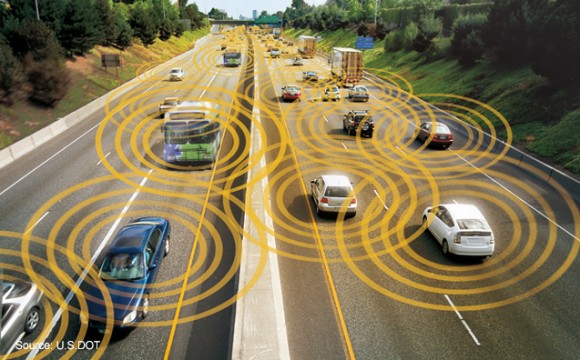




It says “Watch out Stupid”. Oh, wait, maybe that’s my passengers.
and later i learned that george, of the jungle, was one of the testers… so instead of warning lights… it yells, “watch out for that car! or was that a truck?!”
Google’s Self-Driving Cars, Will I Still Need Insurance?
Author: Larry Lubell
http://www.UrbanInsuranceAgency.com
Back in 4th grade I checked out a book from our the school library with the title “Cars of Tomorrow.” The pages were filled with illustrations depicting what the author believed would be in our driveways 30 and 40 years in the future. I hate to show my age, but that time has arrived so where are the Flying cars? I assume that at the time of landing on the moon, we were all guilty of over estimating the rate of progress and assuming by now we would have permanent bases on both the moon and mars. While George Jetson’s ride is still a long way off, Self-driving cars have taken a major step forward.
Google has been working on building a successful autonomous car, and to-date has seven custom-equipped cars, that they claim, combined, have traveled more than 200,000 miles on public roads without crashing. Or to be more accurate, without a crash they came is their cars fault. The system is based on using a GPS navigation system linked to Google maps in order for the car to “Know” where it is, and of course, where it’s going. Clearly that information alone would be insufficient, these autonomous cars must also be able to tell if the light is green or red as well as be able to detect obstacles in its path. As a parent teaching his son to drive, I am keenly aware of just how difficult it can be to drive and safely reach your destination. The auto in front of you can stop suddenly, children run into the street, cars cut over multiple lanes, some drivers run red lights; if fact the list of possible causes of accidents is long and complex.
Are there potential advantages of having cars drive them-selves, sure. Google states that their cars are safer than if a human driver were behind the wheel, since the majority of car accidents are caused by human error and computers controlled operating systems have vastly quicker reaction times. Roadways filled with these cars all controlled by computers, and importantly, by computers in commutation with the computers in the cars around them, can avoid traffic jams, or even drop us off at lets say a concert, and return when it’s time to go home.
So will we all be traveling in computer driven cars next year? No, don’t expect steering wheels disappear that quickly. General Motors estimates their testing of driverless cars will begin by 2015, and the first models can hit the road by 2018. The British government report from the think-tank “Foresight” predicts a far more conservative date of 2056.
If the basic technology is here now, why are we still between 10 and 40 years away from having them fill our roads? A short answer is cost. The equipment contained in one of these cars can add several hundred thousand dollars to the cost of a vehicle. Once these cars go into production, one can expect the cost to drop considerably; but at even one tenth the price, few people will check the box for what could be a $20,000 option. Keep in mind it took 20 years before half the cars came equipped with navigation systems.
Will I still need Car Insurance if my car drives it’s self? The answer is Yes. Your new, very expensive, auto can be stolen, vandalized, hit with hail or any number of other hazards that will make insurance necessary. In fact it is concerns over liability that have, and will continue to slow the production of autonomous cars. When accidents do occur, and an injured party visits a lawyer, just imagine the smile that will come to the attorney’s face when they realize they can go after Google (Talk about “Deep pockets”). Even after Self-driving cars arrive, they will share the roads with traditional cars, accidents will happen. Automatic transmissions have been common for more than 60 years, yet still many sports cars are purchased with stick-shifts because they are more fun to drive. Many people truly love to drive and have no intention of letting the car drive for them; so expect autos that have the ability to be switched between auto and Manuel mode.
Sure, one day it will be common to see cars cruising along without drivers, and at some point that “Cars of Tomorrow.” Book’s perditions will prove true and we will be flying our cars to work. Now if they can just invent a car that folds up into a briefcase.
the only thing i would add… and it goes along with the recognition of lights and other things like turning on red, and one way streets… if the computer fails to comply, who gets the ticket?
It takes more than 30 years. We still have cars driven that use leaded gas. Maybe you meant new cars sold and not cars on the roads. And there will always be antique cars driven about.