
Skip to content
  • MyNewMarkets.com
  • Claims Journal
  • Insurance Journal TV
  • Academy of Insurance
  • Carrier Management
Insurance Journal - Property Casualty Industry News

Featured Stories

  • Litigation Finance Hits a Wall
  • Lawsuit Over Burger King’s Whopper Ads Set Back
  • Articles
  • Jobs
  • Markets

Current Magazine

current magazine
  • Read Online
  • Subscribe
  • Login
  • Front Page
    • National
    • International
    • Most Popular
    • Magazine
    • Forums
    • Blogs
    • Videos/Podcasts
    • Newsletters
  • News
    • Most Popular
    • National
    • International
    • East
    • Midwest
    • South Central
    • Southeast
    • West
  • Magazines
  • Research
  • Directories
  • Jobs
  • Features
    • Events
    • Forums
    • Market Directories
    • Quotes
    • Polls
    • Rankings & Awards
    • Insurance Giving Back
  • Subscribe

Individual or Corporate? Two Visions of the Sharing Economy

By Leonid Bershidsky, Bloomberg Opinion | May 30, 2014
Email This Subscribe to Newsletter
  • Article
  • 1 Comment

Google’s driverless car and Apple’s deal to buy Beats Electronics, primarily for its streaming music service, represent the latest moves in a battle between two visions of the sharing economy: One in which the goods being shared belong to the people who share them, and one in which they belong to corporations.

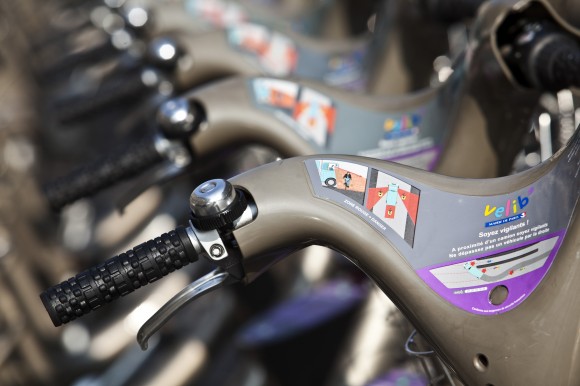
Many new businesses have gained high valuations on the idea that consumers no longer need to own products to reap their benefits. The big names include Uber, Zipcar and France’s Autolib’ in car-sharing; Spotify and Beats in music; Airbnb in short-term rentals; Swapstyle in clothes; Zopa and Prosper in peer-to-peer lending.

Not all sharing businesses, though, are alike. They can be categorized in various ways, but as the need arises to rewrite laws for some of the services to operate, one distinction is becoming increasingly important: Whether the income flows to corporations or directly to private individuals.

Take the music industry. It crushed the peer-to-peer free-for-all of Napster, tentatively accepted Spotify (in which Napster co-founder Sean Parker was an early investor) and will probably fully embrace streaming audio after Apple’s Beats deal. We may even be able to stream the Beatles, whose music is now under an exclusive contract to Apple’s iTunes. It was not OK for individual owners to exchange music among themselves, but the industry rejoices in Apple’s entry.

Streaming, run by major corporations such as Apple, is about to become the standard, and peer-to-peer sharing, in the form of BitTorrent file distribution, is dying out. According to broadband equipment maker Sandvine’s report for the first half of 2014, peer-to-peer sharing accounted for just 6 percent of North American peak-hour traffic, down from 7.4 percent in the second half of 2013. Streaming is cheap and trouble-free enough to render it obsolete.

Consider the car sharing market. The same Paris taxi drivers who physically attacked Uber cars haven’t caused a fuss about the Autolib’ sharing business, whose pretty electric Bollore Bluecars represent an even greater threat: If you can pay a small annual subscription fee and then a few euros per 30 minutes to drive yourself around town, you don’t really need taxis. When Google gets the self-driving car technology right and finds a reliable manufacturing partner — in five years or so — taxi drivers will probably not mess with it, either, even though cars without a steering wheel will render them completely useless.

Uber, a peer-to-peer service, keeps running into regulatory obstacles. Last month, Brussels banned it altogether. Bureaucrats are grumbling about insufficient insurance and safety standards, though it’s hard to see why these should matter if passengers are happy with the service. When Bollore needed space on hectic Paris streets for its recharging stations and parking lots, everything worked out fine. Google, too, will probably get all the necessary regulations changed — and cars without a steering wheel or pedals allowed on highways — just because of its enormous wealth and lobbying power.

Consider, too, the example of Airbnb, the modern-day competitor to one of the sharing economy’s oldest precursors, the hotel industry. Last year, Berlin’s senate banned it because neighbors complained about the noisy and untidy short-time renters and because apartment owners preferred renting out their properties for short stays, thus taking them off the already tight long-term rental market. The service is still available in Berlin, but on a somewhat shaky basis. In New York, Airbnb has also faced legal challenges. In this particular fight, my bet is on hotel owners — but in smaller cities, where Airbnb doesn’t strain the housing market, its service may well survive.

So far the collaborative consumption economy is favoring big corporations with the money, audacity and lobbying power to make products available as services. Governments and markets appear better suited to turning private individuals into perpetual renters of corporate property than to facilitating the sharing of these individuals’ relatively meager resources. This may benefit innovative corporations, the environment and often consumers, but peer-to-peer sharing is much better for strengthening society’s fabric. Regulators should reconsider their attitude: Big business doesn’t always have to win.

Copyright 2025 Bloomberg.

Topics Sharing Economy

Was this article valuable?

Thank you! Please tell us what we can do to improve this article.

Thank you! % of people found this article valuable. Please tell us what you liked about it.

Here are more articles you may enjoy.

Death of Teenager on Carnival Cruise Ship Ruled a Homicide
In Alabama, Shot Employee Gets No Workers’ Comp and No Employer’s Liability
Why Reciprocal Insurance Exchanges Are Back in Fashion
Surveys Show Concerns About Florida Market, But Consumers Are Warming Up

Written By Leonid Bershidsky, Bloomberg Opinion

Leonid Bershidsky is a Bloomberg View columnist. He was the founding editor of the Russian business daily Vedomosti and founded the opinion website Slon.ru.

More From Author

Interested in Sharing Economy?

Get automatic alerts for this topic.

Email This Subscribe to Newsletter
  • Categories: National NewsTopics: corporate sharing economy, Google driverless car, individual sharing economy, Lyft, ridesharing, risks in sharing economy, Uber
  • Have a hot lead? Email us at newsdesk@insurancejournal.com

Latest Comments

  • May 30, 2014 at 2:12 pm
    Jim Holm says:
    The article stated, "Uber, a peer-to-peer service, keeps running into regulatory obstacles. Last month, Brussels banned it altogether. Bureaucrats are grumbling about insuffic... read more

Add a CommentSee All Comments (1)Add a Comment Cancel reply

Your email address will not be published. Required fields are marked *

*

*

More News
California Resources Reports Oil Fluid Spill in Monterey County
People Moves: RiverStone International Appoints Pritchard as UK CEO
Acrisure CEO Greg Williams Makes $400M Commitment to Michigan State University
Business Moves: MGA Nirvana Buys Arena From Ryan Specialty; Ryan Acquires Canada MGU SSRU; Bridgehaven Buys SureStone; Gallagher Re to Buy S. Africa’s Resilea
More News Features

Read This Next

  • Individual or Corporate? Two Visions of the Sharing Economy
  • Insurance Fraud in UK Topped £1B in 2024, With Motor Scams Causing 53% of Claims
  • Industry Trends to Exploit for 2026: Part One
  • South Dakota Legislators Plan Bills to Help Residents in Fight Over Limestone Mine
  • Four Convicted of Collision Fraud Involving a Rideshare Driver in California

Insurance Jobs

  • Associate Product Manager - Chicago, IL or Remote
  • Commercial Lines Compliance – Surplus Tax Filings – REMOTE - Remote
  • Direct Sales Agent Specialist (1449) - Dania, FL
  • Director, Agile Product Owner – Guidewire - Hartford, CT
  • Construction Surety Underwriter / Financial Analyst - Edison, NJ
MyNewMarkets
  • How We're Harnessing AI for Proactive Risk Management in Workers' Compensation
  • How Contractor Networks Help to Reduce Repair Costs, Improve Timeliness
  • Keeping Small Business Insurance Customers
  • From Oily Rags to a Break Room Microwave: Combatting Overlooked Risks in High-Severity Industries
  • Death and Insurance (Not Taxes), Part 2
Claims Journal
  • Waymo to Issue Recall Over Self-Driving Vehicles Driving Past Stopped School Buses
  • Toyota Unveils Concept LFA Supercar, and It's Fully Electric
  • Apple, Google Send New Round of Cyber Threat Notifications to Users Around World
  • NYT, Chicago Tribune Sue Perplexity AI as Copyright War Rages On
  • Standard Chartered Settles $2 Billion Iranian Sanction Suit in London
Academy of Insurance education
  • October 21 E&S Property Underwriting
  • October 23 Gotchas That'll Getchya - Latest Policy Language That'll Get You Sued
  • October 30 Challenges in Agency Mergers – Reducing Staff Flight and Avoiding E&O Claims
  • November 6 Risk and Insurance for Digital Nomads

Insurance News

  • News by Region
  • News by Topic
  • Yesterday

Site Search

Features

  • Insurance Markets Directory
  • Forums
  • A.M. Best Company Ratings
  • Industry Events
  • Agencies For Sale
  • Newswire
  • Insurance Jobs
  • Rankings & Awards

Connect with us

  • Email Newsletters
  • Magazine Subscriptions
  • For Your Website
  • RSS Feeds
  • Twitter
  • Facebook
  • LinkedIn
  • Do Not Sell My Info

Insurance Journal

  • Submit News
  • Advertise
  • Subscribe
  • Reprints
  • Link to Us
  • Contact Us

Wells Media Group Network

  • Insurance Journal
  • MyNewMarkets.com
  • Claims Journal
  • Insurance Journal TV
  • Academy of Insurance
  • Carrier Management
© 2025 by Wells Media Group, Inc. Privacy Policy | Terms & Conditions | Site Map