

Stomach bugs on cruise ships recently hit a nearly two-decade high as more people than ever board the vessels, underscoring how easily viruses spread on contained voyages.
While cruises are in a global spotlight after a rare hantavirus outbreak killed three people on an ocean liner since April, mild gastrointestinal illnesses are far more common on ships. They have risen for the last four years to the highest since 2007, according to data from the Centers for Disease Control and Prevention’s Vessel Sanitation Program. The data tracks ships with 13 or more passengers with foreign itineraries that dock at one or more US ports.
The Vessel Sanitation Program tracks the number of gastrointestinal outbreaks that cruise ships report every year, defined as situations when more than 3% of people on board have some kind of stomach illness.
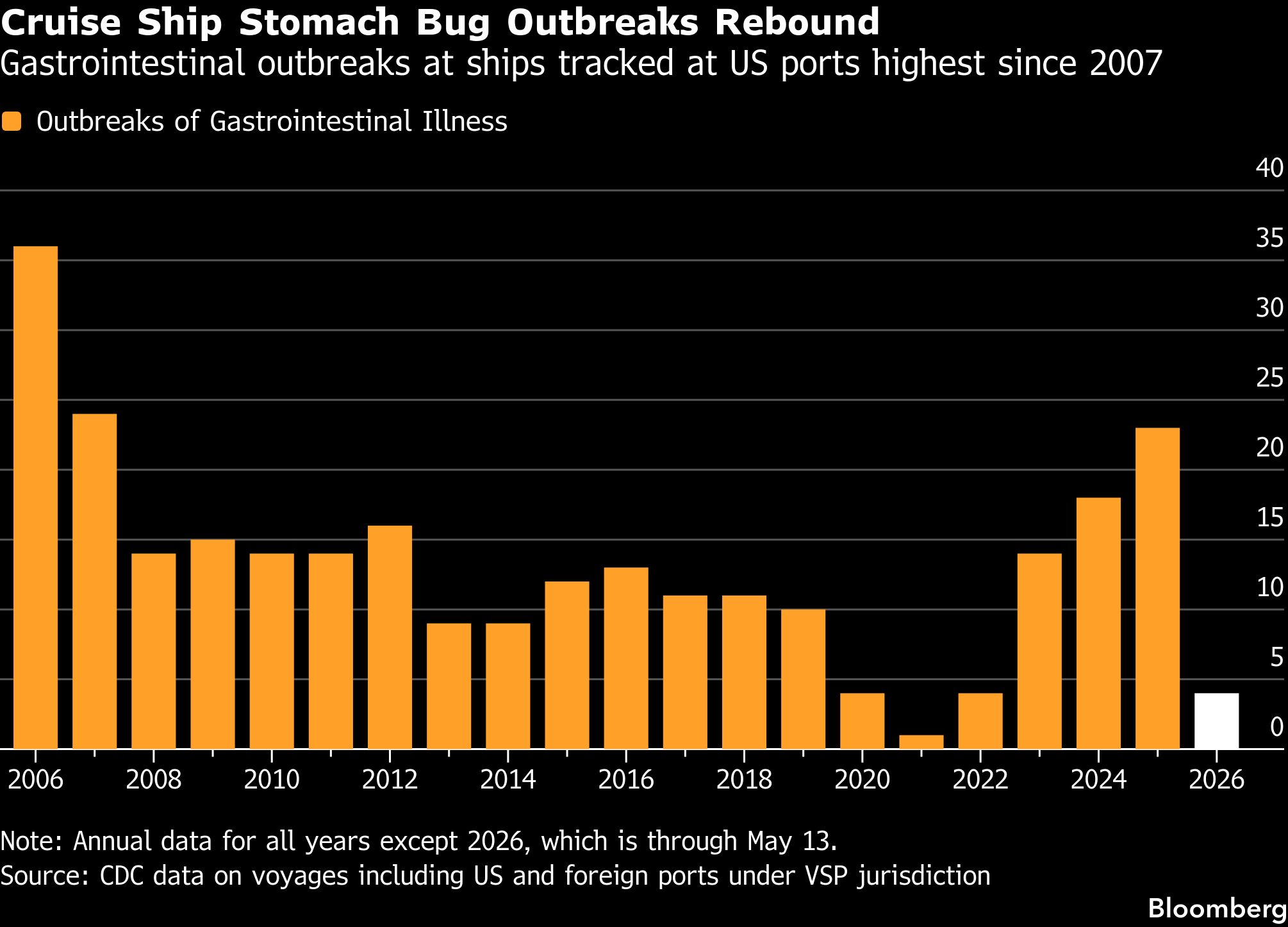
A new variant of the stealthy norovirus in 2006 led to a sharp increase in outbreaks on ships. They subsequently declined but the number of such outbreaks has risen since the pandemic period and last year reached 23, the highest number since 2007, according to CDC data.
Hantavirus Shock
Passengers and crew from the MV Hondius are returning home throughout the world after the deadly outbreak of the Andes strain of hantavirus spread on the ship last month. The ship did not dock at a US port but has caught the attention of Americans as well as travelers globally. The incident brought back memories of the cruise ship quarantined off the coast of Japan in 2020 during the COVID-19 pandemic.
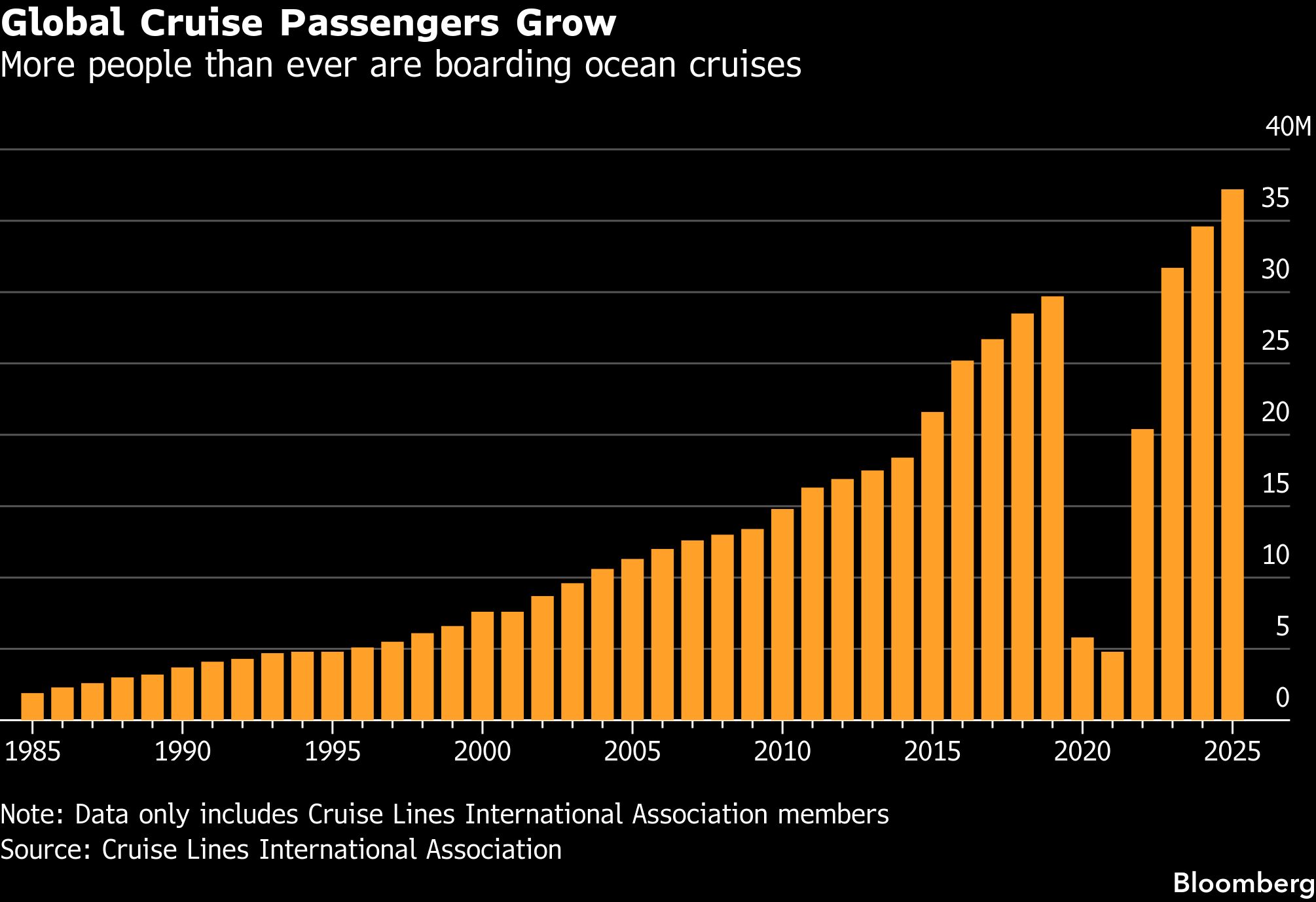
Most cruises halted voyages during the height of the COVID-19 pandemic, but since then the industry has been booming. Global cruise passenger volume reached a record 37 million in 2025, with demand expected to persist into 2026, according to the Cruise Lines International Association.
Health concerns in the past haven’t dented demand, and this year advance bookings at Carnival Corp. and Royal Caribbean Cruises Ltd. are holding up, said Jaime Katz, an analyst at Morningstar Inc.
“There’s an initial hesitation on booking until consumers are able to distill the magnitude of the impact of that outbreak,” she said.
The CDC did not immediately provide a comment. Carnival and Royal Caribbean did not respond to requests for comment. Norwegian Cruise Line Holdings Ltd. referred questions to the Cruise Lines International Association.
Cruise ships operate under strict mandatory reporting that makes outbreaks more visible and illness rates on-board remain below hospitality settings on land, the association said in a statement.
“If you’re going on a cruise, you need to recognize the risk is higher,” said Abraar Karan, an instructor in the division of infectious diseases at Stanford University. Dense socializing spaces, as well as shared food and water systems, can accelerate the spread of diseases, while limited medical equipment and staffing make curbing infections harder, he said.
The average cruise-goer also is older and may be more likely to pick up infections, said Karan, who recommends wearing a mask on ships where respiratory illness is found and washing your hands.
“Cruises are a lot of fun,” he said. “But that’s just part of the trade-off.”
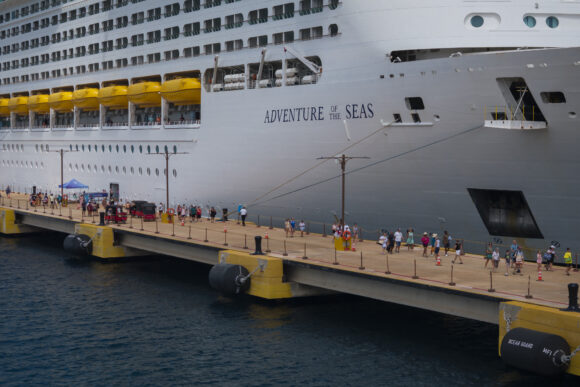
Photograph: Tourists disembark from a Royal Caribbean Adventure cruise ship in Cabo Rojo, Pedernales Province, Dominican Republic; photo credit: Marco Bello/Bloomberg
Related:
- Uncertainty Over Hantavirus Spread Complicates Efforts to Contain Cruise Ship Outbreak
- Health Officials Downplay Pandemic Risk From Cruise Hantavirus Outbreak
Was this article valuable?
Here are more articles you may enjoy.
 Another Crane, Then Another, Collapses Onto Home in Fort Lauderdale
  Industry Reacts to Senators’ Letter for Claims Data and Recent Reports
  Zurich Insurance Completes Acquisition of Beazley, Names New Beazley CEO
  Union Pacific Railroad Fined $304K for Firing Employee During Severe Weather

