


Iran signaled an end to its current military operations against Israel just after US President Donald Trump said the two sides were looking to agree to an immediate ceasefire following a series of tit-for-tat strikes that threatened to derail talks aimed at ending the war in the Middle East.
Iran’s central military command said that if Israel continued to attack, including in southern Lebanon, “much harsher and more crushing actions than before will be on the way,” the semi-official Fars news agency reported, citing a statement.
The decision, which underscores how much the conflict in Lebanon has become a wedge issue in negotiations, came just after Trump said in a Truth Social post that final talks on a truce were “proceeding, subject to ignorance or stupidity getting in its way.”
Trump had earlier demanded an end to the fighting after the Islamic Republic fired volleys of ballistic missiles at Israel on Sunday and Monday, and Israel responded with strikes on military targets in western and central Iran.
Israel also struck Iran’s Karun petrochemical company in Mahshahr on Monday. Tehran warned it will target all oil and gas facilities linked to Israel, the US and their allies in the region if attacks on its own energy infrastructure continue, according to Fars.
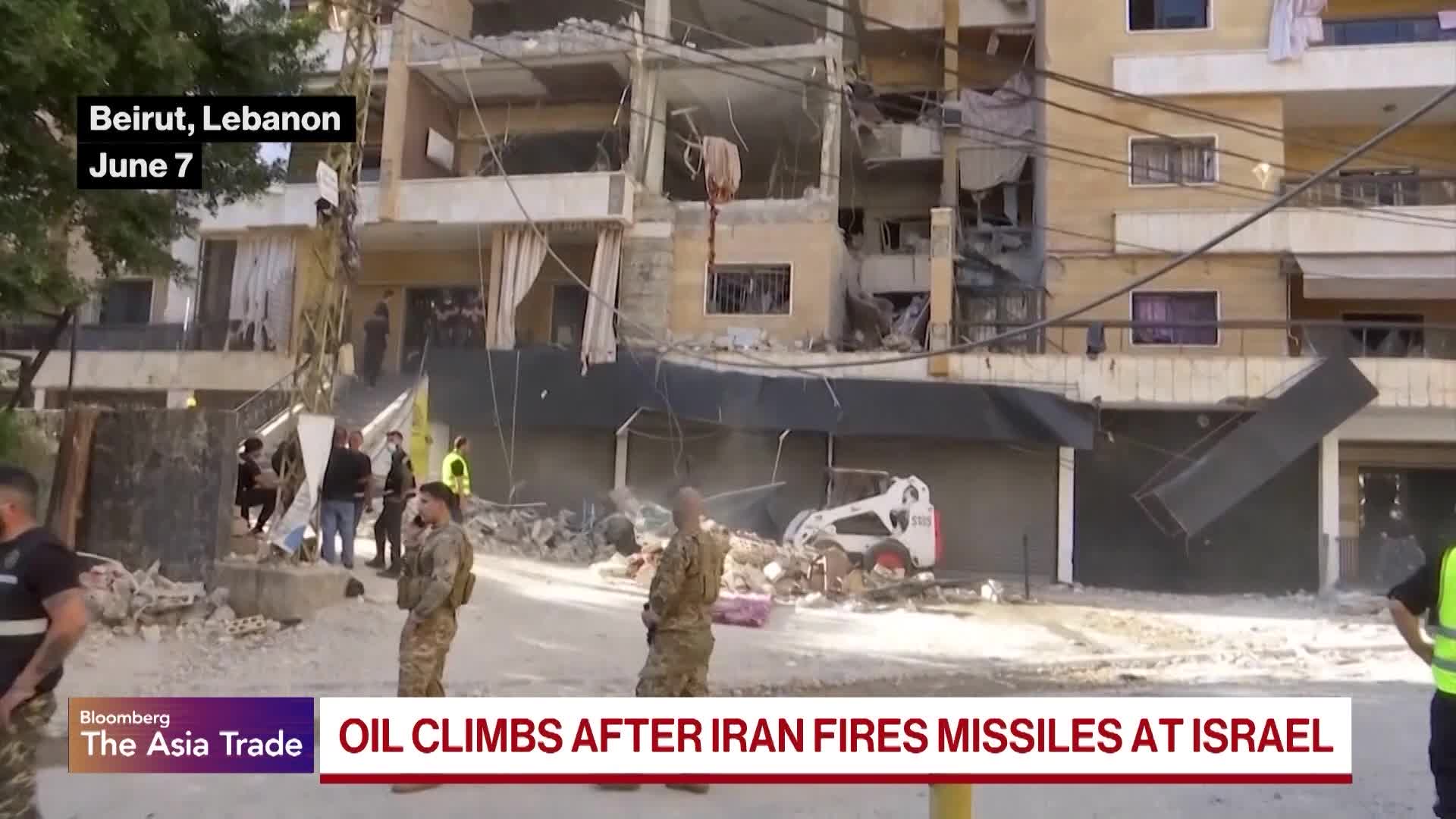
Iran began its offensive after Israeli strikes on Lebanon’s capital, Beirut, and marks a rare example of Tehran coming to the defense of allied militant group Hezbollah.
The fighting poses the most serious challenge yet to a ceasefire that took effect on April 8, halting a war that began in February when the US and Israel started bombing Iran. The conflict left thousands of people dead across the Middle East, disrupted global energy flows and spurred a rally in oil prices that’s stoking fears of a surge in global inflation.
The latest bout of violence erupted despite Trump’s warning on Sunday that a renewed escalation could derail efforts to secure a new, 60-day truce between Washington and Tehran. That would pave the way for negotiations on a broader agreement aimed at ending the conflict permanently.
The Israel Defense Forces sees the campaign against Iran lasting several days, and is preparing for large-scale mobilization of reserve soldiers, Army Radio reported earlier Monday.
Iran said it is also prepared for a long-term war with Israel and strikes on American interests, the semi-official Tasnim news agency reported, citing an unnamed source.
The Iran-backed Houthis said they launched a missile barrage on Israel from Yemen and will be imposing a “complete and total ban on maritime navigation for the Israeli enemy in the Red Sea,” according to statement on their Telegram channel.
The Houthis also vowed to ramp up attacks depending on how the conflict unfolds, citing an escalation of pressure by the US and Israel on Iran and Lebanon.
Saudi Arabia on Monday sounded a missile alert in an area home to the Prince Sultan Airbase, which hosts US forces, the Associated Press reported.
Saudi Civil Defense said the “danger has passed” in the Al-Kharj governorate following an earlier public warning. Iran denied targeting the base.
Oil, which had jumped earlier on the flare up, trimmed gains following the news that Iran was ending its attacks on Israel. Brent was trading 1.7% higher at $94.74 per barrel at 12:26 p.m. in London. Stocks in Asia fell as investors grappled with a range of headwinds, including the flare-up in the Middle East conflict. US stock futures staged a modest rebound despite the Middle East tensions.
The Israeli shekel erased losses to trade 0.9% higher at 2.932 per dollar at 2:14 p.m. in Tel Aviv.
In a phone call with Israeli Prime Minister Benjamin Netanyahu on Sunday, Trump told him not to retaliate against Iran’s missile attacks and to allow more time for diplomacy, Axios reported, citing a senior US official and an Israeli source familiar with details of the call.
Since the US and Iran began negotiating an end to their war, Israel has insisted that any agreement won’t cover its conflict with Hezbollah. Iran has sought to keep Hezbollah under its security umbrella, while Trump has prioritized securing a deal.
Separately, the US president told the Financial Times that his Israeli counterpart would have to accept any deal the US reaches with Iran.
“I call the shots. I call all the shots,” Trump said. Netanyahu “doesn’t call the shots.”
The latest strikes follow an escalation between Israel and Iran-backed Hezbollah. Early Sunday, the Lebanon-based militia attacked targets in northern Israel, prompting a strike by the Israeli military in Beirut’s southern suburbs that killed two people and injured 11.
Last week, Hezbollah and Israel agreed to a partial ceasefire that would see a halt to attacks on Beirut in exchange for the same against northern Israel. A few days later, Lebanon and Israel agreed to a conditional, more comprehensive truce contingent on Hezbollah withdrawing from an area close to Israel. The militant group rejected that truce.
Here’s more on the war:
- Israel closed school across the country on Monday.
- Several rockets breached Jordanian airspace Sunday evening following a “renewed escalation” in the region, Minister of Government Communication Mohammad Momani said in a post on X.
- Israel said on Monday that it identified a missile launch against it from Yemen.
Was this article valuable?
Here are more articles you may enjoy.
 Gronkowski Now Pitchman for eMaxx, a Reciprocal With a Different Playbook
  Union Pacific Railroad Fined $304K for Firing Employee During Severe Weather
  Hackers Breached Propulsion System of US-Bound Oil Tanker
  Florida Commissioner Suspends A-Cap’s Atlantic Coast Life Over Surplus Issues

