

Iran reiterated its determination to control maritime traffic through the Strait of Hormuz, raising the stakes ahead of fresh talks in Qatar on formally ending its war with the US.
Speaking to state television, Deputy Foreign Minister Kazem Gharibabadi said Iran wants to work out an agreement with Oman, which borders the southern side of the vital waterway, to oversee ships passing through Hormuz. But Iran will move forward with its own plans “if for any reason Oman is not interested in doing so,” he said.
“We have warned the Omanis that other countries have no right to interfere in this matter,” Gharibabadi said.
That stance will add to the pressure around the next round of peace talks, which the US said are set to take place in Doha, Qatar, on Tuesday. Trump’s special envoy Steve Witkoff and son-in-law Jared Kushner are set to attend, according to the White House.
Since the conflict erupted in late February with a US-Israeli bombardment of Iran, the Islamic Republic has said it wants to manage the chokepoint — widely considered international waters — along with Oman. It’s said that could involve ships paying fees of some sort, something strongly resisted by the US, Europe and most Gulf Arab states.
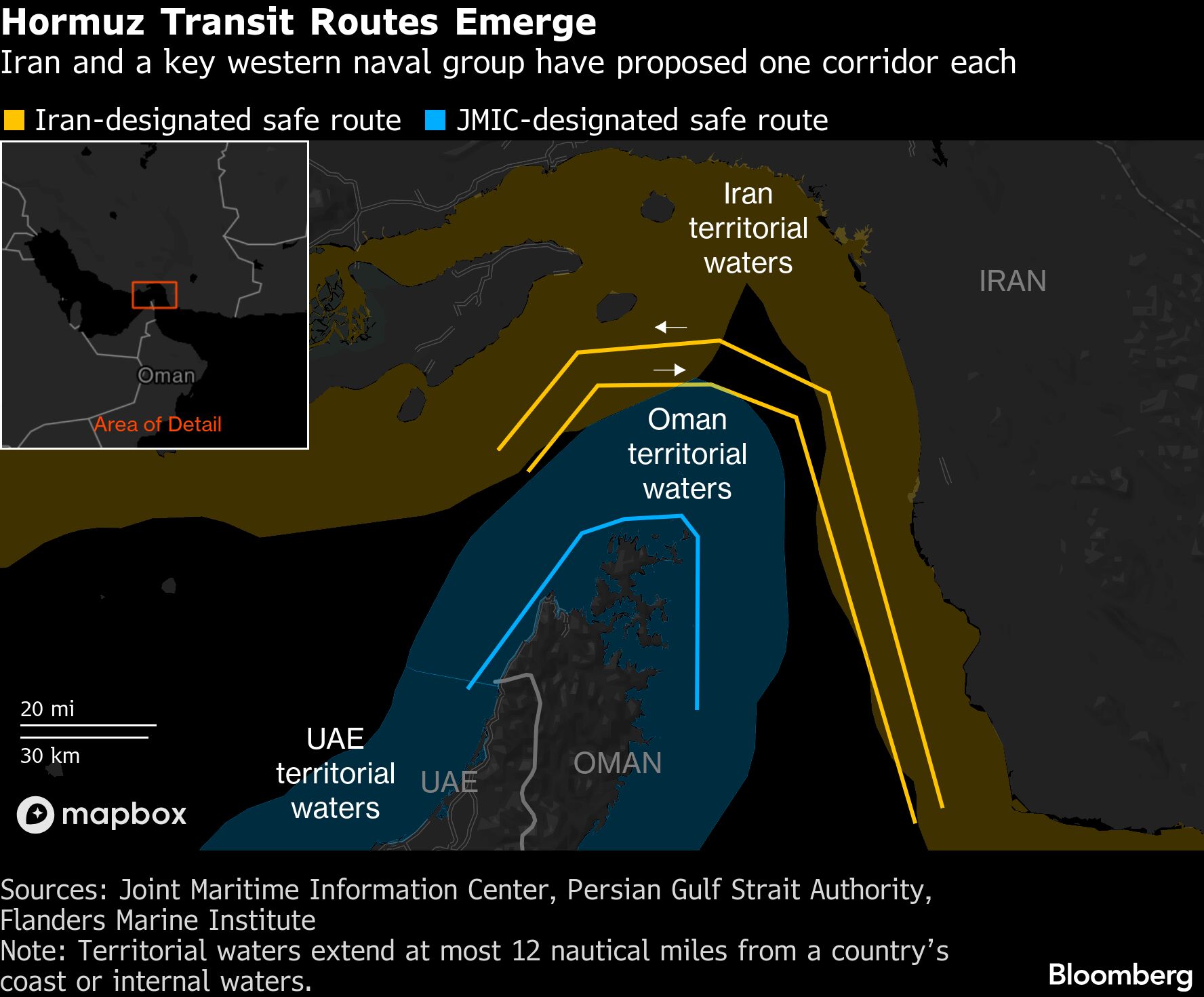
Oman is an ally of the US but maintains close ties to Iran. It’s under pressure from Washington and other world powers not to agree to any tolling or fee system with Tehran. In France on Monday, the country’s leader, Sultan Haitham bin Tariq, agreed with President Emmanuel Macron on “ensuring freedom of navigation without conditions or restrictions.”
The sultanate’s officials previously told European counterparts there’s no way of going back to the pre-war status quo with the Strait of Hormuz and there could be fees for services such as de-polluting the strait or helping ships navigate it, Bloomberg reported last week. Oman has consistently said it will abide by international maritime laws.
Gharibabadi’s remarks offered fresh evidence of Iran’s resolve when it comes to the strait, through which one fifth of the world’s oil and liquefied natural gas supplies normally flow. Shipping traffic has picked up since Iran and the US signed an interim peace deal around two weeks ago. But it’s still far below pre-war levels and Iran attacked ships on Thursday and Friday, prompting skirmishes with the US.
The interim deal said Iran wouldn’t charge tolls for 60 days but left open the possibility of ships being forced to pay some fees after that.
Iran has not confirmed a fresh round of negotiations, though some senior officials are set to be in Qatar, one of the main mediators between Washington and Tehran.
“The Americans are traveling to Doha, but we have no plans to meet with them,” Gharibabadi said. He added Iranian officials would be there to follow up on the interim agreement — which both sides called a memorandum of understanding — through Qatari interlocutors.
On Monday, US President Donald Trump declined to say whether he thought the new talks would lead to a breakthrough after the spate of attacks in recent days jeopardized the ceasefire. He made clear his focus remains on keeping nuclear weapons out of Iran’s hands.
“The meeting in Doha is going to be perhaps important, perhaps not,” Trump said. “We’re going to find out, but we’re winning militarily. It’s almost won militarily, I would say, and it’s really very simple. It’s the denuclearization of Iran. We don’t want them to have a nuclear weapon, and they’re not going to have a nuclear weapon.”
The US, Europe and Gulf Arab nations are increasingly concerned about charges being imposed for the use of Hormuz, which would likely add to energy costs and risk creating a precedent for other countries. Even so, Iran’s ability to dictate to shippers may be limited as long as the southern Omani route remains open to traffic.
For the time being, oil tankers have continued to navigate the strait despite the attacks. A trio of tankers was heading toward the strait inbound late on Monday while two successfully sailed out of the waterway earlier in the day, ship-tracking data compiled by Bloomberg show.
Two more oil supertankers, including one that turned back last week, appeared to be making another move toward departing the Persian Gulf.
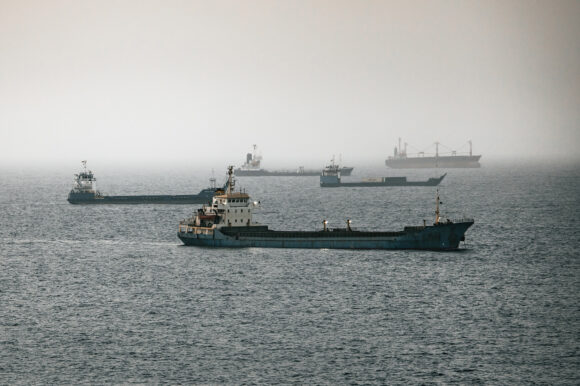
Photograph: Vessels anchored around Qaboos Port in Muscat, Oman on June 22, 2026; photo credit: Elke Scholiers/Getty Images
Was this article valuable?
Here are more articles you may enjoy.
 Viewpoint: The ‘Unbundled’ Insurer Emerges in Age of AI as Value Chain Fragments
  Uninsurable Future: Managing the Climate-Change-Fueled Home Insurance Crisis
  Florida Commissioner Suspends A-Cap’s Atlantic Coast Life Over Surplus Issues
  Large Commercial Property Rates Drop 14.5% in Q2 to Highlight Latest Willis Report

