


Three Wall Street giants used capital from the insurance industry to finance a large chunk of a $16 billion pipeline deal in Kuwait, a rare move for a Middle Eastern infrastructure transaction.
Blackstone Inc., Brookfield Asset Management Ltd. and KKR & Co. opted for insurance-backed financing for the debt portion of the landmark deal, according to people familiar with the matter, who declined to be named discussing private information.
Financial advisers including HSBC Holdings Plc and JPMorgan Chase & Co. had put together a multibillion-dollar package comprised of more conventional bank debt, though the buyers ultimately decided against using it, some of the people said.
The decision points to the growing role of insurers as providers of long-dated capital for infrastructure assets, whose predictable cash flows can be well suited to matching insurance companies’ long-term liabilities. While insurance capital is already commonly deployed in infrastructure financing in the US and Europe, its use as a substitute for large-scale bank financing remains relatively rare in the Middle East, making the deal a potential template for similar transactions in the region.
The sponsors themselves have deep links to the insurance industry. KKR wholly owns life and annuity company Global Atlantic, while Brookfield has built a large insurance operation through Brookfield Wealth Solutions, including American Equity Investment Life. Blackstone manages insurance assets through its Blackstone Credit & Insurance business and has strategic relationships with insurers including Nippon Life.
Representatives for Blackstone, Brookfield, HSBC, JPMorgan and KKR declined to comment, while state-run Kuwait Petroleum Corp. did not respond to a request for comment.
The deal, the largest foreign direct investment in Kuwait’s history, was announced last month even as the Gulf nation faced near-daily attacks from Iran. The three asset managers will each hold an equal share of a 49% stake in a joint venture involving the usage rights to pipelines owned by a KPC subsidiary.
The transaction will generate $7.85 billion in upfront proceeds for Kuwait and help boost its crude-production capacity to 4 million barrels a day by 2035. Before the war forced it to slash its output, Kuwait pumped about 2.5 million barrels a day.
The joint venture covers usage rights to 13 pipelines, with Kuwait Oil Co. retaining operating and maintenance rights for more than 20 years in exchange for a volume-based tariff.
The deal follows similar moves elsewhere in the Gulf, including oil and gas pipeline transactions by Abu Dhabi National Oil Co. and Saudi Aramco, as governments seek to bring in external capital without losing control of key assets. In these cases, investors obtained bridge financing from banks that were later refinanced by bonds.
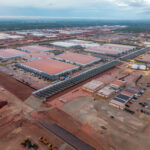
Photograph: Kuwait City, Kuwait; photo credit: Bassam Zidan Ahlawy/Bloomberg
Was this article valuable?
Here are more articles you may enjoy.
 AI’s Water Strain Includes Surging Demand From Electricity Use
  NYC Restaurants Shut Off Air Conditioning, Close on Sundays as Costs Surge
  Kroger Plans to Slash 37% of Corporate Jobs in Next Three Years
  Surplus Lines Leaders Remain Bullish on Outlook in a Shifting Market

