
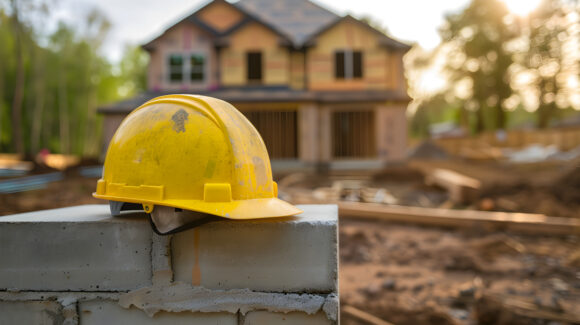
Were he alive today, Albert Einstein would make for a fantastic expert witness in builders risk coverage litigation. Einstein’s testimony on the concept of entropy would be particularly insightful—assuming his hourly rate was affordable, of course.[1]
In recent years, we’ve seen a substantial increase in builder’s risk claims related solely to defective work (in the absence of actual, physical damage). These claims rely on the notion that defective work will eventually fail, and likely sooner than non-defective work. On the surface, it is hard to argue with that concept: if something is built incorrectly it will likely break down sooner. But is that the type of loss that builder’s risk policies cover? Not according to Einstein.
What Is A Builder’s Risk Policy?
By way of background, like most property policies, builder’s risk insurance requires direct physical loss or damage to property to trigger coverage, subject to other terms. Importantly, though, a builder’s risk policy is not a warranty that a project will be free of defects or constructed in a manner consistent with project specifications. The Florida Supreme Court nicely summarized these concepts, which (should) continue to hold true today:
Builder’s risk insurance is a type of property insurance coverage, not liability insurance or warranty coverage. The purpose of this type of insurance is to provide protection for fortuitous loss sustained during the construction of the building. If a described loss occurs, the insurer generally pays the cost of … repairing the damaged property. However, those losses for which coverage is provided are clearly dependent upon the specific language of the builder’s risk policy … This contract does not operate as a warranty for faulty workmanship and should not be transformed into a guarantee against design and construction defects.[2]
A Troubling Recent Trend
Nonetheless, despite these bedrock principles, coverage disputes related to purely defective construction are on the rise. The emergence of these disputes is attributable to a few recent, and might we say, “defective,” trial court decisions. Chief among them is a federal trial court’s now infamous opinion in South Capitol Bridgebuilders,[3] related to the construction of the Frederick Douglass Memorial Bridge in Washington, D.C (“SCB“). SCB involved inadequate vibration of concrete used for supportive structures which “led to decreased structural integrity of the bridge.”[4] In coverage litigation against its builder’s risk carrier, the insured argued, among other things, that the failure of the bridge to reach its specifications constituted “direct physical loss or damage” required to trigger the policy’s coverage. Siding with the insured, and in reliance on a broad dictionary definition of “damage,” the court opined that “decreased weightbearing capacity” could amount to physical damage.[5]
In the wake of SCB, even policyholder advocates have acknowledged that the court misunderstood the purpose (and terms) of builder’s risk insurance, at least in part. Indeed, as one prominent plaintiffs’ firm has explained, “Builders’ Risk policies are not intended to cover the cost of repairing defective but undamaged property. That is a commercial risk for builders which the Builders’ Risk insurance market isn’t, and never has been, prepared to insure.”[6]
Nevertheless, some have read the holding in SCB as supporting the concept that construction which fails to meet a project’s expectations/specifications can trigger builder’s risk coverage. Proponents of SCB argue that defective work will eventually fail, and likely sooner than non-defective work. But does a project’s shortened lifespan constitute physical damage triggering builder’s risk coverage?
Einstein’s Testimony On Entropy
Here’s where Einstein and the law of entropy (or the “Second Law of Thermodynamics” — if you want to sound elegant) comes into play. He would explain, in simple terms, that entropy is the natural tendency of all things to move from order to disorder over time. Metal will rust. Wood will decay. All construction will eventually deteriorate. It’s a law of physics.
Were he on the stand, Einstein would surely urge the court to consider entropy in the instance of defective yet undamaged construction. He would explain that just because defective work may break down at a faster rate does not mean it is damaged. In fact, even a perfectly constructed project begins to slowly break down the moment it is complete. But that gradual decline is unavoidable (and therefore uninsurable), even if the rate of decline is increased due to faulty work.
So, should the scope of coverage be any different in the context of defective work? Not according to Einstein. The idea that defective work experiences entropy at a potentially faster rate than non-defective work does not change the calculus: a defective project is not the same thing as a damaged project. Indeed, despite frequent reliance on SCB in making the opposite argument, proponents often overlook the SCB court’s perhaps contradictory acknowledgment that “defects of material workmanship in and of themselves are insufficient to constitute damage.” Therefore, a decrease in the useful life of a project due to defective work, i.e. accelerated entropy, should have no bearing on the scope of builder’s risk coverage afforded. After all, it’s rarely smart to disagree with Einstein.
- [1] Admittedly, Einstein did not discover the concept of entropy. That honor goes to a guy named Rudolf Clausius. But Einstein won the Nobel Prize, which would undoubtedly play well before a jury.
- [2] Swire Pac. Holdings, Inc. v. Zurich Ins. Co., 845 So. 2d 161, 165 (Fla. 2003).
- [3] No. 21-CV-1436 (RCL), 2023 WL 6388974, at *9 (D.D.C. Sept. 29, 2023).
- [4] The loss also involved visible honeycombing and voids.
- [5] Despite finding the bridge experienced a “decrease” in weight bearing capacity, it appears the bridge never actually lost strength. Instead, it simply never reached its intended strength to begin with.
- [6] https://fenchurchlaw.com/the-worlds-first-leg3-court-decision-and-what-it-means-for-the-builders-risk-market/
Was this article valuable?
Here are more articles you may enjoy.
 Friend of Suspected FBI Data Thief: ‘Crazy’ Teen Warned Not to Hack Bureau
  ‘Unusual’ Isaias Brings Winds, Downed Trees But Fewer Claims Than Expected
  Kroger Plans to Slash 37% of Corporate Jobs in Next Three Years
  Europe’s Insurers Cut Coverage of Weather Losses, Report Says