

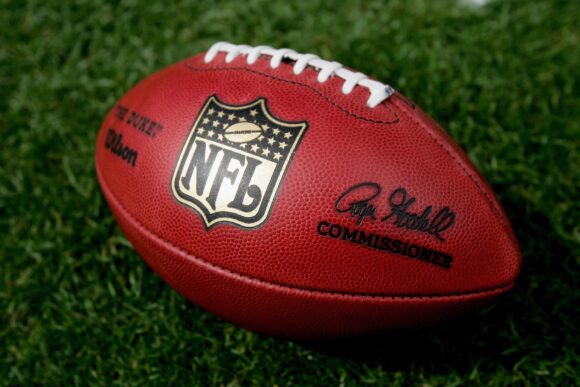
The most-recognizable diversity policy in sports is facing the biggest challenge in its history.
Florida Attorney General James Uthmeier, who has been endorsed by President Donald Trump, is calling for the end of the National Football League’s Rooney Rule, a provision that requires teams to interview at least two minority candidates for head coaching jobs. He says the rule “brazenly violates Florida law” and he wants the league to drop enforcement of it by May 1.
Pressure also is building in Washington, where at least two federal agencies have advanced legal arguments over the past four months that may imperil the rule and other policies like it.
Until now, the NFL has largely escaped the Trump-led culture war during his second administration even as top universities such as Harvard and Yale and blue-chip companies including Walmart Inc. and International Business Machines Corp. have scaled back their diversity, equity and inclusion efforts. The country’s most popular sport also has avoided the kind of controversy it faced a decade ago, when players led by Colin Kaepernick began kneeling during the national anthem to demonstrate against systemic racism. The dispute intensified after Trump, during his first term, called for the players to be fired.
The NFL has considered changes to the Rooney Rule in response to the DEI backlash before deciding against them, said two people familiar with the league’s deliberations. The adjustments would have been minor changes to wording — such as requiring a diverse candidate pool instead of “minority candidates” — intended to help the league avoid scrutiny, the people said.
Commissioner Roger Goodell pledged as recently as March 31 to uphold the rule despite Florida’s warning. “We are well aware of the laws and where the laws are changing or evolving,” he said. “We think the Rooney rule is consistent with those.” Goodell and the NFL declined further comment to Bloomberg.
The Rooney Rule was named for late Pittsburgh Steelers owner Dan Rooney, who chaired the NFL’s Committee on Workplace Diversity when the rule was adopted in 2003. It was first implemented as a requirement for interviewing head coaches. Since then, it has been expanded to ameliorate persistent disparities between predominately Black athletes and largely White and male coaching staffs.
To employment lawyers, the Rooney Rule is the best-known example of a “diverse slate” policy, in which hiring managers are encouraged or mandated to include a certain number or percentage of minorities in their applicant pool.
Numbers show the rule, while well-intentioned, has done little to increase the ranks of Black head coaches. The league had 10 head-coach openings for this coming season and only one — Robert Saleh of the Tennessee Titans — was filled by someone from a diverse background. With the addition of Saleh, five of 32 teams have head coaches from minority groups.
The NFL has said its diversity efforts have resulted in significant increases in the number of women and people of color who work in operations and coaching staffs beyond the top job. Thirty-one percent of executives, coaches and operations staff at the start of the 2024 season identified as people of color, up from 25% in 2020, while representation of women rose to 32% from 27%, according to league data provided to Bloomberg. People of color accounted for 42% of all coaches in 2024, up from 35% four years earlier.
Florida’s Uthmeier claims the pro-DEI directive is illegal under his state’s law because it forces owners to consider race and gender in a way that prevents them from immediately hiring a desired candidate. He also has attacked some of the NFL’s other inclusive hiring policies, including development programs targeted at increasing diversity and a 2022 mandate that all teams employ at least one woman or minority offensive assistant.
Art Rooney II, whose father was the rule’s namesake, told reporters last month that owners discussed the latest challenge to the Rooney Rule at their most recent owners’ meetings, and that he expected the league to have conversations with Florida’s attorney general. However, he said he doesn’t “anticipate any dramatic changes” to it. “There’s no discussion about getting rid of it, that’s for sure,” Rooney added. He declined to comment on other potential threats to the rule from federal officials via a spokesman.
Separately, the Department of Justice and the Federal Trade Commission have contended in legal filings and official complaints that diverse slate policies are unlawful.
The Justice Department said “diverse interview slates” were among the unlawful policies that IBM utilized when it discriminated against employees and job applicants based on race, color, national origin or sex. While the company didn’t admit wrongdoing, it will pay more than $17 million to resolve the allegations.
The FTC told more than 40 of the country’s largest law firms this year that their participation in an industrywide program modeled off of the Rooney Rule amounted to “potentially anticompetitive collusion.” Dubbed the “Mansfield Rule,” it encouraged law firms to ensure at least 30% of applicants for promotions and hiring were people of underrepresented groups.
FTC Chairman Andrew Ferguson wrote in February that the agency views “collusion or unlawful coordination on DEI metrics” as an unfair and anticompetitive labor practice that falls under its jurisdiction.
“What we haven’t seen yet is an actual contested legal challenge in this space,” said Nicholas Cheolas, a partner at Wiley Rein LLP. “So we’re operating in an environment where we see a lot of warnings and statements and speeches, but we haven’t really had to test, in real time, the legal theories and where they stack up.”
The NFL is a prime target for anti-DEI groups because “it’s an organization everybody knows,” said Ian Prior, senior counsel at America First Legal, which first filed a complaint against the Rooney Rule with the Equal Employment Opportunity Commission in 2024.
Proponents of the Rooney Rule argue that, done well, diverse slate policies can ensure managers cast a wide net when elevating talent, forcing them to consider qualified people with different backgrounds or appearances who might have otherwise been overlooked.
Starting in 2009, the rule was expanded several times to include general manager and top executive jobs, and later to coordinators, quarterback coaches, and to allow women candidates to satisfy the “minority” criteria. In 2020, the NFL decided to offer compensatory draft picks to reward teams whose minority coaches and staff became general managers and head coaches at other teams.
The efforts haven’t gone unnoticed by conservative-activist groups, which have argued that the rule amounts to classifying applicants on the basis of race, color or sex.
“The Rooney Rule has faced potential challenges for a long time,” said Michael Huyghue, a lawyer and former head of football operations for the Jacksonville Jaguars. “The league has been aware of the risk.”
Last May, the NFL abruptly suspended an accelerator program open only to minority coaching and front-office candidates, a week before it was scheduled to take place. It restarted the program this year, opening to non-minority candidates too.
A league staffer denied the move was a response to the political climate, but the two people close to the league said they were skeptical. Opening development programs to all has becomea go-to tactic for companies as they seek to prevent accusations that they discriminate against White people or men.
“What we’ve seen in the last few years is an effort by legislatures and the courts to better define the line between impermissible race discrimination and permissible affirmative action,” said Jodi Balsam, a professor of sports law at Brooklyn Law School. NFL attorneys have seen “the writing on the wall,” she said.
The core tenets of the Rooney Rule are on solid legal footing, according to Jeremi Duru, a professor of law and director of the Sport and Society Initiative at American University. Title VII of the Civil Rights Act of 1964 clearly prohibits employers from making a hiring, firing or promotion decision based on characteristics such as race, sex or national origin. However, companies don’t have to ignore these characteristics in assembling their applicant pool so long as they don’t deprive any applicant of opportunities, he said.
“It’s not two people out of a pool of five, or two people out of a pool of seven; it’s two people of color out of a total pool of how many ever you want,” said Duru, who’s also on the board of the Fritz Pollard Alliance, an organization founded around the inception of the Rooney Rule that supports diverse hiring in the NFL. “Once you start attacking initiatives that are very benign as being unlawful, very few initiatives for equal opportunity are going to go unchallenged.”
Unlike a decade ago, there’s little indication that players now would react strongly to any changes to the Rooney Rule. The Players Coalition, formed in 2017 to improve racial equity, declined to comment. The NFL Players Association said in a statement that “it’s the league’s responsibility” to ensure pathways exist for all qualified candidates.
Former Executive Director DeMaurice Smith, who led NFLPA for more than a decade until 2023, wrote a 91-page paper near the end of his tenure, calling the rule a “failed experiment.” He pointed to a confidential 2022 NFLPA survey of 47 current and former coaches, in which the vast majority of respondents complained about the lack of transparency around pay, benefits and the hiring process.
Additionally, there’s the unresolved case involving Brian Flores, who’s suing the league over racial discrimination. The Minnesota Vikings defensive coordinator has offered evidence that the New York Giants interviewed him for a head coaching job after they’d already chosen a different candidate, rendering the Rooney Rule a sham. A New York judge said in February that Flores could bypass arbitration and proceed to trial.
“The largest sports organization in the country not only doesn’t enforce the Rooney Rule, it doesn’t comply with state and federal fair-hiring laws,” Smith said in an interview, echoing his paper’s assertion. “And no one is making them do it.”
Photo: Photo by Doug Pensinger/Getty Images
Was this article valuable?
Here are more articles you may enjoy.
 Two Past Hurricanes, OIR Data Give Idea of What to Expect From Isaias in Florida
  McDonald’s Hit With Class Action Alleging AI-Powered Menu Price-Fixing
  Hurricane Isaias Reaches Cat 3 Status as Insurers, Adjusters, Property Owners Prepare
  Florida Commissioner Suspends A-Cap’s Atlantic Coast Life Over Surplus Issues

