

John Popovics thought he’d done everything right.
Earlier this year the University of Illinois at Urbana-Champaign civil engineering professor was planning a trip to Riyadh, Saudi Arabia, to take part in a National Science Foundation workshop. Because the costs were adding up quickly, he chose cheaper, nonrefundable options for his flights and hotels — as well as the Travel Guard insurance that United Airlines Inc. offered.
“I walked in thinking, ‘Travel insurance is good, and it will protect me,'” he says. Popovics scanned his policy, noting the many scenarios it covered, from lost luggage to a terrorist attack.
Then the US attacked Iran in February, and the National Science Foundation called off the event.
“When I tried to get my money back, they said, ‘Sir, we don’t cover acts of war,'” Popovics recalls. “I was shocked.”
It’s a chaotic time to travel. Over the past several months alone, travelers have found themselves stranded in the Caribbean because of US military intervention in Venezuela, unable to fly into or out of Mexican airports due to cartel violence and stranded throughout the Middle East when airspace shut down around Iran. Federal funding lapses have led to ballooned security lines and other disruptions at US airports. Now fuel shortages are threatening to upend summer travel, making it more expensive, less flexible and rife with flight reductions.
Between unexpected events and increasingly aggressive travel insurance marketing — you’ll see it as an add-on option to almost any type of booking — consumers are scooping up policies at record levels. According to the US Travel Insurance Association’s most recent data, Americans spent $5.56 billion on travel insurance in 2024, a 46% increase from 2019. And individual companies report continued growth since then. At Berkshire Hathaway Travel Protection, policy sales were up 15% last year and an additional 7% in the first quarter of2026.
But many consumers are finding that, as Popovics experienced and Tom Waits sang, the large print giveth and the small print taketh away: War, global fuel shortages and government shutdowns are all scenarios that are rarely covered by insurance policies.
“It’s the implied promise of every travel insurance policy: If something goes wrong, we’ve got your back,” says Christopher Elliott, a consumer advocate whose nonprofit, Elliott Advocacy, addresses some 10,000 to 20,000 travel disputes annually, a meaningful share of them travel insurance claims. “That’s simply untrue.”
Travel insurance customers have long complained online about gotcha clauses and foot-dragging on claims. But scroll through the communities of travelers sharing their recent experiences on social media, and you’ll find many who in recent months have lost thousands of dollars on missed trips or spent fortunes on hotels and flights after being stranded in foreign countries. Almost all of them were shocked to have their claims denied by insurance companies.
Robert Gallagher, CEO of North America for Zurich Cover-More, the company that owns Travel Guard, said in a statement that insurance is about sharing risk.
“Exclusions like this exist because these types of conflicts can trigger mass evacuations, infrastructure collapse and widespread disruption affecting thousands of travelers all at once,” he said. “That would place unsustainable pressure on the shared risk pool and ultimately compromise the affordability of coverage available for everyone.”
Popovics did manage to recover most of his costs. United Airlines charged a fee to change his flight, and after much stonewalling from Priceline, he received a hotel refund. In the future, he says, he will pony up for refundable bookings, not for insurance.
His story is a reminder that while travel insurance can be helpful in the event of medical emergencies or other trip disruptions, it’s not the saving grace that many people imagine. Here’s a guide to how travel insurance works for US consumers and what it does — and doesn’t — buy you.
What does travel insurance normally cover?
The main types of travel coverage fall into several buckets: trip cancellation, trip interruption, trip delay, medical expenses, medical evacuation, lost or delayed luggage and, least cheerful of all, accidental death and dismemberment. Each has its own fine print.
Standard trip cancellation policies pay back your nonrefundable costs if you have to cancel a trip before you leave — so long as you’re canceling for preapproved reasons, such as illness or the death of a close family member. (Tough luck getting reimbursed if your ski destination has no snow or you suddenly get slammed at work.)
Trip interruption covers costs if your trip is cut short for similar reasons, but after it’s started. Trip delay coverage helps with meals and hotel costs if your flight is seriously delayed — typically by more than six hours — for reasons that include weather or mechanical problems.
A standard policy covering many (or all) of these scenarios often runs 4% to 10% of your total trip cost; you can review policy costs and inclusions side by side with aggregator websites such as Squaremouth, InsureMyTrip or Travelinsurance.com. Don’t spring for the “protect my trip” options offered at airline checkouts — they almost always lead to generic, limited and overpriced coverage.
Does travel insurance generally cover geopolitical events like war or airspace closures? The short answer is no. “Acts of war” typically count as a “blanket exclusion” in insurance parlance. That means any impacts from military action aren’t covered — even if your trip is cancelled or interrupted due to an invasion.
Companies define “war” broadly. Popovics argued that the violence that caused his trip cancellation was more like terrorism, since Congress had not declared war in Iran. No dice.
But there can be gray areas. Chrissy Valdez, senior director of operations for Squaremouth, says you “may potentially still be covered” for flight delays and cancellations that happen as downstream effects of geopolitical crises. Her advice: Get documentation from the airline about the reason for disruptions and file it with your claim.
Having complementary coverage with a service like MedJet or Global Rescue can also help. These aren’t technically considered travel insurance companies. Rather, the membership-based services specialize in medical evacuations and crisis response offerings. If you find yourself in danger because of civil unrest or a terror attack, they can transport you to a safe location.
That’s felt particularly relevant in recent months, as MedJet monitored members trapped in the Middle East who were sheltering in place, coordinated transfers to secure airfields and facilitated evacuation flights from locations whose airspace was open. The company declines to share figures on its membership, though it says has seen a 48% increase in such subscriptions over the past year. Global Rescue says that for the first two months of this year, sales of memberships that include security response were up 29% over the same period in 2025. Both companies sell short-term and annual memberships that start under $200 for a week-long trip.
What about natural disasters, government shutdowns or TSA problems?
Hurricanes and natural disasters may be covered by standard travel insurance, but timing is key. If you buy your policy after a specific weather event has been forecasted, it’s considered a “known event,” even if its expected path was not initially threatening your destination. Related claims are typically excluded.
Clint Henderson, managing editor for The Points Guy, says one of the most common misconceptions about travel insurance at the moment is that it will compensate you for missing a flight because of Transportation Security Administration issues. Even in the case of extreme TSA disruptions caused by government shutdowns, consumers are responsible for getting themselves to the airport early enough to clear security. If a government shutdown creates a shortage of air traffic controllers, though, as happened around the US in late 2025, you might receive compensation for directly related flight delays and cancellations.
I’ve heard about “Cancel for Any Reason” insurance. Should I get it?
Cancel for Any Reason, or CFAR, is what many consumers think they’re buying when they purchase travel insurance. It’s actually an add-on to policies and allows you to, yes, cancel a trip for any reason — fear, a pet’s illness, your kid making the state championships, the possibility of war — and reimburses you for some 50% to 75% of already-paid, nonrefundable costs. Squaremouth says it has seen a 27% increase in searches and quote requests for CFAR coverage over the last year.
There are a number of important catches, however. CFAR has to be purchased within a couple of weeks of the first payment you make on the trip, and it can only be activated before you leave. You can’t buy CFAR on its own, and it’s more difficult to get in states with stricter regulations around insurance, including Washington and New York. CFAR is also expensive, costing up to 18% of your total trip price.
What if my airline, tour operator or hotel cancels my booking or goes out of business?
These concerns have spurred some travelers to book insurance lately, especially as carriers slash routes due to high fuel costs or even shut down operations entirely. The clause that would protect you here is typically described as “supplier default protection” — that’s meant to reimburse you if, say, your tour operator or cruise lines stops operating. Make sure to read the fine print here too—you generally have to buy your policy within a certain window, and it may not cover every travel provider.
If an airline drops your route or cancels your flight, it’s the carrier that’s responsible for refunding you, not your insurance provider. But insurance kicks in if, say, a suddenly canceled flight makes you miss your cruise, or you get stuck somewhere overnight. It will cover your nonrefundable prepaid costs and expenses like meals, accommodations and possibly transportation.
Again, war isn’t covered: It’s a carve-out that left many passengers stranded with little to no recourse when some 23,000 flights were canceled in and out of Middle Eastern hubs in late February and early March at the onset of the war in Iran. If airlines respond to fuel shortages by blaming route changes on the war, you’ll be equally out of luck.
So what is travel insurance actually good for?
Coverage for medical emergencies can be very valuable, especially if your health insurance provides little or no coverage outside the US.
Wilton, Connecticut-based travel agent Martha Pearlstone of Freebird Travel recently had such an experience when she booked a monthlong trip to Italy for a couple celebrating a milestone birthday. They were on a small Aeolian island when the wife received a call from her doctor telling her she had advanced cancer. Travel insurance helped transport them home for treatment and covered the nonrefundable costs for the rest of their trip.
“Sometimes it’s not about airlines and global conflict,” Pearlstone says. “It’s that life can just go sideways.”
Can I just use the coverage that comes with my credit card?
Plenty of experienced travelers do just that. Premium cards including the American Express Platinum and Chase Sapphire Reserve come with trip cancellation, trip interruption and baggage protection benefits that kick in automatically at no additional cost when you use the card to pay for even a small part of the trip.
“That’s part of what you get when you pay that gigantic annual fee,” says The Points Guy’s Henderson.
But credit card insurance can be less comprehensive than a policy you buy independently. The Chase Sapphire Reserve card offers $2,500 in emergency medical or dental reimbursement and $100,000 in medical evacuation coverage; Squaremouth’s insurance experts recommend at least $50,000 in emergency medical coverage and $100,000 in evacuation coverage — and at least twice that if you’re cruising or engaging in high-risk activities. Most cards also cap cancellation reimbursement. For the American Express Platinum, the ceiling is $10,000 per trip and $20,000 per year, potentially leaving you shortchanged on expensive itineraries.
Minneapolis-based mom of three Katie Garrity Smieja says these ceilings haven’t been an issue for her. Given Minnesota’spropensity for bad weather, she uses credit card coverage often, including when winter weather caused her to miss her flight and prevented her family from checking to their (already-paid-for) hotel in St. Maarten on their intended arrival date this past March. “It covered our missed night when we couldn’t get out of MSP as planned,” she says. “I’ll never travel without travel insurance.”
Are there other loopholes I should know about?
Several countries that are in conflict or are subject to a Level 4 (“Do not travel”) advisory from the US Department of State may be excluded from travel insurance entirely. And adventure sports like scuba diving and skiing often require you to buy additional coverage for related injuries.
Unless you’re booking a travel insurance policy through Weather Promise, which reimburses you automatically when it rains on your trip, there isn’t a lot of recourse for run-of-the-mill bad weather, even if it ruins your plans.
The treatment of preexisting medical conditions is usually excluded too, if those conditions haven’t been stablefor a certain amount of time, usually 60 days.
If anything goes wrong, how does my claim have the best chance of being approved?
Call your insurer early, and certainly before making expensive decisions. If you’re considering booking alternate flights or hotels, confirm that those costs will be covered under your policy and ask what documentation you’ll need.
Document everything and start your insurance claim as soon as possible, says Chrissy Valdez of Squaremouth. If your flight is delayed or canceled, save any communications from the airline that state the reason. If your bag goes AWOL, save the receipts for anything you replace, down to the underwear and dental floss. The more of a paper trail you have, the stronger your claim will be.
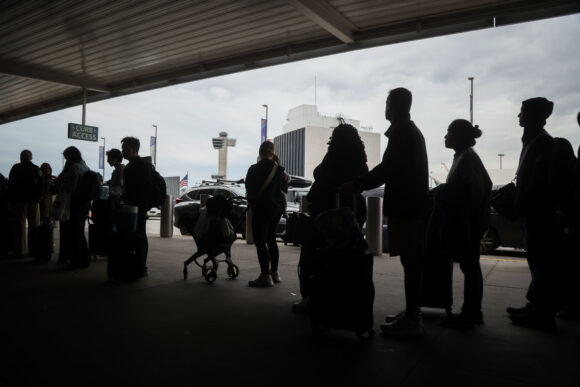
Photo: Photographer: Michael Nagle/Bloomberg
Was this article valuable?
Here are more articles you may enjoy.
 Surplus Lines Leaders Remain Bullish on Outlook in a Shifting Market
  NYC Restaurants Shut Off Air Conditioning, Close on Sundays as Costs Surge
  Hurricane Isaias Reaches Cat 3 Status as Insurers, Adjusters, Property Owners Prepare
  Industry Reacts to Senators’ Letter for Claims Data and Recent Reports

