

Washington state is set to approve a new tax on millionaires, a measure that would shift how the state raises money and set off a likely court fight over a nearly century-old legal ruling.
The state’s Democratic-controlled House of Representatives passed the proposal late Tuesday after lawmakers debated through Monday night. The bill now goes to the Senate, where it is widely expected to win approval.
Governor Bob Ferguson, also a Democrat, vowed to sign the measure, saying it would “apply to less than one half of one percent of Washingtonians, but make life more affordable for millions.” Enactment would set up a legal showdown over whether the Washington Supreme Court will overturn a 1933 decision that blocked graduated income taxes in the state.
This year’s bill would establish a 9.9% tax on household income of at least $1 million, to be first collected in 2029 on earnings from the previous year. Proponents predict it will raise almost $4 billion a year that will be paid by about 30,000 filers, reducing reliance on a sales tax that falls disproportionately on lower earners. Opponents warn it will damage the business environment that has spawned companies such as Amazon.com, Microsoft and Starbucks.
Former Starbucks Chief Executive Officer Howard Schultz said he’s leaving Washington state for Florida, a week after the company said it would open a new office in Tennessee to support its growth ambitions in the South and Northeast. Starbucks will remain headquartered in Seattle.
In a LinkedIn post, Schultz, who is retired from Starbucks, praised the Pacific Northwest and said he hopes that “Washington will remain a place for business and entrepreneurship to thrive.”
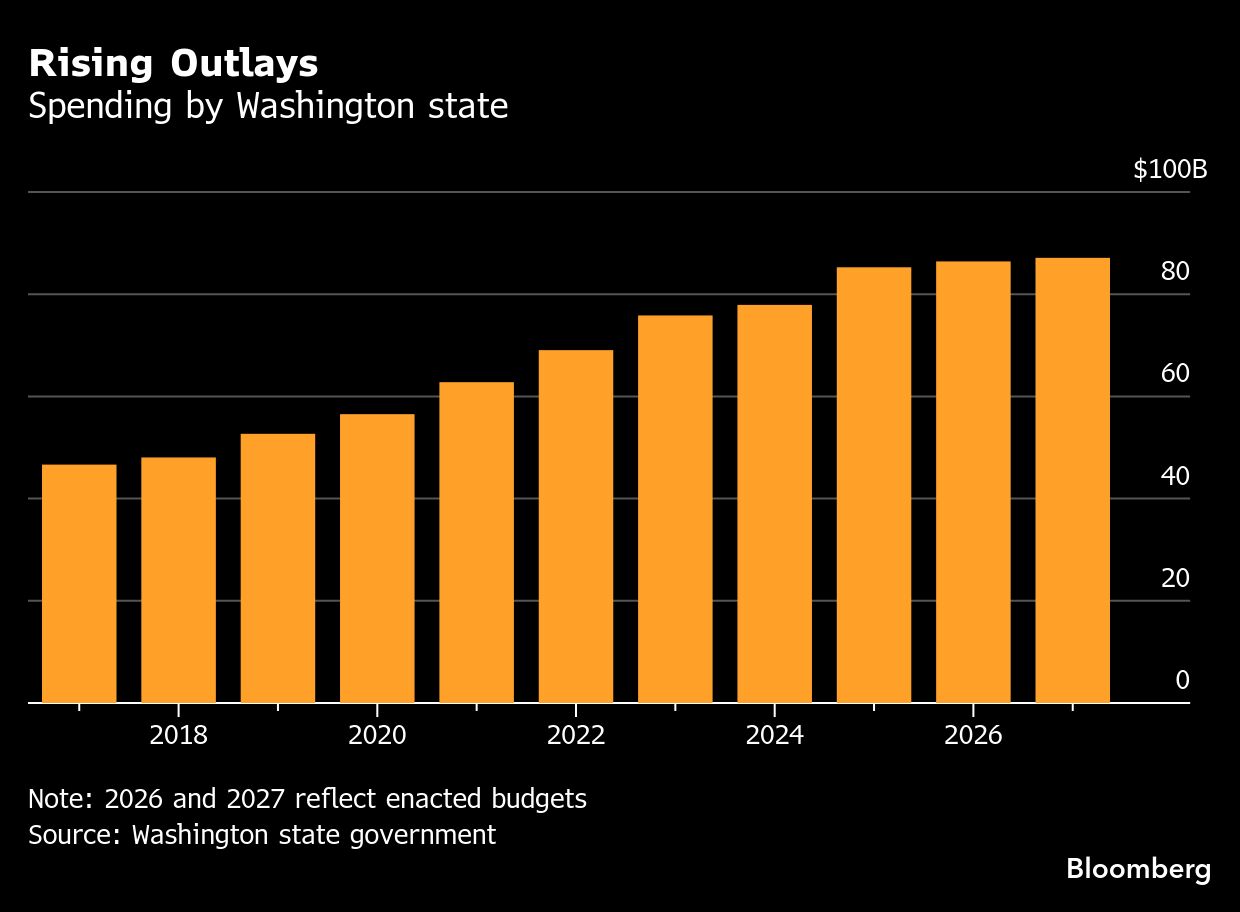
The income tax would come on top of a capital gains levy and other revenue-increasing measures that Washington state Democrats have pushed through in the past five years.
“It seems to be a historic legislative session — from a tax perspective — every year now,” said Aaron Johnson, an attorney at Ballard Spahr. “We are undermining the approach that any prudent business would take in determining whether or not to remain in our state or to invest in our state.”
Jamie Pedersen, the Democrat who sponsored the bill in the Washington Senate, said he came to the idea of a “millionaire’s tax” by imagining a state for his children that fully funds public education, helps people seeking shelter and provides affordable healthcare.
“We have a broken, upside-down, hundred-year old tax system that is just not adequate to meet the needs of our state in the 21st century,” Pedersen said last month. “Our tax system ought to be restructured.”
The tax will almost certainly face legal scrutiny if it becomes law, however. According to the 1933 Supreme Court ruling, a graduated income tax approved by voters violated the state Constitution, which requires property levies over 1% to be uniform. The Constitution defines property as “everything, whether tangible or intangible, subject to ownership.”
Rob McKenna, a former Republican state attorney general, pointed to roughly a dozen cases over the past century in which that precedent was upheld.
“The proper avenue for enacting a graduated income tax with a rate in Washington is through constitutional amendment, not judicial reinterpretation of plain constitutional language,” McKenna said in a brief.
During the legislative debate that began Monday, critics of the bill warned it would prompt high earners to leave Washington, with one Republican lawmaker rattling off a list of states that are currently lowering or eliminating their income taxes. Democrats countered that plenty of of high-tax states including California and New York continue to attract investment.
In Seattle, large employers already pay a tax on some top salaried jobs, and there are additional levies to support housing and long-term care. The Tax Foundation, a conservative-leaning think tank, published a report in January maintaining that high earners in Seattle would end up owing more than 18% in state and local taxes — higher than New York City’s 14.8%.
Opponents also warned that future lawmakers will seek to apply Washington’s income tax to more modest salaries. Under the existing legislation, only households earning at least $1 million would pay, with incomes of a couple filing jointly counting toward that threshold.
“By adopting a state income tax, Washington is giving up one of our primary competitive advantages we have had over other states and regions,” Kris Johnson, president of the Association of Washington Business, said in a statement after the measure passed in the House.
Democrat Noel Frame, one of the bill’s sponsors in the Senate, said the income tax is “an important tool to rebalance the code overall,” by giving some of the revenue back to Washingtonians through the Working Families Tax Credit, small-business tax breaks and sales-tax exemptions on some products.
Frame said the rate and structure of the income tax aligns with the state’s capital gains tax, arguing that Washington voters approved that structure by rejecting a 2024 effort to repeal it. At the time, however, that tax was 7% on gains over $270,000. Just a few months later, in last year’s legislative session, state lawmakers increased the rate to 9.9% for gains over $1 million.
That measure was also challenged all the way to the state’s Supreme Court, but the justices avoided overturning the 1933 income tax precedent by ruling that a levy on capital gains is actually an excise tax.
Shortly thereafter, Ken Fisher moved his Fisher Investments from Washington to Texas, citing the court decision. In an apparently sarcastic statement, his firm said it would relocate “in honor of the Washington State Supreme Court’s wisdom and knowledge of the law, and in recognition of whatever it may do next.”
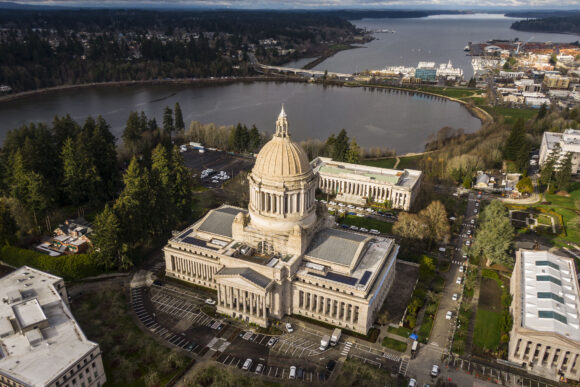
Top photo: The Washington State Capitol in Olympia. Bloomberg.
Topics Washington
Was this article valuable?
Here are more articles you may enjoy.
 KCC Says Isaias Insured Losses to Be $3 Billion; AM Best Calls Storm an Earnings Event
  Insurers: French Supermarkets’ Cyber Insurance Unlikely to Cover Food Losses
  Eastern States’ Grocers Shut Online Systems After Cyberattack
  Harbor Emerges From Stealth with $10M Funding to Handle AI-Agent Risk

