

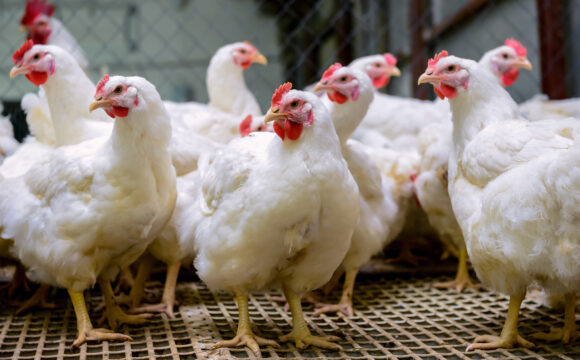
Delaware officials announced Sunday that preliminary testing of a commercial broiler flock in Kent County has returned presumptive positive for avian influenza.
The Delaware Department of Agriculture said it quarantined the affected premises, and the birds on the property are being depopulated to prevent the spread of the disease. Birds from the affected flock will not enter the food system.
This is the first Delaware detection of avian influenza in a commercial flock during the 2025-26 waterfowl migratory season.
The Delaware Department of Agriculture, along with the University of Delaware laboratory system, performs surveillance and testing of birds for avian influenza within the state. Surveillance is conducted at commercial poultry operations, exhibition and backyard flocks, and at livestock and poultry auctions.
US Senators Push USDA for Urgent Action on Bird Flu Vaccine
The U.S. Department of Agriculture (USDA) also does surveillance and testing for avian flu. Within the last 30 days, 65 flocks (16 commercial and 14 backyard) across the country have been confirmed as having the virus, affecting 1.2 million birds, according to USDA.
Avian influenza is a highly contagious airborne respiratory virus that spreads quickly among birds through nasal and eye secretions and manure. The virus can be spread from flock to flock, including flocks of wild birds, through contact with infected poultry, equipment and the clothing and shoes of caretakers. This virus affects poultry, like chickens, ducks, and turkeys, and some wild bird species, such as ducks, geese and shorebirds.
Delaware backyard flock owners who notice any unusual symptoms in their flock should email poultry.health@delaware.gov or call the Delaware Poultry Health Hotline at 302-698-4507.
The U.S. Department of Agriculture said in June that it was developing a potential poultry vaccination plan, but the agency as not yet released details.
The virus has infected a small number of people across the country. Delaware’s DPH and the federal Centers for Disease Control (CDC) say that the risk to the general population is low. Officials recommend that people and pets should be kept away from wild birds and bird droppings.
Topics Commercial Lines
Was this article valuable?
Here are more articles you may enjoy.
 Florida AG Says His Office Investigating ‘Anti-Public Adjuster’ Endorsements in Policies
  How One Hacker Used AI Agents, a Few Thousand Dollars to Break Into Websites
  Alabama Pharmacy, Not Agent, at Fault for Not Reading Policy Before $5M Judgment
  Reuters: DXC in Advanced Talks to Sell Insurance Software Unit for $2.4 Billion

