

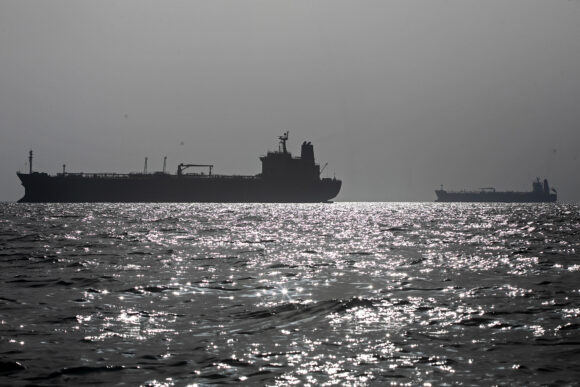
The Strait of Hormuz remains effectively closed to commercial shipping, with maritime traffic reduced to a trickle and dominated by Iranian-linked vessels. There were few notable foreign-affiliated movements amid reports of Iran’s Bitcoin-backed insurance program for shipping companies willing to transit the waterway.
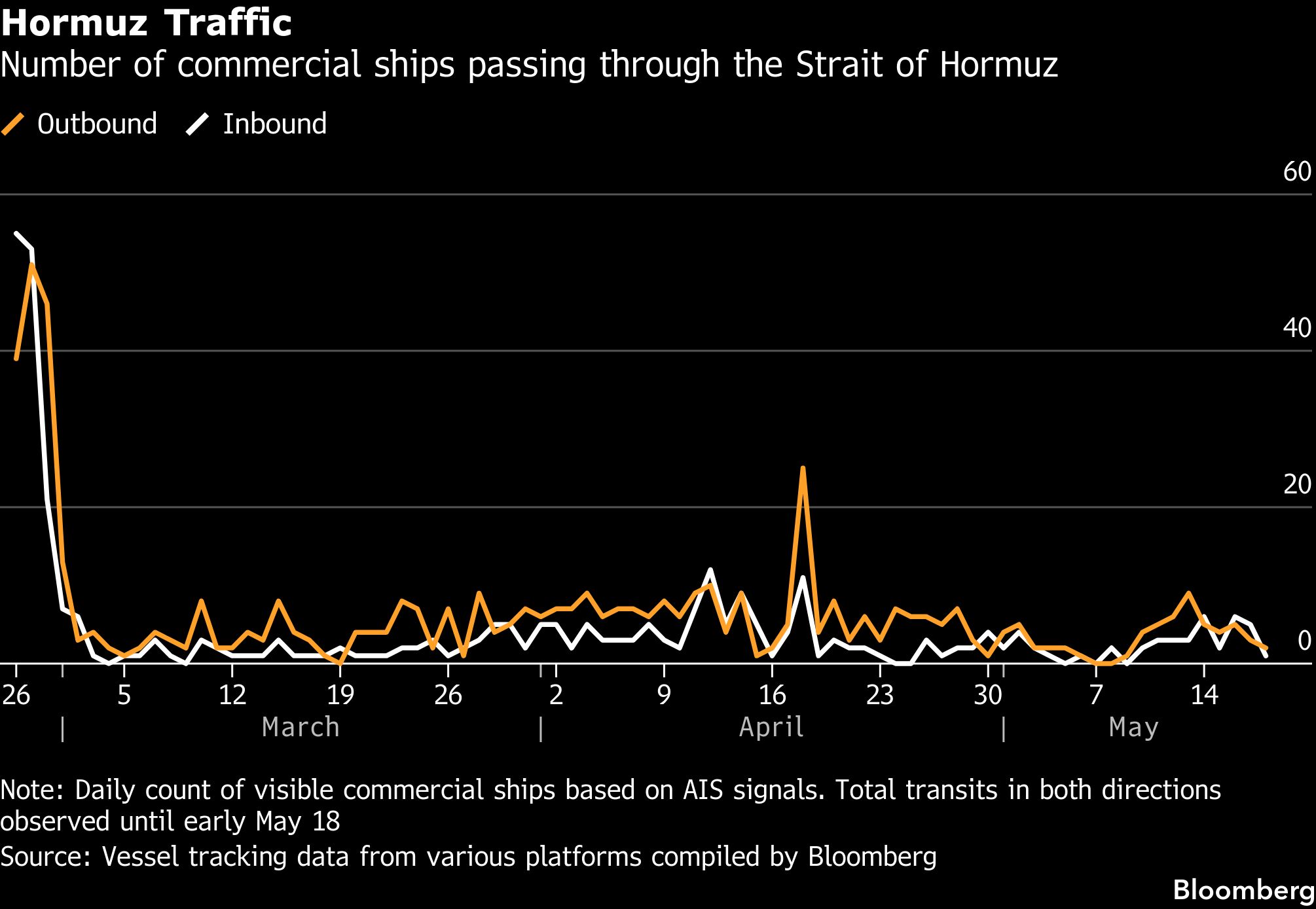
Shipping traffic dipped over the weekend as daily transits fell from about 11 on Saturday to eight on Sunday, tracking data compiled by Bloomberg show. Among those vessels, the only non-Iranian transits were an empty inbound South Korean-linked supertanker Aram, also known as Cameroon Prosperity, and an outbound liquefied petroleum gas carrier Al Barrah, managed by Saudi Arabia’s Sabic. That trend extended into Monday morning, with tracking data showing just three transits, all tied to Iran.
Iran is attempting to leverage the ongoing crisis by introducing Hormuz Safe, a Bitcoin-backed insurance program for shipping companies navigating the strait, according to the semi-official Fars news agency. While Tehran projects the initiative will generate over $10 billion in revenue, the actual structure and risk coverage of the policy remain unclear.
Read more: Iran Starts Bitcoin-Backed Shipping Insurance for Hormuz Strait
Separately, Iranian media reported that the US proposed a temporary waiver on sanctions targeting Iran’s oil exports as part of efforts to secure a broader peace arrangement and reopen Hormuz. The US has not confirmed the proposal.
Hormuz Transits
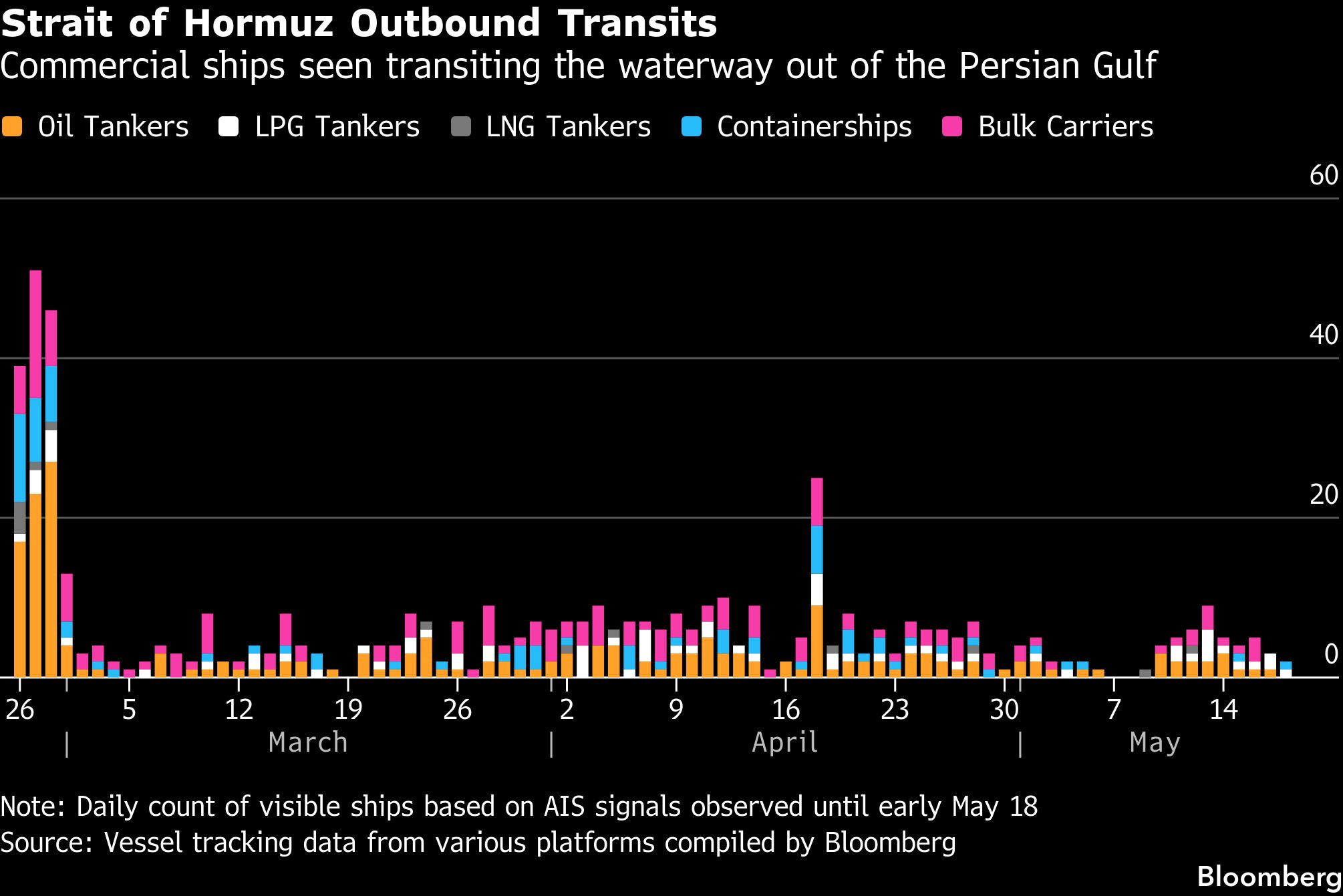
Alongside the Saudi LPG carrier, Sunday’s outbound commercial traffic included an Iranian LPG ship and a small fuel carrier, while Monday’s outward flows featured an additional Iranian LPG tanker and a containership.
However, some of these transits remain shadowed by the US blockade against Iranian shipping in the Gulf of Oman. In a post on X, US Central Command said Sunday that the military has now diverted 81 commercial ships since imposing its own blockade on Iran.
At the same time, roughly 23 tankers have been observed around Iran’s main oil-export hub, marking the largest concentration near the island since the US Navy began blockading Tehran’s maritime trade.
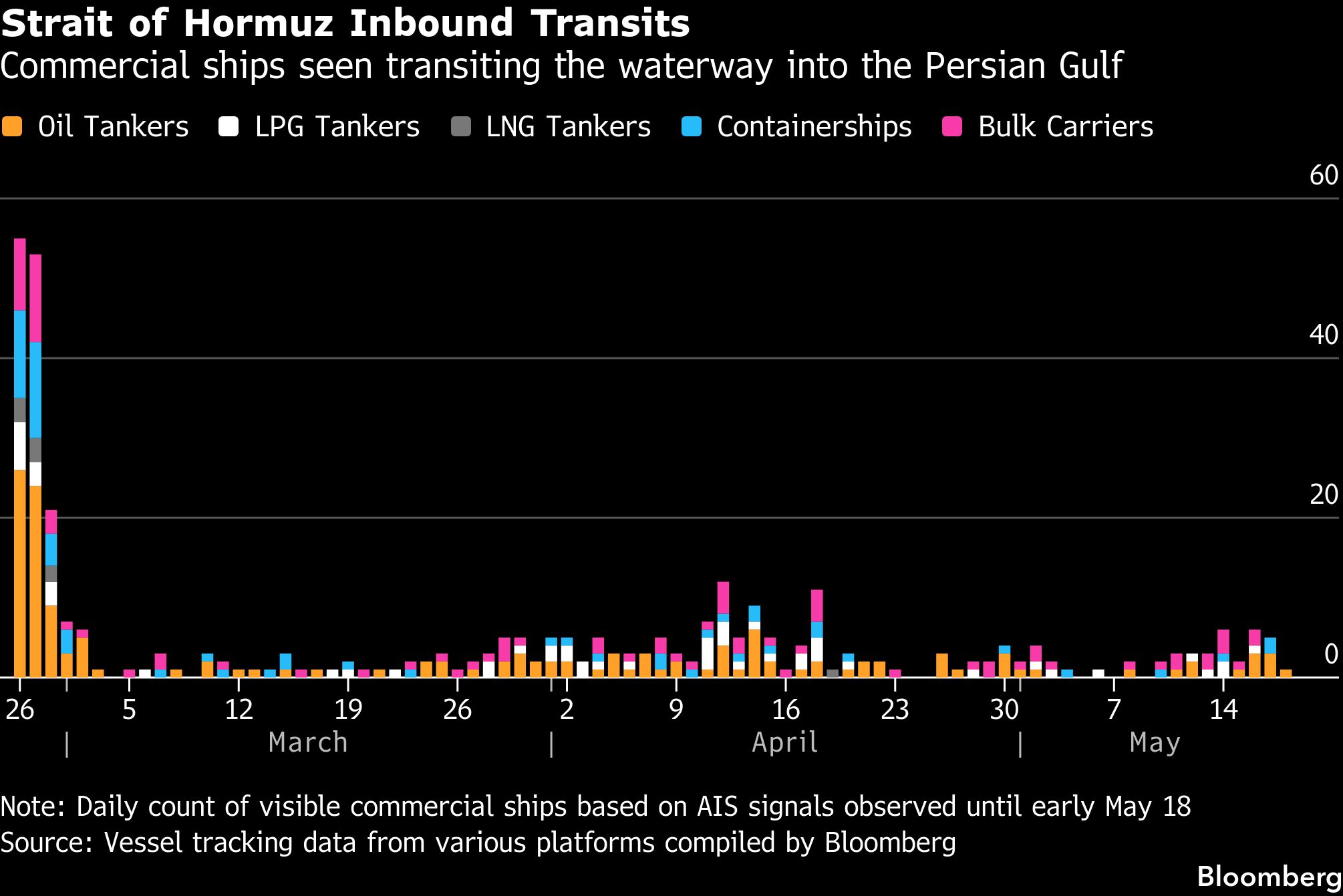
Following Sunday’s entry of a supertanker into the Persian Gulf, two Iranian fuel tankers and two containerships also made their way inside, with another fuel tanker following suit on Monday morning.
Widespread interference of signals on the industry’s Automatic Identification System has clouded the picture, making independent verification of ship traffic increasingly difficult.
As a result, transit counts may later be revised upward when ships reappear further from high-risk waters.
The US naval presence may also be distorting the observations. Iran-linked vessels entering or leaving the Gulf could be switching off AIS signals to avoid detection, making it harder to track flows in real time.
Even before the US barred movement to and from Iranian ports, it was common for Iran-linked vessels to “go dark” when approaching Hormuz. Signals were often not restored until well into the Strait of Malacca — around 13 days’ sailing from Iran’s Kharg Island.
NOTES:
Because vessels can move without transmitting their location until they’re well away from Hormuz, automated positioning signals were compiled over a large area covering the Gulf of Oman, the Arabian Sea and the Red Sea to detect those that may have departed or entered the Persian Gulf.
When potential transits are identified, signal histories are examined to determine whether the movement appears genuine or is the result of spoofing — where electronic interference can falsify the apparent position of a ship.
Some transits may not have been detected if vessels’ transponders haven’t been switched back on. Iran-linked oil tankers often steam from the Persian Gulf without broadcasting signals until they reach the Strait of Malacca about 10 days after passing Fujairah in the UAE. Other ships may be adopting similar tactics and won’t show up on tracking screens for many days.
This tracker will be published during heightened tensions involving Iran, and aims to capture traffic for all classes of commercial shipping.
Photograph: Ships anchored in the Strait of Hormuz near Larak Island, Iran on May 16, 2026; photo credit: Majid Saeedi/Getty Images Europe
Was this article valuable?
Here are more articles you may enjoy.
 Uninsurable Future: Managing the Climate-Change-Fueled Home Insurance Crisis
  Large Commercial Property Rates Drop 14.5% in Q2 to Highlight Latest Willis Report
  Sedgwick: Property Claims Face Delays, Are Growing More Complex
  Viewpoint: The ‘Unbundled’ Insurer Emerges in Age of AI as Value Chain Fragments

