

London marine insurers have been seeing fewer inquiries for journeys to transit the Strait of Hormuz and some said the cost of cover had risen, in a sign of growing caution from shipowners as the US and Iran exchange attacks.
Two marine war insurance brokers and two underwriters said they have seen fewer requests for quotes since a ceasefire in the Middle East all but broke down this week. While the evidence is anecdotal so far, it points to a renewed caution in the industry.
So far on Thursday, visible shipping traffic through Hormuz had virtually ground to a halt, with few observable journeys taking place. Some shipowners who had recently transited the waterway said a day earlier that they were reconsidering returning. Another canceled a plan to do so.
Read more: Hormuz Ship Traffic Grinds to Near Halt After US, Iran Strikes
However, the true picture of transits is muddied by the fact a number of vessels have been crossing the waterway with their transponders turned off even before the interim peace deal between Washington and Tehran had fallen into place.
Despite the drop-off in requests for cover, brokers and underwriters said that some owners were still showing an interest in making the journey.
“I think that it would be fair to say that the requests for quotes has dropped off given a reluctance to commit to transits, although we are still receiving inquiries and terms are available,” said Simon Lockwood, head of shipowners, Marine GB, at broker Willis Towers Watson Plc.
The cost of cover has remained high throughout and hasn’t increased much since the peace deal has frayed, Lockwood said. However, other brokers have seen premiums inch higher.
Marcus Baker, global head of marine at Marsh, the world’s largest broker, said that rates have risen to anywhere between 2% and 6% of the value of a vessel from a fraction of a percent in pre-conflict times.At the higher end of that range, it would cost $6 million to insure an oil tanker worth $100 million while transiting Hormuz, although owners often receive large no-claim discounts that can reduce headline rates.
At the height of the conflict some ships were being charged as much as 10% of their value to transit, but before the recent attacks rates had started to drift below 2%, brokers had said at the time.
“This roller coaster is unlikely to abate until a true and lasting ceasefire is maintained,” Baker said.
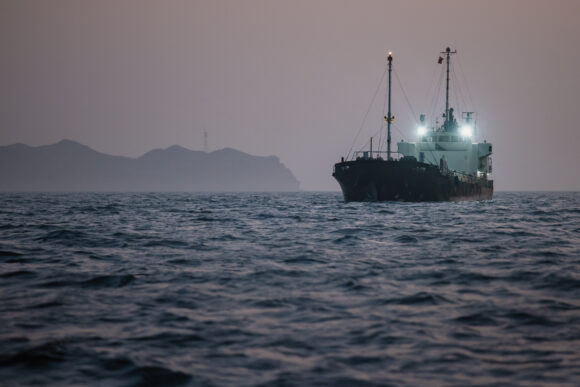
Photograph: A vessel remain anchored off Port Sultan Qaboos in Muscat, Oman; Elke Scholiers/Getty Images
Related:
Was this article valuable?
Here are more articles you may enjoy.
 Kroger Plans to Slash 37% of Corporate Jobs in Next Three Years
  Broad AI Exclusions in Insurance Policies Could Create Uncertainty, Marsh CEO Says
  Europe’s Insurers Cut Coverage of Weather Losses, Report Says
  NYC Restaurants Shut Off Air Conditioning, Close on Sundays as Costs Surge

