

Insurers can drive improvements in climate resilience by rewarding companies that invest to protect their businesses, rather than simply penalizing risky assets with higher premiums, according to a senior executive at Aon Plc.
“Our role as an intermediary is to push insurance partners out of their comfort zone, making sure that the right reward is there for clients who do invest in resilience,” Jennifer Richards, chief executive officer for Asia Pacific at Aon, said Wednesday at the Bloomberg Sustainable Business Summit in Singapore. “We have enough stick. We have got to get the carrot working.”
Read more: Carlyle Rethinks Portfolio Risk to Give Weather Insurance a Bigger Role
A push to further incentivize climate-proofing comes as extreme weather inflicts mounting damage on global infrastructure while insurance coverage lags. Natural disasters generated $260 billion in global economic losses in 2025, with $133 billion of that damage uninsured, according to Aon’s 2026 Climate and Catastrophe Insight report.
With floods, heatwaves and storms increasingly disrupting supply chains and battering physical assets, companies are under growing pressure to fortify their operations — and can also benefit from taking action.
Singapore’s state-owned investor Temasek Holdings Pte. is engaging insurance companies on pricing some policies differently for companies that adopt weather-protection measures, while Carlyle Group Inc. recently developed a risk framework intended to reflect the benefits of asset hardening.
Closing the global protection gap — the share of losses left uninsured — will require overcoming a severe lack of data on the true cost of climate events, according to Richards. There are also wide regional disparities: Asia faces a 90% protection gap, compared with 70% in the US and 50% in Europe, the Middle East and Africa, she said.
Efforts are also underway to harness larger datasets and deploy AI tools to better understand the hidden economic hits from climate extremes — from lost worker productivity, to spikes in health costs — that are impacting corporate balance sheets, Richards said. “It would be very naive to think those costs aren’t currently coming through the system,” she said.
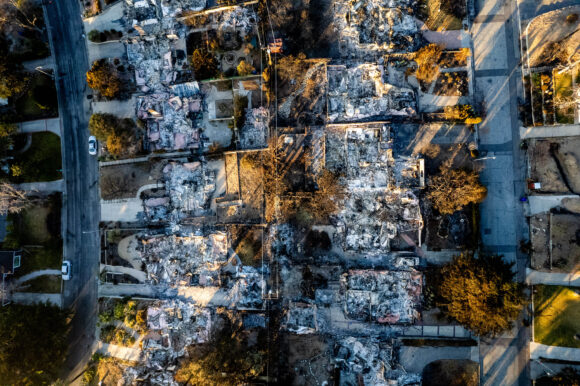
Photograph: Destroyed homes in the aftermath of the Los Angeles fires in January 2025; photo credit: Kyle Grillot/Bloomberg
Related:
- Heat Morphs Into a Major Economic Shock for an Unprepared Europe
- Coffee Trader Seeks to Shield More Vietnam Growers With its Specialty Weather Cover
Was this article valuable?
Here are more articles you may enjoy.
 AI Bubble Risks Worst S&P 500 Crash Since 2008, Strategist Says
  Banking Watchdogs Ramp Up AI Scrutiny as Stability Fears Mount, Sources Say
  Harbor Emerges From Stealth with $10M Funding to Handle AI-Agent Risk
  Hurricane Isaias Reaches Cat 3 Status as Insurers, Adjusters, Property Owners Prepare

