

Bird remains, including feathers, were found on parts of the engine that was damaged on a recent Ryanair Holdings Plc flight, resulting in a passenger being partially sucked into a broken window, the US National Transportation Safety Board said [on Thursday, Aug. 13].
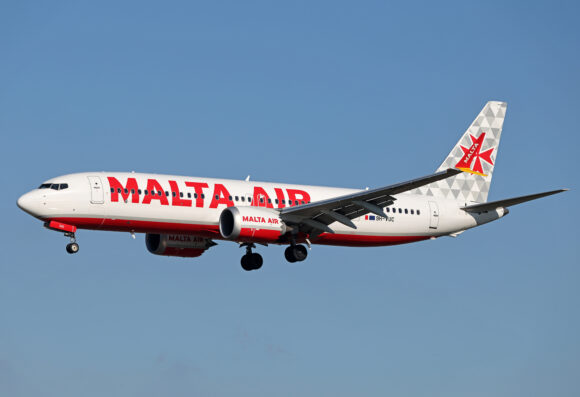
The Boeing Co. 737, operated by Ryanair subsidiary Malta Air and meant to travel from Greece to Germany on July 10, was forced to return to the departure airport after a fan blade broke off from one of the engines. That resulted in fragments striking parts of the aircraft, shattering the window and piercing the fuselage, the NTSB said in its preliminary report.
Other passengers had to help pull the injured passenger who had been sucked into the window back into the cabin, the agency added.
Although the NTSB won’t reach any conclusions on a probable cause until the end of its probe, the investigation’s findings so far point to a bird strike likely causing the fan blade to break, said Jeff Guzzetti, a former accident investigation chief for the US Federal Aviation Administration.
A review of maintenance records showed that the fan blades for the engine had undergone an inspection as recently as May 24, with no findings. The NTSB said flight crews reported four suspected bird strikes to the affected engine in the 12 months preceding the accident. No damage was found by subsequent maintenance, but bird remains were “reportedly found in two of the cases,” the agency said.
The bird remains discovered by the NTSB were taken to the Smithsonian Institution Feather Identification Lab in Washington for examination.
A Ryanair spokesperson said the company won’t comment until the investigation has concluded. Last month, the NTSB warned Ryanair Chief Executive Officer Michael O’Leary to not make public comments about the incident, saying his remarks during an earnings call violated international rules governing aircraft investigations.
In the report, the NTSB said that the flight crew received a “high vibration” alert for the engine while the plane was climbing. The pilots took steps to address the problem, which seemed to briefly abate before increasing again. They then heard a loud bang, according to the report.
Enhancements laid out in three FAA airworthiness directives, and designed to strengthen the engine against vibrations when a fan blade snaps, weren’t incorporated, the NTSB said, noting that the compliance deadline for those directives is July 2028.
“Based on the findings from this accident, FAA and NTSB will reexamine those previous mandates,” Guzzetti said.
Photograph: A Boeing Co. 737, operated by Ryanair subsidiary Malta Air; photo credit: Joan Valls/NurPhoto/Getty Images
Related:
Was this article valuable?
Here are more articles you may enjoy.
 Europe’s Insurers Cut Coverage of Weather Losses, Report Says
  Business Interruption Claims Approach $1M Average, Says Allianz
  Harbor Emerges From Stealth with $10M Funding to Handle AI-Agent Risk
  Florida Supreme Court Approves Board Certification in Insurance Law

