

Behind the scenes activity in the US IPO market is reaching a fever pitch, according to dealmakers, as companies lured by stock markets near record highs prepare to go public.
The industry has been busy lining up underwriting mandates from companies that were forced to delay listing plans due to the US government shutdown. There’s also hope that some of the world’s biggest private tech companies might go public and make 2026 a breakout year after three years of gradual growth in activity.
US IPO volume — excluding SPACs and closed-end funds — is poised to blow past $40 billion this year when Medline Inc. prices its IPO next week. At the top of the price range, it would raise $5.37 billion, making it the biggest debut globally.
The 2025 haul would be a substantial increase over last year’s volume, but still well behind the $100 billion-plus years in 2020 and 2021 when easy money flowed during the Covid-19 pandemic. Few bankers are willing to predict a return to those levels next year, but they do see plenty of companies doing the lead-up work to go public in 2026.
“The velocity of IPO pitch activity is overwhelming, in a good way, across every industry,” said Jim Cooney, Bank of America Corp.’s head of Americas equity capital markets. “All of our teams are flat out.”
The list of possible early-year debutants is more sharply defined than usual, boosting the odds of 2026 getting off to a good start.
There’s a sizable group of companies that are on file to seek US listings, including insurance tech firm Ethos Technologies Inc., crypto ETF specialist Grayscale Investments Inc. and space and defense contractor York Space Systems Inc. With an already-crowded calendar into the end of 2025, most will need to look to next year.
Others that are weighing IPOs but haven’t filed publicly include crypto trading platform Kraken and connected TV platform Alphonso Inc., which have filed confidentially. Billionaire Bill Ackman’s US-listed closed-end fund and equipment rental firm EquipmentShare are also among those considering listings, people familiar with the matter have said.
“You will see the first quarter get off to a good start as a number of companies migrate from the fourth quarter into the first quarter,” said Keith Canton, JPMorgan & Co.’s ECM Americas co-head.
“We are reasonably optimistic, and think it’ll be the fourth year in a row where we’re moving up and to the right from an IPO volume perspective,” he said.
Private Players
The biggest swing factor for next year is whether high-profile tech companies such as SpaceX — which have raised copious sums of private capital and now boast massive valuations — will pursue long-awaited IPOs.
Such moves are far from guaranteed, but there’s a growing sense of inevitability that at least one or two big names will see the benefits of going public.
“It feels like there needs to be one of those ‘oh my gosh’ events in 2026,” said Clay Hale, Wells Fargo & Co.’s co-head of equity capital markets.
“This is just a probability exercise,” he said. “At least one of them is more likely to go public when you have 20 of these companies rather than five.”
Drawing an investor audience shouldn’t be hard for these companies, but the struggles of some newcomers could make some investors wary about IPOs in general as 2026 gets under way.
The dismal debuts of StubHub Holdings Inc., Navan Inc. and Gemini Space Station Inc. have contributed to IPOs as an asset class underperforming the S&P 500 Index this year. That sits uneasily with the notion that companies that go public are supposed to have cheaper valuations than their listed peers.
“IPO discounts are going to remain toward the higher end of recent ranges to start the year,” said Steven Halperin, Moelis & Co.’s head of public equity. “Investors will be very careful at the start of the year and banks need to get IPO product to generate alpha for investors.”
This means there will be a focus on getting the pricing of IPOs right, according to JPMorgan’s Canton.
“There have been some massive home runs but also some IPOs that haven’t performed as well as expected,” he said. “While that won’t impact overall investor demand to participate in IPOs, it may start to show up in increased investor discipline around valuations.”
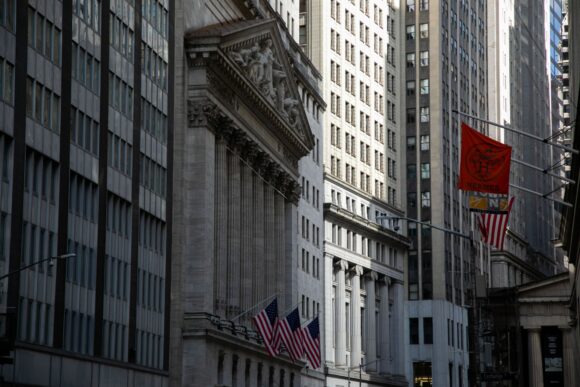
Photo: The New York Stock Exchange (NYSE) in New York. Photographer: Michael Nagle/Bloomberg
Topics USA
Was this article valuable?
Here are more articles you may enjoy.
 Sedgwick: Property Claims Face Delays, Are Growing More Complex
  Gulf Coast on Alert for First Hurricane of 2026
  Another Crane, Then Another, Collapses Onto Home in Fort Lauderdale
  Union Pacific Railroad Fined $304K for Firing Employee During Severe Weather

