

Extreme weather will likely spur more than $20 trillion in global spending over the next decade, boosting sales and earnings for reinsurers and companies involved in energy efficiency and climate security, according to analysts at Bloomberg Intelligence.
Returns for a group of 275 companies focused on environmental adaptation and mitigation beat the broader market by almost 32 percentage points in the year through April 19, Bloomberg Intelligence analysts Andrew John Stevenson and Eric Kane wrote in a report published Tuesday. Spending on climate adaptation has helped drive gains for companies including BWX Technologies Inc., RenaissanceRe Holdings Ltd., Woodward Inc. and Dycom Industries Inc., they wrote.
Costs from extreme-weather events totaled $1.4 trillion last year, equal to about 1.2% of global gross domestic product, the BI analysts said. The findings underscore the economic toll of climate change and the opportunities it creates for companies that help customers mitigate and adapt to its effects. Last year alone, there were 23 weather events in the US that caused at least $1 billion of damages, the third-highest annual total on record, according to research nonprofit Climate Central.
While several sectors are poised to benefit from climate-related spending, other parts of the economy are likely to bear the brunt of climate-change costs. Bloomberg Intelligence identified municipalities and consumers as among the most exposed. The research also warned that federal support for disaster recovery could fall to levels that jeopardize rainy-day funds in 26 states, potentially putting pressure on state and local government credit ratings.
Insurance premiums have risen 7 percentage points faster than inflation since 2017 as extreme-weather events become more costly, Stevenson and Kane wrote. The trend is redirecting billions of dollars from more productive uses of capital, while putting pressure on municipal growth, public health spending and homebuilder margins.
Fitch Ratings published a report earlier this year highlighting how climate risk is jeopardizing the credit rating for dozens of countries, citing more frequent weather shocks that are making it harder to service debt, especially in smaller nations.
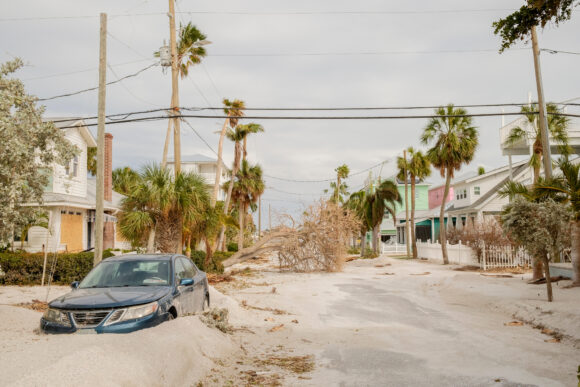
Photo: A downed tree and blocked-in vehicle after hurricanes Helene and Milton in St. Pete Beach, Florida in 2024. Photographer: Tristan Wheelock/Bloomberg
Was this article valuable?
Here are more articles you may enjoy.
 Agency Network SIAA Acquires MGA Canopy Specialty Insurance
  McDonald’s Hit With Class Action Alleging AI-Powered Menu Price-Fixing
  The Big Data/AI ‘Revolution’ Is Driving Up Verdicts, Settlements as Plaintiffs Buy In
  Another Crane, Then Another, Collapses Onto Home in Fort Lauderdale

