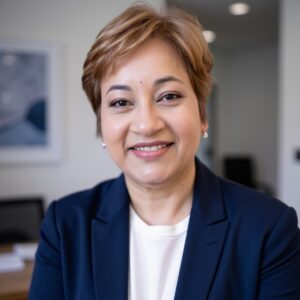
For more than four decades, I have worked across the commercial property/casualty insurance ecosystem. Over those years, I have watched our industry attract people, develop underwriters, transfer knowledge, promote talent, lose experienced practitioners, and adapt as the way we work has changed.
Five years ago, I completed doctoral research examining a talent vulnerability I had already been watching develop from inside the industry.
The concern was not whether commercial P/C knew how to develop underwriters. We did—and we still do.
The concern was timing.
As experienced practitioners moved toward retirement, would enough people be attracted to the industry, developed, and ready in time to assume the responsibilities that needed to be performed?
My research included a pre-mortem examining what could happen if relevant aspects of the talent system remained insufficiently changed. It was a warning about a possible condition—not a prediction of what inevitably would occur.
Five years later, I went back to look again. What I found was plenty of activity—and a harder question.
There is visible activity
The commercial P/C talent environment cannot fairly be described as though nothing has happened.
Insurance-related academic programs remain active, and some programs show meaningful enrollment growth. That is encouraging. But growth in an academic program does not tell us how many students eventually enter Commercial P&C, choose underwriting, or develop into practitioners ready for underwriting responsibility.
Organizations are also paying explicit attention to development and succession. Contemporary evidence includes examples in which potential successors are assessed not simply by whether they have been identified, but by expected time-to-readiness.
That distinction matters. A name on a succession plan tells us that someone has been identified. It does not tell us that the person is ready.
Evidence also shows deliberate efforts to structure developmental experiences as work arrangements change. Early-career practitioners may be given intentional exposure to experienced colleagues, brokers, field activities, workshops, and other learning opportunities.
We should not assume these approaches are occurring everywhere, nor does their existence establish their effectiveness. But they demonstrate that some organizations are paying explicit attention to how developmental exposure occurs as the work environment changes.
Talent is moving—but movement is not creation
Commercial P/C is an ecosystem. Insurers, reinsurers, agents, brokers, managing general agents (MGAs), and other organizations draw upon overlapping pools of talent and expertise.
When one organization hires an experienced underwriter from another, the hiring organization may have solved an immediate need. But commercial P/C did not necessarily gain another experienced underwriter.
Evidence documents underwriting talent moving among parts of the P/C ecosystem.
At an organizational level, that movement can matter enormously. At an ecosystem level, however, it may simply change where experience sits. That is why hiring activity alone cannot tell us whether the broader talent vulnerability is being resolved.
AI is changing the developmental environment
AI adds another dimension. Technology and automation are not new to insurance. What is relevant now is the increasing integration of artificial intelligence (AI) into underwriting workflows and documented examples of associated work redesign.
Evidence from commercial P/C includes a case in which AI reduced manual data-entry work while underwriting-assistant roles were redesigned toward greater end-to-end responsibility and a pathway to higher underwriting positions.
That may be a positive development. But we should not jump from work redesigned to capability improved. Nor should we assume the opposite.
A better developmental question is: What did people learn through the work that changed—and where will that learning occur now?
Some routine work may contribute little to underwriting development. Other tasks may expose developing practitioners to applications, forms, coverage language, systems, risk information, workflows, and the context surrounding underwriting decisions.
We should not preserve work simply because people have always performed it. But as technology changes the work, we should understand what developmental exposure is being removed, retained, transformed, or deliberately replaced.
Efficiency and development are not necessarily opposing objectives. They are simply not the same objective.
Activity is not the same as readiness
This is where the evidence became particularly interesting to me. We can see academic activity, recruiting, hiring, training, mentoring, succession initiatives, workforce movement, changing work arrangements, and AI-enabled redesign.
All of those things matter. But none, by itself, answers the harder question: Do we have enough people who are actually ready to perform the underwriting work the industry requires?
Public evidence becomes much thinner as we move from measuring activity toward answering that question.
That does not mean companies are not measuring readiness internally. Many may be. Nor does it establish that commercial P/C lacks sufficient underwriting capability. The evidence I reviewed does not support that conclusion either.
It means that from the available public evidence, we cannot tell whether the activity we can observe has produced sufficient readiness and underwriting capability across the ecosystem.
That distinction matters.
Filling the chair may solve only the visible problem
Organizations have to keep operating.
Someone retires. Someone leaves. Someone is promoted. Business continues. The chair has to be filled.
Organizations respond by promoting internally, hiring externally, redistributing responsibilities, retaining experienced practitioners, redesigning roles, or using technology to absorb portions of the work. Those actions may solve an immediate problem. But systems rarely allow us to change one thing without affecting something else.
Promoting someone internally may fill one chair while creating another opening behind that person. Hiring an experienced practitioner may solve one organization’s need while moving that experience from somewhere else in the ecosystem.
Redistributing responsibilities may maintain output while changing developmental or mentoring capacity. Retaining an experienced practitioner may preserve access to expertise without creating additional experienced practitioners. Automating work may increase capacity or efficiency while changing the experiences through which developing practitioners learn.
None of these consequences is inherently good or bad. But they matter.
Filling a position and maintaining the capability required by the work are not necessarily the same thing.
A filled chair tells us that someone occupies the role. It does not, by itself, tell us whether the person is ready for all of the responsibilities associated with it. And it does not tell us what changed elsewhere because of the solution we chose.
That is where a systems view remains useful. When we solve the immediate problem, we should also ask: What else did our solution change?
A more precise leadership question
Five years ago, my concern centered on whether commercial P/C was preparing in time for a talent vulnerability that demographic change could expose. Five years later, I would sharpen—not replace—that concern.
Rather than asking only: What are we doing about the talent gap? I would add:
- What underwriting work must our organization be capable of performing?
- What knowledge, competency, experience, and judgment does that work require?
- Who is ready to assume those responsibilities now?
- Who is developing toward them?
- How do we know when they are ready?
And when we promote, hire, reorganize, retain, or automate: What problem did we actually solve—and what else did our solution change?
These questions move the conversation beyond headcount, programs, named successors, and occupied chairs. They focus attention on readiness for the work that must actually be performed.
Five years later
Five years after completing my doctoral research, I would not describe the commercial P/C talent system as unchanged. There is visible activity across attraction, development, succession, workforce movement, and work design. Some specific changes can be documented.
But activity does not establish readiness. And a filled position does not necessarily establish capability continuity.
The available public evidence does not tell us whether sufficient underwriting capability exists across the commercial P/C ecosystem. It does not tell us that sufficient capability is absent either.
So perhaps the question worth carrying into the next leadership conversation is not simply: Are the chairs filled? It is: Do we have people ready to perform the underwriting work we need—and how do we know?
And once we act: What else did our solution change?
Sources
• Khan, B. R. (2021). System View of the Talent Gap in the Commercial Property and Casualty Insurance Sector: A Pre-Mortem. Doctoral dissertation, Thomas Jefferson University.
• University of Iowa, Tippie College of Business. (2025, December 4). Tippie Risk Management and Insurance Program Now Country’s Third Largest. This supports the article’s observation that enrollment growth is occurring in some insurance-related academic programs.
• Lloyd’s Market Association & Lloyd’s. (2025, November 24). Lloyd’s and LMA Host Joint Underwriting Summit, Highlighting Declining Pipeline of Female Underwriting Talent. This supports the distinction between identifying successors and measuring expected time-to-readiness within a defined underwriting population.
• Contant, J. (2024, June 27). Rethinking Knowledge Transfer as Experienced Underwriters Retire. Canadian Underwriter. This supports the discussion of deliberately structured developmental exposure under changing work arrangements.
• Conning. (2023, July 24). U.S. MGA Market Grows Swiftly, Exceeds $85 Billion in Premium in 2022. This supports the observation concerning movement of underwriting talent from insurers and brokers to MGAs.
• Lamm, J., Leiman, A., & Carr, M. (2026, January 27). AI and the Insurance Workforce: Enabling the Human-AI Organization. PwC. This supports the discussion of AI-associated work redesign, developmental exposure, and the Commercial P&C underwriting-assistant case.
Topics Commercial Lines Talent Training Development Property Casualty
Was this article valuable?
Here are more articles you may enjoy.
 Viewpoint: The ‘Unbundled’ Insurer Emerges in Age of AI as Value Chain Fragments
  India Insurance Regulator Eyes 2027 Start for Commission Caps
  PVC Pipes Swept Away by Helene Still Dominate Cleanup of NC River
  Hordes of Teens on E-Bikes Force Suburbs to Rewrite Road Rules