

September is usually the month when deadly Atlantic hurricanes menace coastal communities from Nicaragua to Newfoundland, but the world’s second-largest ocean hasn’t been this docile since 1941.
Dry air, a stable atmosphere and storm ripping wind shear are suppressing every system that emerges, fulfilling predictions that a strong El Niño will make it a quiet hurricane season. So far this year, the Atlantic has produced five short-lived tropical storms and no hurricanes.
“We’re crushing all sorts of shear records this year,” said Phil Klotzbach, lead author of Colorado State University’s annual seasonal forecast. “The models are so anemic on storm development coming up in the next 10 days too.”
In his two-week outlook — typically the most active time for Atlantic hurricanes and tropical storms — Klotzbach said there is a 97% chance activity will be well below average. The statistical peak of the season is Sept. 10, the one day when a named storm is almost always certain to be prowling the ocean or growing out of a patch of thunderstorms.
The tranquil Atlantic is good news for the millions of people who live along the US East and Gulf coasts, or on Caribbean islands. It also means fewer disruptions for the oil and gas export terminals that line the Gulf of Mexico.
Hurricanes are being held back by wind shear — when winds blow at varying speeds or directions at different altitudes, potentially tearing apart developing storms. Stable air is also suppressing tropical waves moving west from Africa, which carry thunderstorms that can become the building blocks for hurricanes.
Both obstacles are tied to El Niño, which promotes wind shear across the Caribbean and sinking, stable air over the central Atlantic.
In addition to tracking storm numbers, many forecasters and researchers use something called accumulated cyclone energy, or ACE, which is tallied by comparing the storms’ longevity and energy.
“We currently have an ACE of 4.4,” Klotzbach said.
That’s the lowest since 1941, which had just six storms, including more ferocious tempests than 2026 has generated so far, according to National Hurricane Center records.
So far this year, tropical storms Arthur, Cristobal and Dolly only lasted two days each, while Edouard made it to three days and Bertha five days. The strongest winds any of the storms produced was 50 miles (80 kilometers) per hour from Edouard and Bertha, both of which drenched the Texas coast.
“Of course, I’m sure we’ll eventually at least get one hurricane this year,” Klotzbach said. “But it will more likely come out of the subtropics than the deep tropics given how strong the shear is forecast to remain.”
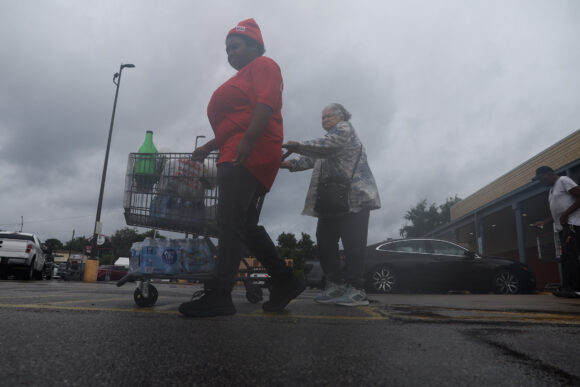
Photo: An employee helps a customer with her groceries as Tropical Storm Edouard approaches Port Arthur, Texas on Sept. 1. Photographer: Antranik Tavitian/Getty Images North America.
Was this article valuable?
Here are more articles you may enjoy.
 Viewpoint: The ‘Unbundled’ Insurer Emerges in Age of AI as Value Chain Fragments
  NY City Accuses Law Firm of Running Injury Claims Fraud Operation
  Hurricane Isaias Reaches Cat 3 Status as Insurers, Adjusters, Property Owners Prepare
  Uninsurable Future: Managing the Climate-Change-Fueled Home Insurance Crisis

