

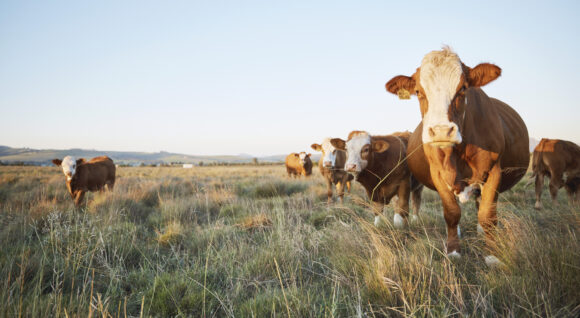
Precisely two weeks prior to the November 3 midterm elections, the administration announced the creation of a new government program for farmers, the US Department of Agriculture’s “Harvest Fuel Relief Program.” This provides $8 billion in federal subsidies to farmers, ostensibly to offset financial pain caused by diesel fuel costs that have nearly doubled since last year.
Diesel fuel cost has risen from $3.62/gallon in October 2025 to $6.31/gallon in October 2026, a 74% increase.
This program, like several government cash handout initiatives before it, has connections with the deep well of crop insurance funding. Financing for the Harvest Fuel Relief Program, as well as for another handout action, the Farmer Bridge Assistance Program, comes from the Commodity Credit Corporation, which also funds the federal crop insurance program.
The proximity of the introduction of the Harvest Fuel Relief program to the midterms may not be coincidental. Our analysis of cash outlay programs shows that half of the federal programs that hand out largesse were created or initiated in the handful of weeks before the elections, in September and October, 2026. Approximately half the programs introduced since early 2025 also have some connection to insurance.
The administration’s knee-jerk habit of throwing money at a problem may bring a short-term fix, but it fails to address the underlying source of the problems. Whichever party gains a majority in the House and the Senate should review the mountain of cash disbursement programs, and make cuts where disbursements are not required. Cut wherever possible. Fiscal soundness demands it.
Among the numerous cash subsidy programs that send money directly to farmers, soldiers, the elderly, the newborn, programs for farmers may be the least necessary. In the main farm families are not struggling financially. To be sure, median farm household income is 23% higher than the national median, and farm family net worth is seven times higher than the national median.
Farming is not the only industry feeling economic pain from higher diesel fuel to power its machinery. When the price of diesel goes up, profits are constrained for several other economic sectors as well. These include trucking, construction, mining, emergency services (hospital backup generators), paper manufacturing, and the military. But farming gets the most attention in Washington, possibly because farm interests spend approximately $180 million annually to lobby Washington and individual states.
| Median Annual Farm Household Income | Median Annual Nationwide Household Income | Median Farm Household Net Worth | Median National Household net worth | |
| 2025 | $108,000 | $87,000 | $1.4 million | $216,000 |
Source: USDA
The $8 billion Harvest Fuel Relief Program is just the most recent initiative of many introduced since 2025 to direct more money into farmers’ pockets. A cynical explanation of the government’s vast handouts would be that they are attempts to buy votes. Below we list some of the most prominent such programs:
| Program | Date Introduced or Announced | Program Description | Insurance Connection |
| Harvest Fuel Relief Program | Oct 19, 2026 | $8 billion to farmers | Yes |
| ACA Tariff Rebate | Oct 1, 2026 | $500 ACA refund checks to 950,000 ACA enrollees | Yes |
| Tariff Rebate Act | Extended to late 2026 | Issues tariff-related revenue to families | No |
| Medicare Part B | Sept 30, 2026 | 20+ million seniors enrolled in Medicare Part B receive one time $90 payment. | Yes |
| ACA Refund Check | Sept 30, 2026 | administration sent $500 checks to 950,000 Americans who purchased unsubsidized health insurance through ACA | Yes |
| Farmer Bridge Assistance Program | December 2005 | $11 billion to row crop farmers and $1 billion for specialty crops and sugar | Yes |
| Trump Dividend | Announced Sept 9, 2026 | $5,000 to every adult if both parties win in congressional midterm elections | Yes |
| 1776 Warrior Dividend | December 2025 | $1,776 for tax-free military housing stipend for 1.5 million soldiers | Yes |
| DOGE Checks Concept | 2025 | proposed returning 20% of federal spending cuts made by DOGE; and 20% more applied to the national debt. DOGE did not achieve savings | No |
| Trump Accounts | July 2025 | $1,000 tax-free IRAs for children born during this term | Yes |
Source: Public announcements, author’s research
The Congressional Budget Office (CBO) analyzes administrative actions such as the relief and subsidy programs shown above to determine whether they are budget-neutral, which means that they do not raise the debt, and that there are offsets in the form of additional revenue generated to pay for the programs. The CBO has concluded that direct cash disbursement actions are not budget-neutral, but add hundreds of billions of dollars to the deficit.
Instead of looking for ways to hand out money to all and sundry, the administration should be targeting cuts. The CBO has found that there is so much fat in the federal crop insurance program that it can be reduced by $46.7 billion over a 10-year timeframe if appropriate cuts are made.
What’s the answer? Follow the law, and advocate for free markets, not free money.
Topics Agribusiness
Was this article valuable?
Here are more articles you may enjoy.
 Miami Beach Buildings Sinking at Different Rates, Due to Construction, Study Finds
 King Tides Inundate Streets and Flood Homes and Businesses on Both US Coasts
 More Florida Insurers Announce Rate Cuts for Auto, Homeowners, Condo Units
 PHP Security Flaws Highlight Potential Systemic Risk Aggregation for Cyber Insurers