

Billion-dollar wildfires in the US have become more than five times as frequent and 10 times as costly over the past two decades, according to a new analysis of the nation’s most destructive fires.
The analysis, from Climate Central, a nonprofit climate research and communications group, looks at individual fires each causing at least $1 billion in damage. Earlier federal estimates combined losses from many fires that occurred during the same wildfire season into a single disaster.
Thirty-one individual wildfires have crossed the $1 billion threshold since 1980, together costing nearly $186 billion and destroying more than 79,500 structures, the analysis finds. An estimated 373 people died in the fires.
The surge reflects both a changing climate and communities’ choices about development, said Adam Smith, the scientist who led the project. “Either way you look at it, the rise in damages relates to human activities,” he said.
From 2007 through 2026, the US experienced 26 billion-dollar wildfires, compared with five during the previous 20 years. Inflation-adjusted losses jumped to $170 billion from $15.6 billion. More than three-quarters of the billion-dollar fires have occurred since 2016, including the $36.3 billion Palisades fire in Los Angeles in 2025 and the $6 billion Lahaina fire in Hawaii in 2023.
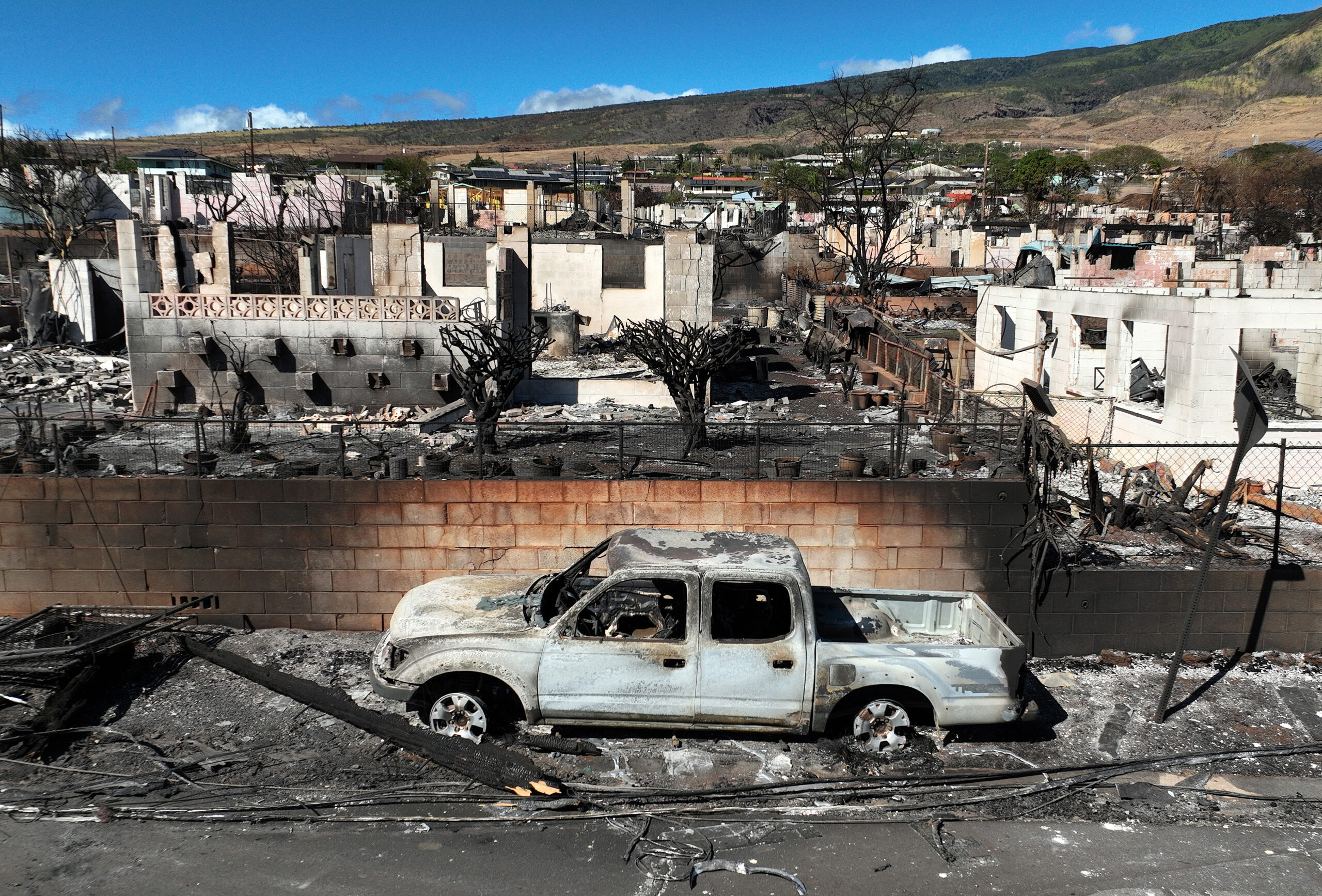
Burned cars and homes in a neighborhood destroyed by a wildfire in Lahaina, Hawaii on 2023. Photographer: Justin Sullivan/Getty Images
Climate change is contributing to conditions that increase the likelihood that fires ignite and spread, Smith said. At the same time, increasingly valuable real estate and rising reconstruction costs in areas where communities meet wildlands mean there is more to lose when fires occur.
California dominates the tally, accounting for 23 of the 31 billion-dollar fires and $167 billion of the losses. The others struck in Hawaii, Colorado, Oregon, New Mexico, Tennessee, Texas and Washington.
The analysis changes the way the economic toll of wildfires is measured, looking at fires separately instead of combining all the fires during one season into a single collective disaster. The change produces a more detailed picture but also a lower overall price tag. Under the previous approach, wildfire losses totaled $221 billion, compared with about $186 billion using the new one. The older method included losses from many smaller fires that don’t individually meet the $1 billion threshold.
For decades, the National Oceanic and Atmospheric Administration (NOAA) maintained the US Billion-Dollar Weather and Climate Disasters database, tracking the nation’s most expensive hurricanes, floods, droughts, wildfires and other events.
NOAA discontinued the project in 2025. Climate Central began operating the database that October, with Smith, who had spent 15 years as lead scientist for the NOAA project, continuing to helm the research.
Climate Central’s goal was to continue the federal dataset, Smith said, expanding the detail available on wildfires while retaining the methodology for assessing other types of disasters. Next year, the group plans to go further, identifying individual fires that caused at least $100 million in damage going back to 1980.
Including the newly separated wildfire events, Climate Central counts 453 billion-dollar US weather and climate disasters since 1980, with total losses of $3.2 trillion.
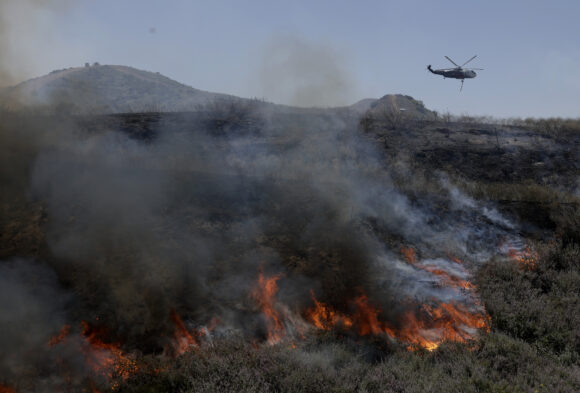
Top Photo: A firefighting helicopter flies over the Sandy Fire as it burns through the area in Simi Valley, California on May 18.
Topics USA Catastrophe Natural Disasters Wildfire
Was this article valuable?
Here are more articles you may enjoy.
 Nvidia-Backed Fireworks AI Notifies Customers of Its Second Hack in Weeks
 Archdiocese of NY Finalizes $800M Fund for Sex Abuse Survivors; Avoids Bankruptcy
 Insurtech Lemonade Posts $43.7M Loss for Q3
 Georgia, Florida Insurers Facing New Scrutiny, Regulations After Election


