

Companies competing for workers to build data centers are finding that a motel room with sluggish Wi-Fi isn’t much of a draw. Try free steaks and golf simulators.
As data-center development has exploded with the rise of artificial intelligence, competition for water and power supplies is pushing construction further into rural areas that often lack the housing and infrastructure to support the hundreds or thousands of temporary workers needed to build hulking warehouses of computer servers. That’s forcing developers to increasingly lean on a stopgap solution that was popularized during the shale-oil boom of the 2010s: sprawling temporary villages known as man camps.
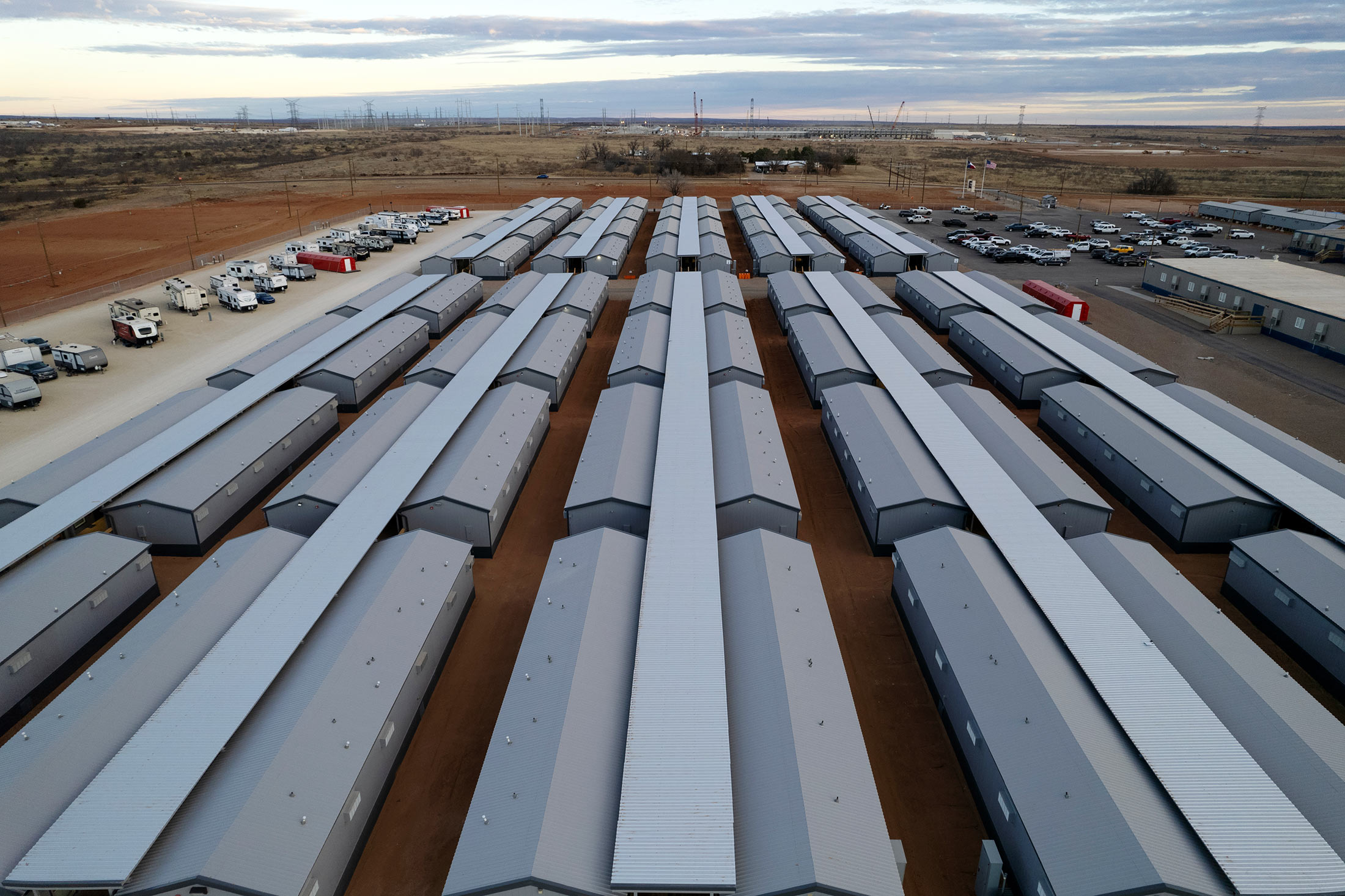
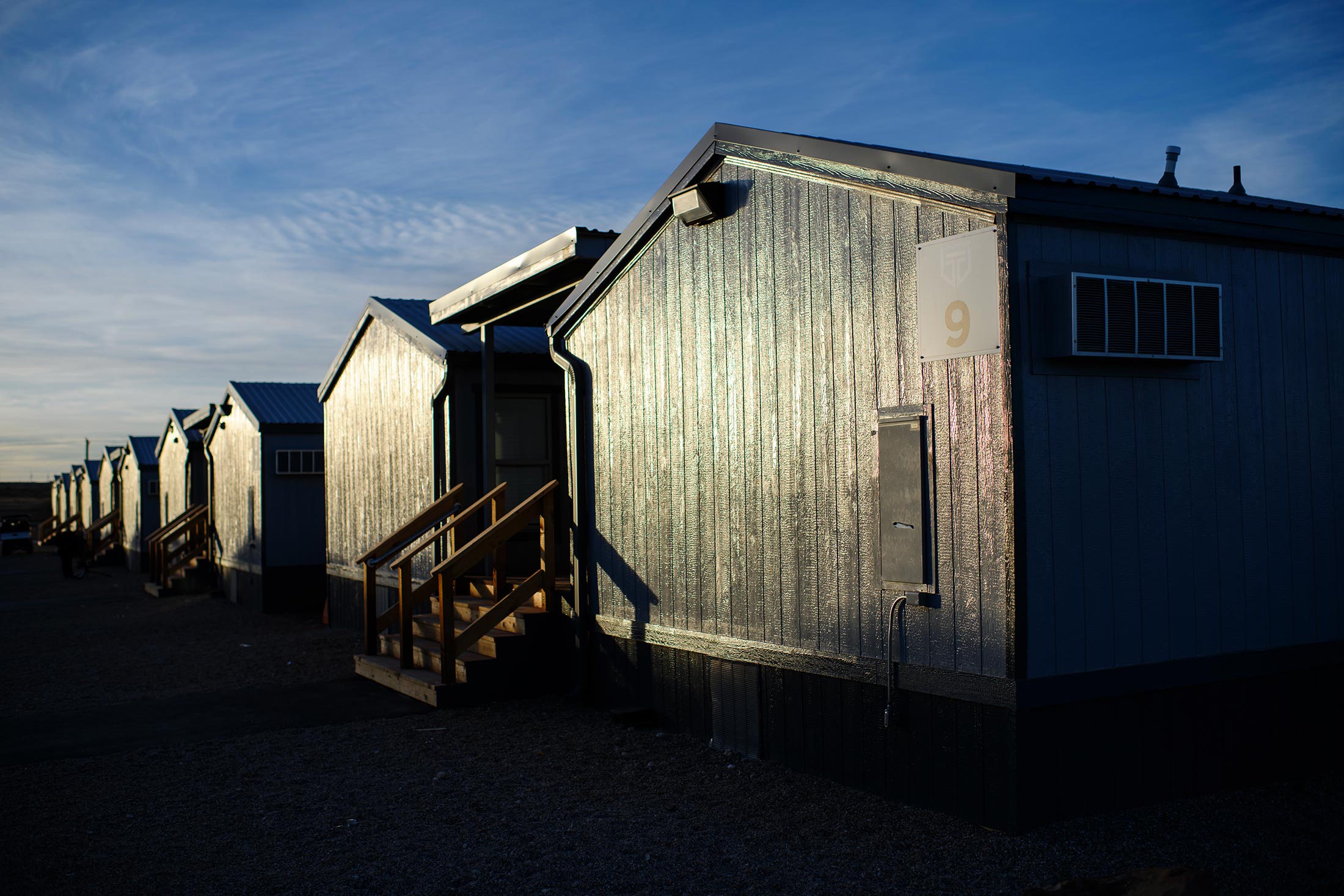
These temporary housing villages can vary from wood-framed two-story apartment buildings to containerized modular homes or trailer parks supplied with electricity and water. But to lure in-demand electricians, welders and pipefitters, developers are going the extra mile and offering game rooms, rib eyes and shuttle rides to work. That’s fueling a lucrative niche for companies including Target Hospitality Corp. and Civeo Corp. that specialize in mobile housing.
It’s effectively a back-door play for a share of what Bloomberg Intelligence estimates is $700 billion of projects in the planning stage and another $160 billion already underway throughout the US.
“It’s the largest, most actionable pipeline I’ve seen,” said Troy Schrenk, the chief commercial officer at Target Hospitality, which is building “workplace hubs” — its preferred term over the more colloquial man camps — in Texas and Nevada. The sites aren’t the epitome of luxury, but they sure beat what Schrenk calls “Hotel F-250” — sleeping in a vehicle and spending a per-diem allowance on food.
Typically, the construction companies that work with Target Hospitality offer housing, meals and amenities to their employees for free as long as they’re working. It’s an additional lure for tradespeople already enjoying significant pay hikes — with some data-center electricians making more than $150,000 a year.
While Target Hospitality also does work for the government on immigration detention, it sees the data-center buildout as its most lucrative growth opportunity. Its new unit tied to data centers has signed three projects it expects to generate $331 million over two years.
Sand and Mesquite
That includes a $43 million agreement announced in August to build and operate a 250-bed community to support Galaxy Digital Inc.’s conversion of a former Bitcoin mining facility in Dickens County, Texas, into a 1.6 gigawatt data center. Target Hospitality has since signed two additional contracts to expand the camp, adding 800 beds that promise another $89 million in revenue.
In all, Target Hospitality projects it can house 1,500 people at the site near the unincorporated community of Afton, which would nearly double the population in a county that’s 900 square miles of sandy soil and mesquite trees east of Lubbock.
Before Galaxy moved in, the economy centered around agriculture, with modest cattle, cotton and wheat sales. Galaxy is now the largest employer and taxpayer, and the influx of capital has transformed the county’s balance sheet. Local sales tax receipts almost tripled in just three years, hitting $494,000 last year.
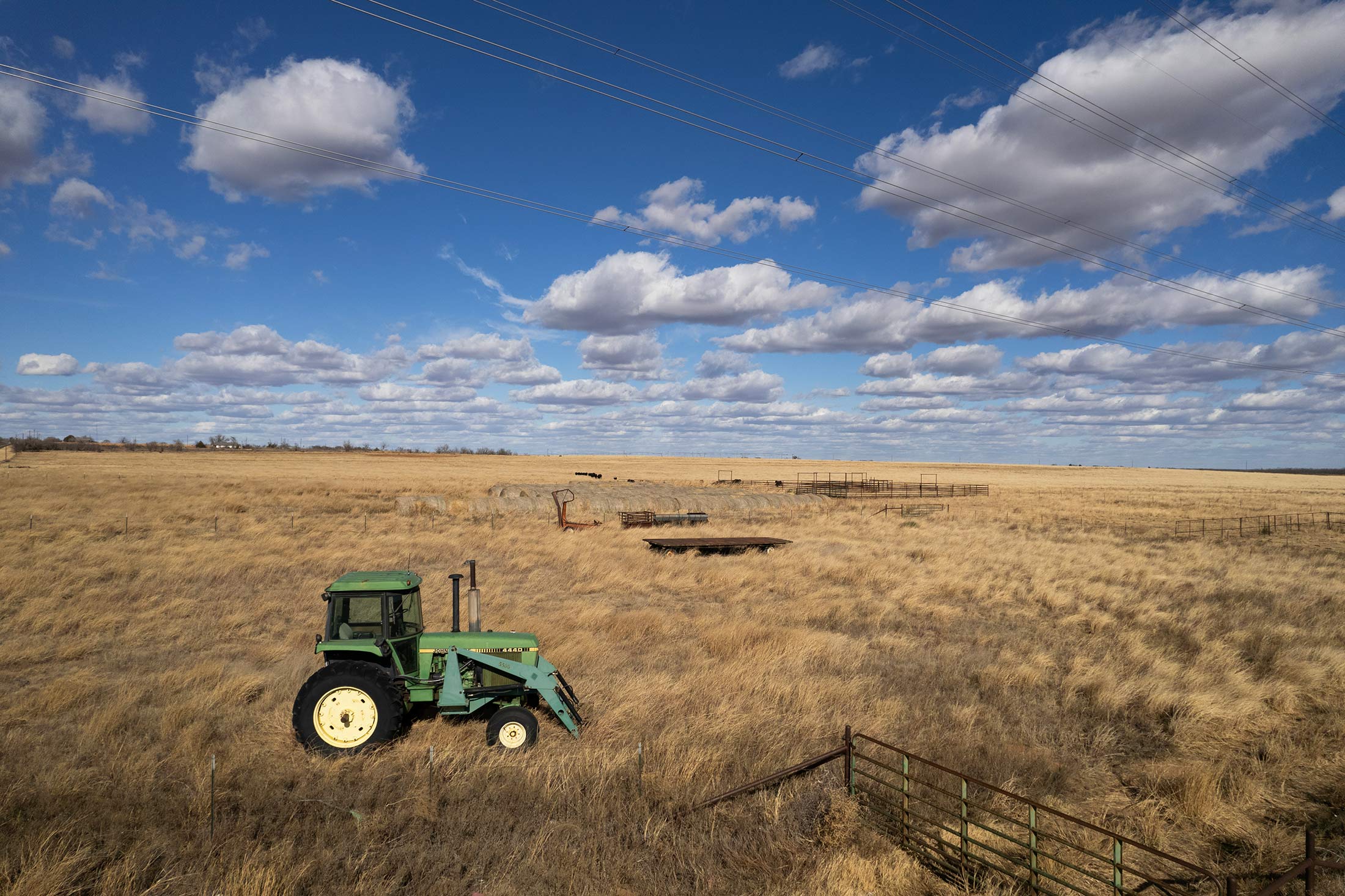
Still, the boom can be “overwhelming,” said Dickens County Judge Kevin Brendle, the top elected official. Locals aren’t used to long lines at the grocery store or gas station. Aging byways like Farm-to-Market Road 193 buckle under the flow of heavy vehicles.
“It’s a little bit aggravating for people who’ve been here a long time,” Brendle said.
Brendle also acknowledges some of the gains may be short-lived. When construction finishes and crews move to the next site, firms like Target Hospitality can pack up and ship their homes to new developments.
For many of the housing providers, the projects hearken back to their work during the shale oil boom, when small villages popped up alongside drilling sites across the Permian Basin. Some of the man camps, which despite their name are generally open to women, were known as rough places, with studies linking them to increased crime.
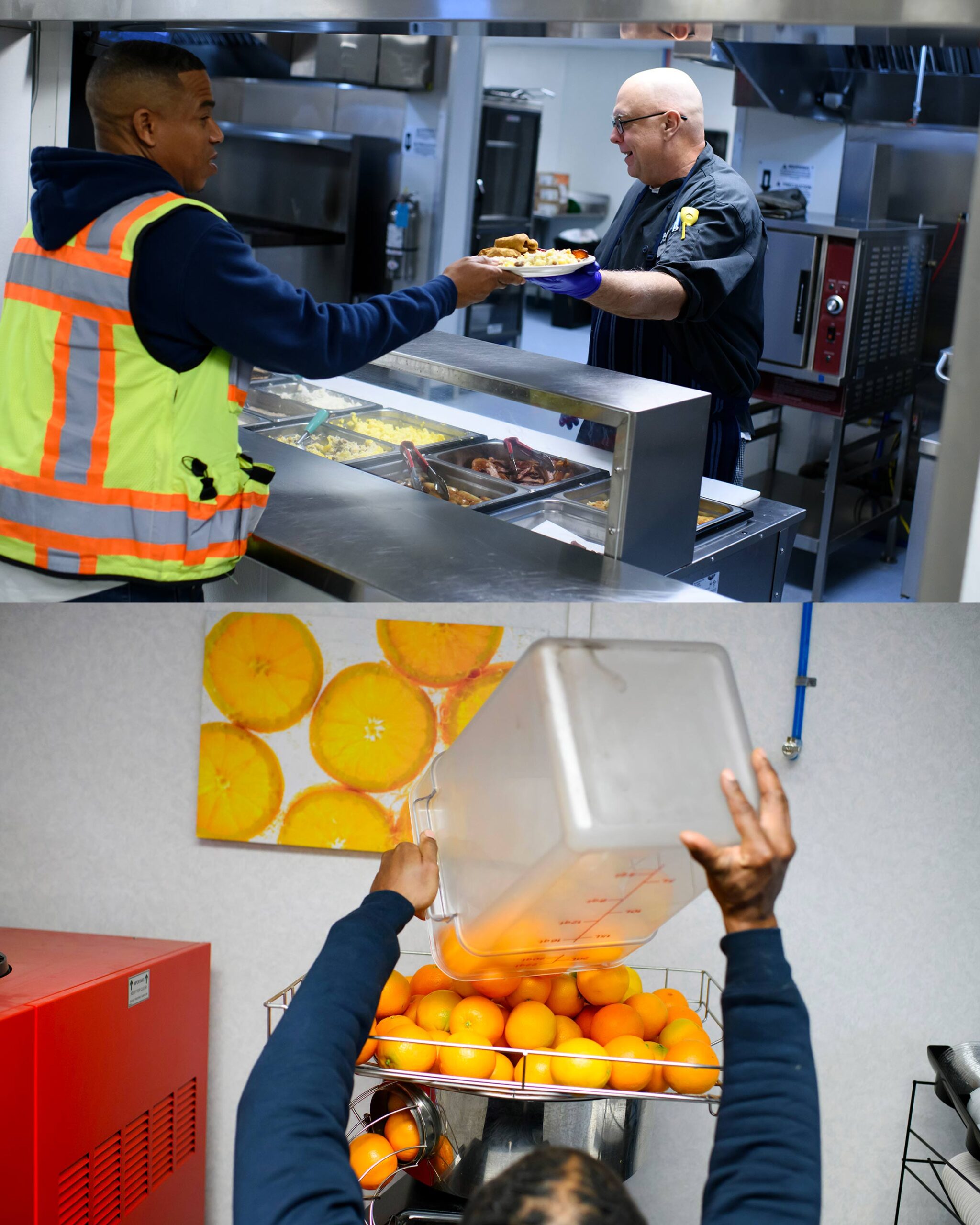
But Target Hospitality and other developers say the communities they’re building are different. From above, the site in Dickens County looks like an Excel spreadsheet, with long rows of gray housing units laid out on a rectangle cut out from the surrounding farmland. There’s a gym, a laundromat and game rooms with ping-pong and a golf simulator. The communal dining hall resembles a campus cafeteria with hot-sauce caddies and high-top tables.

Target Hospitality cooks on a nine-week rotating menu, offering fresh-squeezed orange juice daily and grilled steaks on demand, though orders of rib eyes tend to cool off once the novelty subsides.
The data-center boom has helped backfill business Target was expecting to receive under a $168-million-a-year contract to house and feed undocumented immigrants that was canceled after border crossings plummeted beginning in 2024. The company also owns the Dilley Immigration Processing Center in Texas that the government uses to hold migrant families. While CoreCivic Inc. runs most of the operations there, Target Hospitality provides the food. Court filings from a lawsuit alleging inhumane treatment of detained minors show that some families have complained of food with mold and worms — a striking contrast to the fare advertised at the man camps.
Target Hospitality, which isn’t named as a defendant in the lawsuit, declined to comment on those claims. CoreCivic has defended the quality of the food offerings. The Department of Homeland Security has denied allegations of poor conditions.
Luring Labor
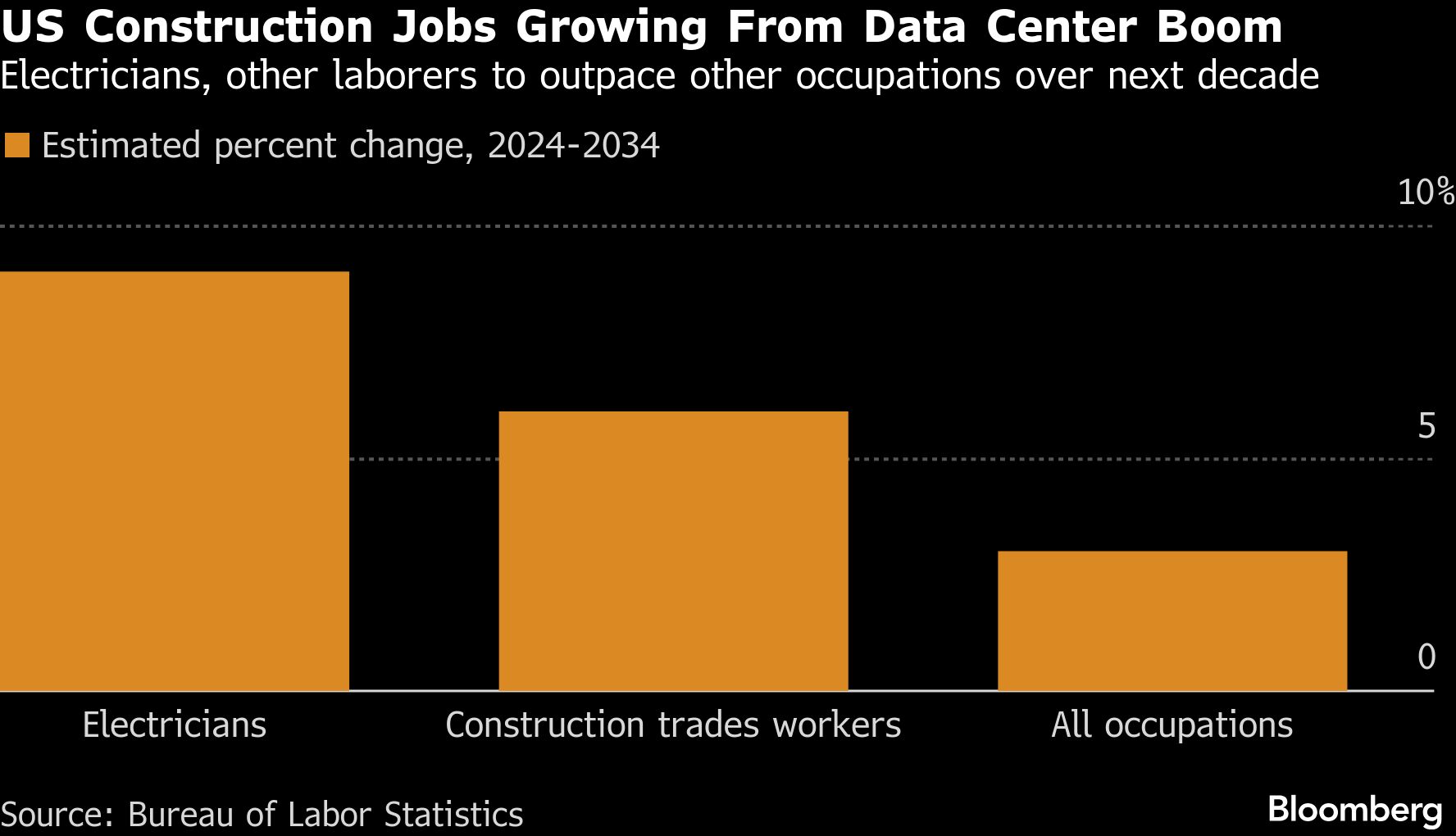
The effort to lure workers with stepped-up accommodations comes as employment in construction trades is expected to grow 6% from 2024 to 2034, double the projected growth for all jobs, according to the Bureau of Labor Statistics. Roles for electricians, a bottleneck for AI construction, are expected to expand 9% in that time.
As data-center projects increasingly push into more remote areas, developers are having to get more creative to lure workers to construct these sprawling facilities, said Charles McCarthy, president of mission critical projects for Suffolk Construction, a major data-center developer.
In rural stretches of places like Texas and Indiana, “there’s not a whole lot out there. So you have to provide your own housing to get the workers,” he said.
The industry’s lifestyle has become akin to a traveling circus of sorts, with specialized workers living away from their families for long stretches and bouncing around the country to different sites.
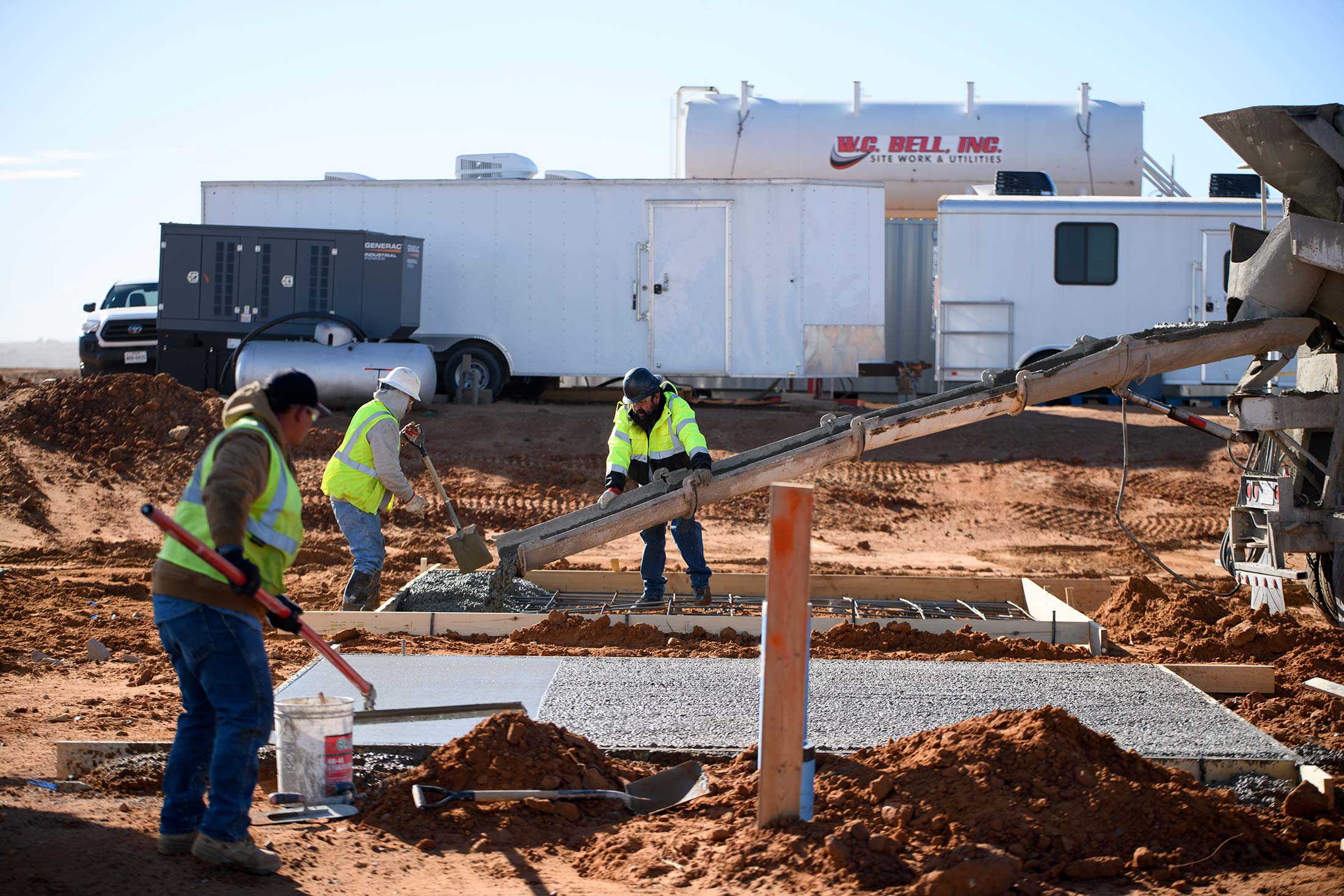
“We’re looking at husband-and-wife teams because they’ll travel together,” McCarthy said. The company also has father-son pairs. The military has been a particularly fruitful source for recruitment because veterans are comfortable with periods of separation and working long hours under various weather conditions, he said.
Around the country, other temporary housing firms that have worked in immigration, emergency response and oilfields are taking notice.
Atco Structures & Logistics, a unit of Calgary-based Atco Ltd., has quoted 40 to 50 projects, ranging from a 50-bed camp to a 6,000-person development, according to Joshua Nabb, the division’s senior vice president. Occasionally, in their rush to get data centers online as quickly as possible, developers’ timelines are unfeasible, he said.
“We just got a request for 2,000 beds yesterday for April,” Nabb said in an interview in January. “That’s just not possible.”
The tight timelines can prove a boon for companies specializing in short-order temporary housing. Civeo, which has traditionally serviced oilfield and mining projects, is pursuing data-center housing deals with the selling point that it can get a basic camp running in 90 to 120 days, said Chief Executive Officer Bradley Dodson.
While Civeo hasn’t yet signed any deals, it is so bullish on the space that it has been banking land near data-center developments, getting them permitted for residences with water, power and sewer service before projects are announced.
“We make beds and sandwiches,” Dodson said. “It’s not rocket science, but you want to have a partner that has done it.”
Shale to Data
About 600 miles east of Dickens County, Meta Platforms Inc.‘s push to build one of the world’s largest data centers in northeastern Louisiana has transformed the rural community around it. The roads running from the 5-mile-long construction site to nearby Delhi — population 2,500 — are dotted with picket signs advertising RV parks and man camps built to house the 5,000 to 7,000 construction workers expected to be on site.
Along the route to Delhi’s small downtown sits Dunn Village and RV Park — once a 31-acre dirt pit that Corporate Mobile Housing LLC has transformed into housing for up to 500 of those temporary workers. The company, which got its start providing shelter for engineers responding to Hurricane Katrina, now has a multiyear contract with Turner Construction, one of Meta’s general contractors, to house its trade workers.
After opening at the outset of 2026, construction crews are still trickling in. As of mid-February, only 30 RV spots had been utilized and 90 people had occupied the mobile home units. There’s a bare-bones gym, movie room and quiet cafeteria that provides meals all week, with the exception of Saturday nights, when workers are encouraged to go spend their money in town. The workers pay Corporate Mobile Housing for their accommodations and meals, often using a per-diem provided by Turner.
John Lauve, Corporate Mobile Housing’s CEO, isn’t worried about filling out the man camp. The construction site isn’t at peak activity yet, and Meta CEO Mark Zuckerberg has suggested that the project will expand to deliver up to 5 gigawatts — more than double the current plan for 2.3 gigawatts.
“That means we may be here for 10 to 15 years,” Lauve said. There’s so much demand, he added, that there’s no concern about competition: Just steps from Dunn Village and RV Park sits another man camp run by GoMotel. The companies plan to host activities for their tenants together.
With its sights set on data centers, Corporate Mobile Housing is wrapping up its projects in the oil patch of West Texas and New Mexico. Lauve’s team is traveling the region to court new business related to the AI build out, including in northwestern Louisiana, where Amazon.com Inc. recently announced it will be investing $12 billion for its own data center campuses.
“There are so many potential clients,” he said. “Thank god we got our foot in the door.”
Was this article valuable?
Here are more articles you may enjoy.
 Former Trident Reciprocal CEO Ordered to Pay $468K in Attorney and Arbitrator Fees
  World’s Largest Retirement Community Set to Borrow $180 Million for More Homes
  Chubb CEO Greenberg: Industry Has to ‘Put Arms Around’ AI Liability
  Jury Awards $6.8 Million in Nursing Home Understaffing Class Action

