

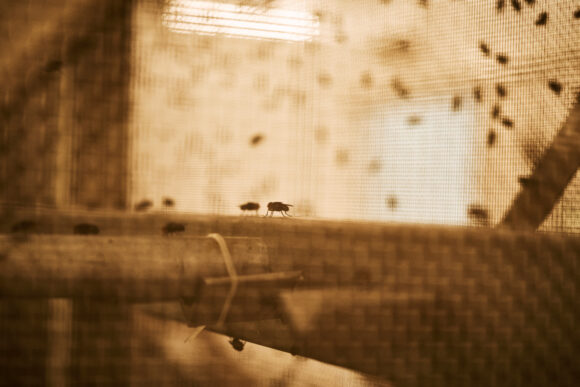
As the deadly New World screwworm spreads through Texas, posing significant risk to the US cattle herd, experts are still puzzling over the mystery of how it got there.
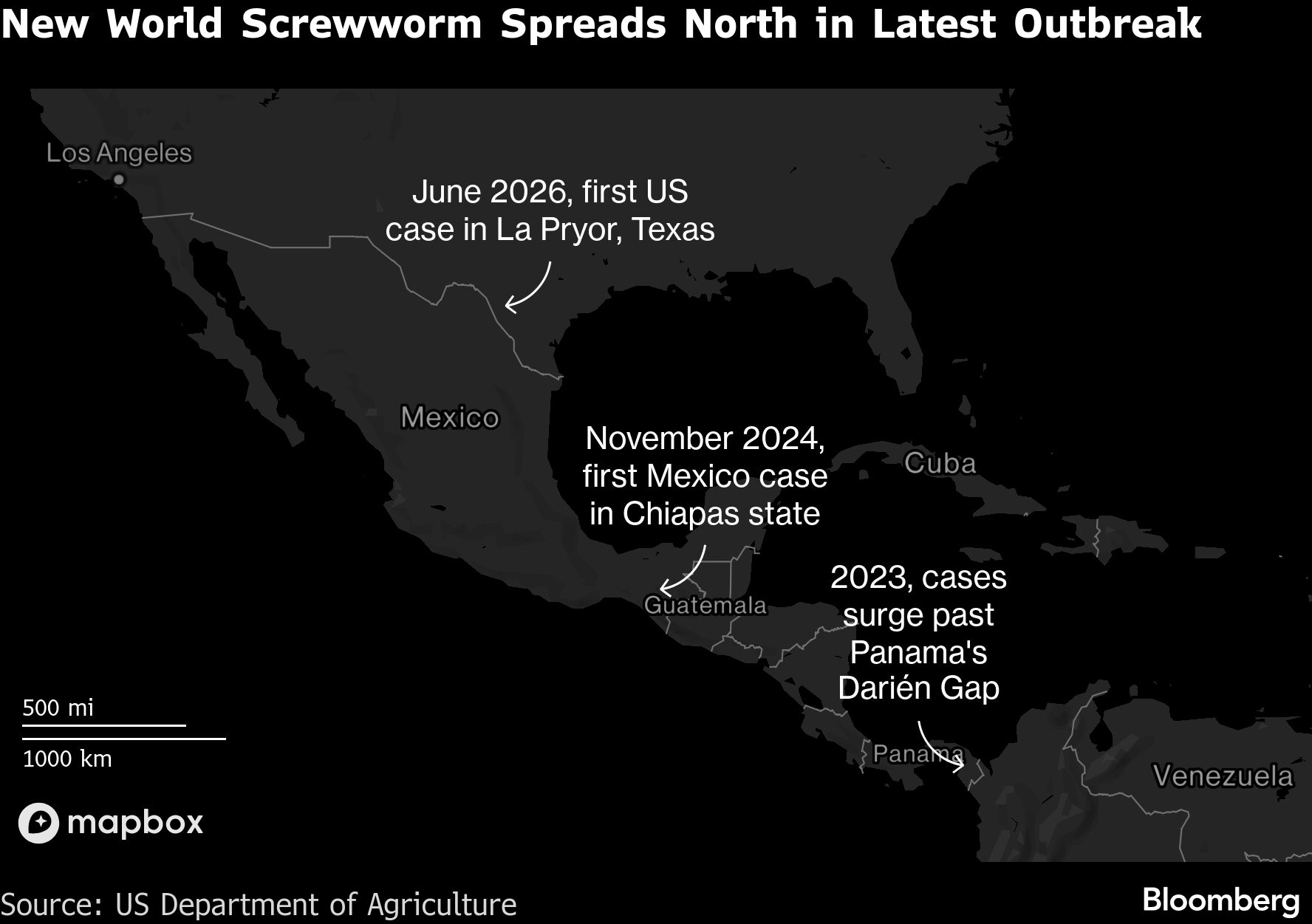
The parasite fly’s larvae, which feeds within the wounds of warm-blooded animals, was first detected in a calf in Zavala County at the start of last month, marking the first case in the country’s livestock in about five decades. Detections have grown to more than 30, and it’s still unclear how the pest got into the US or how it is spreading.
The lack of information has made the screwworm a political talking point. US Agriculture Secretary Brooke Rollins has blamed the Biden administration’s “failed immigration policies (and wide open border…)” for the pest’s expansion into Texas, as well as across Central America. New Mexico Congresswoman Teresa Leger Fernández said “we should not be spreading false information,” including “that immigrants are bringing over the screwworm.”
At the same time, the US Department of Agriculture has come under criticism — mostly from Democrats — that the agency’s staff cuts and reorganization plans have weakened its ability to detect and respond to the threat from screwworm.
The discourse on how the parasite has spread is “probably a lot of speculation,” said Kevin Esch, an executive vice president at animal health company Zoetis Inc.
Understanding how the flesh-eating pest entered the US is important because eradication may take years. Awareness and prevention of its various methods of spread will be key to mitigating the damage the fly does in the meantime.
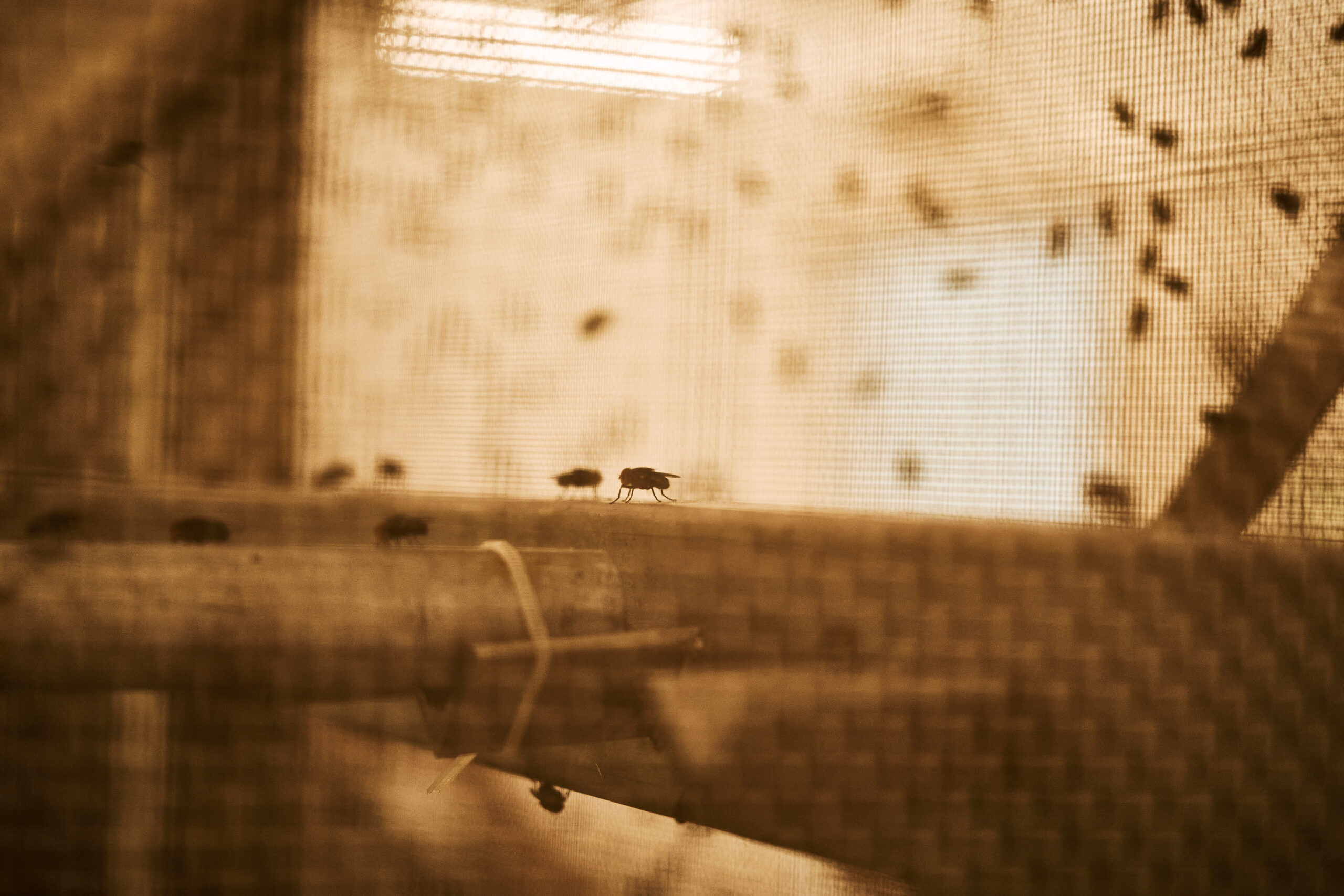
The screwworm can only travel short distances, which means there’s little chance it flew across the border. More likely, infected livestock — and humans moving those animals — drove its spread, both into Texas and within the state. But how? Livestock shipments from Mexico, where the screwworm’s presence had recently accelerated, have been largely halted since the fly was confirmed there in late 2024.
There are other ways a fly could have arrived, including via a wild animal or an uninspected pet. Newly hatched larvae in infected animals could then mature and breed to produce even more flies within the US. So far, though, there have been no reported cases in wildlife and no wild flies have been caught, according to the US Department of Agriculture.
“There’s always a risk with the amount of livestock shipping and transfer that goes around. Certainly you can’t discount that,” said Esch, whose company is among those making conditionally approved screwworm drugs. But as cases in Mexico crept northward to just dozens of miles from Texas, “I think you also can’t discount that it’s naturally migrated and our control efforts have not been effective enough to keep it from moving through.”
The early cases in Texas were young animals that wouldn’t have moved across the border themselves, meaning that they were likely infected by another animal, though it’s unclear whether that would be via domesticated or wild animals, said Alec Gerry, an entomology professor at the University of California, Riverside.
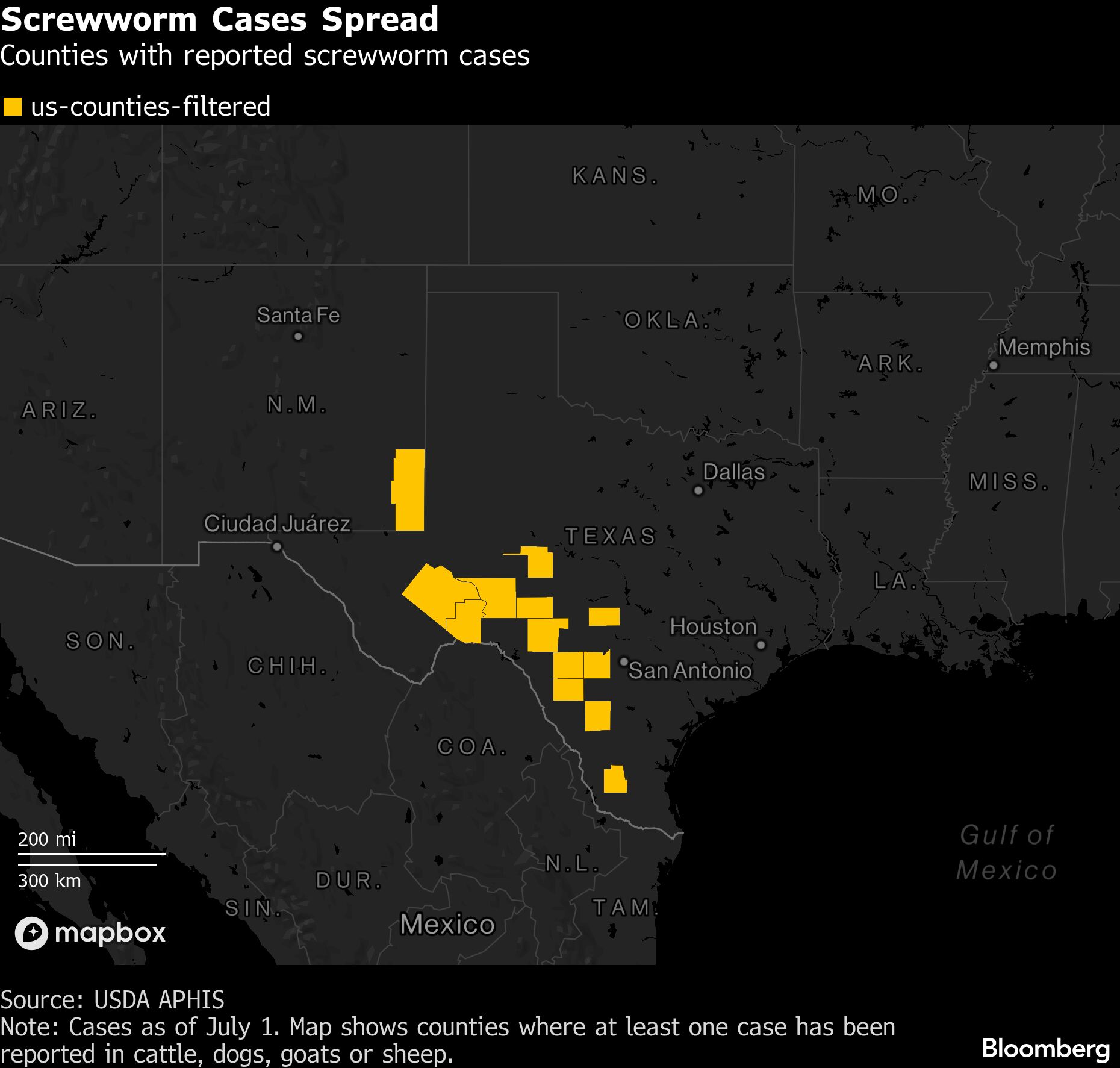
The detections, so far totaling 32 animals including sheep and goats as of Sunday, have largely clustered in southern Texas. Of those, 14 are listed as currently inactive.
An infected dog in New Mexico, to date the only detection outside of Texas, adds more layers of mystery.
Initially, it was thought that the dog, which has recovered, picked up the parasite from Mexico. Yet the New Mexico Department of Agriculture later said the animal was not south of the border at any point. That points to a local transmission, a conclusion that could signal the screwworm has a larger presence in the US than previously expected. Still, no further cases have emerged in New Mexico, and no wild screwworm flies have been caught there.
The concern is that screwworm may be spreading undetected throughout the Southwest, even as government agencies have moved quickly to contain infections. There is already a quarantine in place in parts of more than a dozen Texas counties, and a number of states have also restricted livestock movement from the state. The USDA said it is working with the Department of Homeland Security to monitor the border, while also exploring methods of wildlife surveillance including using drones and artificial intelligence.
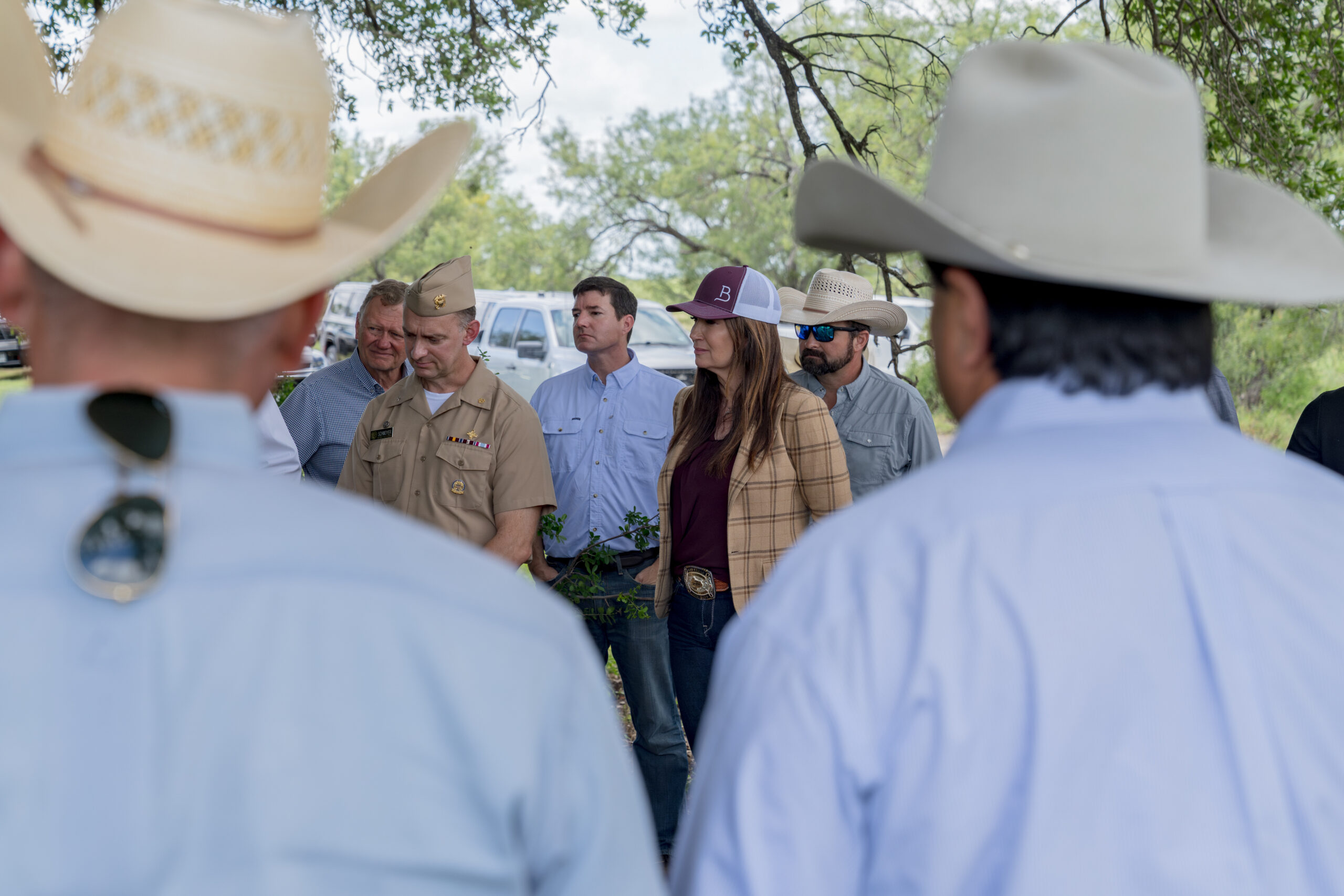
Rollins has pushed back on criticism that staff cuts and ongoing plans to relocate much of the agency away from its Washington, DC-area headquarters could have impacted inspections. The agency has added more than 100 full-time employees to work on screwworm over the last 15 months in preparation for the parasite to arrive in the country, she said at a Senate hearing in mid-June. The US and Mexico last month also opened a new facility to produce sterile flies in Metapa, Mexico — only the second in the Americas — to curb the fly’s reproductive cycle.
While the answer to how screwworm got to the US remains unclear, there’s more agreement on how the it may have re-emerged in Mexico, even as the pest wasn’t meant to spread so far north after it was successfully eradicated from Central America decaded ago.
The US, Mexico and several Central American countries from the 1970s onward joined together to push the screwworm down to the Darién Gap, a narrow 60-mile stretch of land surrounding the border of Panama and Colombia that naturally separates North and South America. The remote, inhospitable terrain serves as a natural biological barrier, though hundreds of thousands of migrants traverse the gap every year.
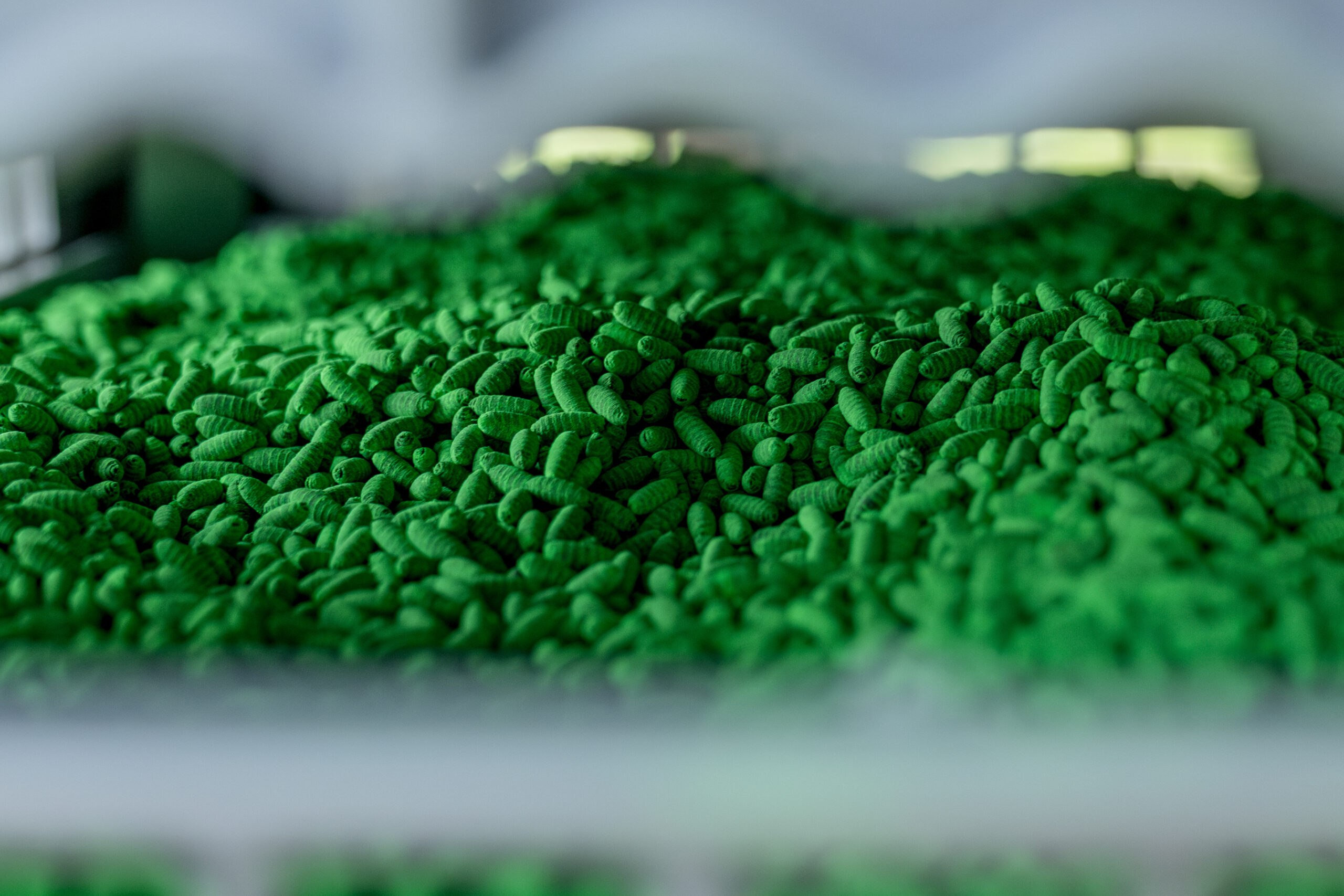
The weapon of choice to keep the screwworm at bay is a plant in Pacora, Panama, that has been continually churning out sterile flies, which mate with wild female flies to halt reproduction. That proved effective for decades.
But in 2023 cases jumped in Panama from just a couple dozen to 6,500, and the parasite has since infected more than 185,000 animals in Central American countries and Mexico. The prevailing theories are that reduced surveillance during the Covid-19 pandemic and illicit cattle trades throughout the region allowed the screwworm to spread.
“The fall-out of movement restrictions during the Covid-19 pandemic would have impacted ongoing animal health surveillance efforts,” said Paolo Tizzani, the World Organization of Animal Health’s senior veterinary epidemiologist. Warmer temperatures may have also created better conditions for the parasite’s spread, he added.
From there, the illegal movement of cattle, which aren’t inspected as part of a formal border crossing, facilitated the fly’s spread northward, said Jeremy Radachowsky, the director for the Mesoamerica and Western Caribbean region at the Wildlife Conservation Society.
The non-governmental organization has called for countries to tamp down on that trade, noting that screwworm hotspots were appearing along known cattle-smuggling routes from Nicaragua through Honduras and Guatemala into Mexico.
“It’s not going to be good enough to just sterilize our way out of this if there’s constant reinfection and reinfestation through illegal cattle movement,” Radachowsky said.
Topics USA
Was this article valuable?
Here are more articles you may enjoy.
 Viewpoint: The ‘Unbundled’ Insurer Emerges in Age of AI as Value Chain Fragments
  AI Models May Soon Self-Replicate Across Smart-Home Devices, Anthropic Warns
  Supervisor’s Punching of Employees Enough for Tort Suit, NC Appeals Court Says
  AI’s Water Strain Includes Surging Demand From Electricity Use

