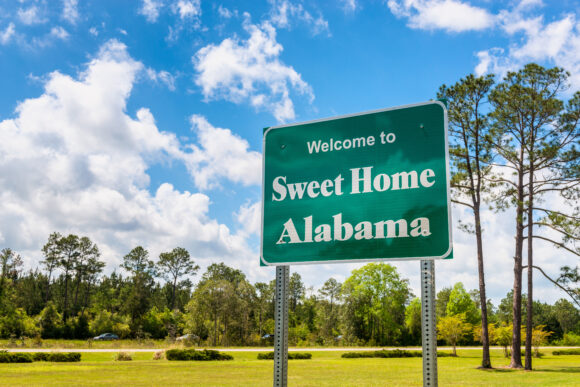
A new report from the Alabama Department of Insurance shows claims litigation and big verdicts are on the rise in the state, inflating loss costs for insurers and putting upward pressure on auto and commercial liability premiums.
“…The average paid loss per claim has risen significantly over the past five years, suggesting that increasing claim severity is likely influenced by legal involvement,” the report noted.
The report, based on an August data call and information from 167 insurers, shows that for all liability lines except homeowners, the number of claims dropped from 2020 to 2024. But the share of litigated claims rose by almost a third—from 10% to 13%. The total payout amounts rose by 38% and the average payout jumped 45% in that period—far outpacing the U.S. inflation rate.
“The fact that claims severity has increased three times the rate of inflation shows that something else is going on besides typical cost increases,” said Harrison Proctor, director of Alabamians for Legal Reform.
The report indicated that medical malpractice saw the biggest increase in costs. From 2020 to 2024, the number of claims dropped slightly. But the total payout for those 167 carriers soared by 140%—from $9.6 million to $23.5 million, the report noted. The average medical liability payment more than doubled, to $58,974.
The data was compiled and analyzed by Risk & Regulatory Consulting, an actuarial and research firm for regulators, based in Connecticut. The 167 insurers accounted for 97% of the total paid losses in the data call time frame.
An increase in litigated claims spotlights the cold calculus that property-casualty insurers have faced for eons: when it’s prudent to fight some lawsuits in court versus when it is less costly to settle and move on. In comments submitted by insurance carriers in the report, one company’s representative summed it up:
“We have a decreasing willingness to take litigation to trial as, it is our perspective, any claim that goes to trial has a much greater potential for significant damages to be awarded (whether in the spirit of true indemnification or not),” the unnamed carrier noted in the report. “All this goes to say that, given these significant increases in claims dollars being paid, the premium must rise in conjunction with the increases in both frequency and severity of litigated claims as well as to accommodate the unknown variance of potential ‘nuclear verdicts.'”
An escalation in litigation may not be surprising to anyone in the insurance industry. But the report suggests that even in states that are not ranked as “judicial hellholes” by litigation-tracking groups, lawsuits are having an impact.
While lawmakers in the neighboring states of Florida and Georgia in recent years have enacted changes designed to stem lawsuits and jury verdicts, the Alabama Legislature has not taken the tort-reform path. A 2024 bill, Senate Bill 293, died in committee. It would have regulated litigation financing, limited vicarious liability for employers, and would have attempted to curb attorney advertising.
In the Alabama legislative session that began last week, a tort-reform bill has yet to drop. But Proctor said his organization is hopeful that a measure will be introduced, if not this year, then next. With elections set for later this year for most legislators and state officials, a new crop of leaders may be more inclined to tackle the subject next year.
“Reports like this help educate people about the need,” Proctor said.
The DOI data call was not done with legislation in mind, said Jennifer Bowen, public information officer for the department. “This was simply meant to help us better understand liability insurance coverage in Alabama,” she said.
The data call was similar to those done in other states, including Georgia. Alabama DOI excluded homeowners’ liability claims data to be consistent with Georgia’s data call to lessen the burden on carriers and avoid an extra level of complexity.
The Florida reforms and, to some extent, the Georgia tort measures, appear to have had an impact on insurance premiums, officials in those states have said. Both states have seen several decreases in personal auto insurance rates in the last 24 months from major carriers.
But in Alabama, private passenger auto liability insurance rates, which held steady from 2015 through 2022, climbed sharply from 2022 to 2024, the report said. “Based on our analysis of legal claims, this increase may be at least partially driven by the growth in legal claims,” the consulting group wrote.
The report did not examine the reasons for more litigated claims. But legal reform advocates have said multiple factors are at play, nationwide. These include the prevalence of advertising by plaintiffs’ lawyers and, in some states, an increase in staged auto accidents linked to a few law firms.
The number of advertisements for legal services doubled from 2017 to 2020, but has declined slightly since then, while spending on ads has risen steadily from 2017 through 2024, the American Tort Reform Association has reported. Legal interests in 2024 spent more than $2.5 billion on almost 27 million ads, about six times the number of ads placed by pizza restaurants, the association noted. Alabama metro areas were not among those with the highest quantity of legal ads.
The Alabama DOI report can be seen here.
Topics Lawsuits Trends Pricing Trends Liability Alabama
Was this article valuable?
Here are more articles you may enjoy.
 Hurricane Isaias Reaches Cat 3 Status as Insurers, Adjusters, Property Owners Prepare
  ‘Unusual’ Isaias Brings Winds, Downed Trees But Fewer Claims Than Expected
  Iran Ramps Up Ship Attacks in Hormuz as Oil, Gas Flows Rise
  AI Bubble Risks Worst S&P 500 Crash Since 2008, Strategist Says