

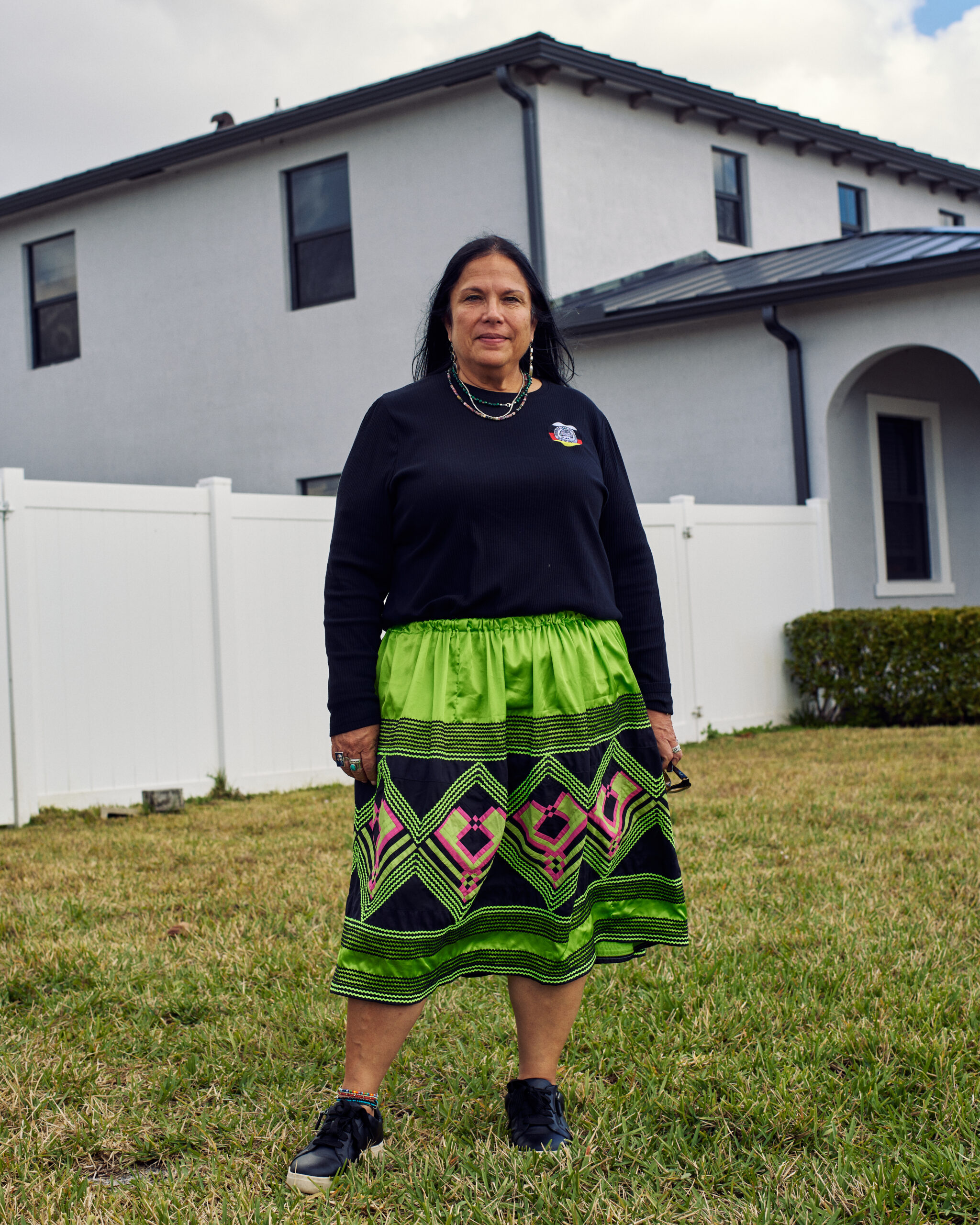
Ciara Billie was about to step into the shower of her newly built townhome on the Hollywood Seminole Reservation in South Florida when her ceiling began to crumble and an air-conditioning vent crashed down on her toilet.
For months, Billie said she had experienced problems with her home. The roof had to be repaired. The floors were buckling. And then there was the mold. It started on the laundry-room ceiling and popped up around vents in the bedrooms and bathrooms, Billie said, and crept up the exterior walls and onto the windowsills.
“I feel like the mold just ran us out of our own home,” Billie said.
The Seminole Tribe of Florida hired Miami-based home construction giant Lennar Corp. to build Billie’s home and hundreds more in 2019, hoping to give tribe members an affordable alternative to the region’s soaring home prices. Rents would be below market rates, and buyers could tap into tribal trusts for down payments. Other residents entered rent-to-own agreements with the tribal council.
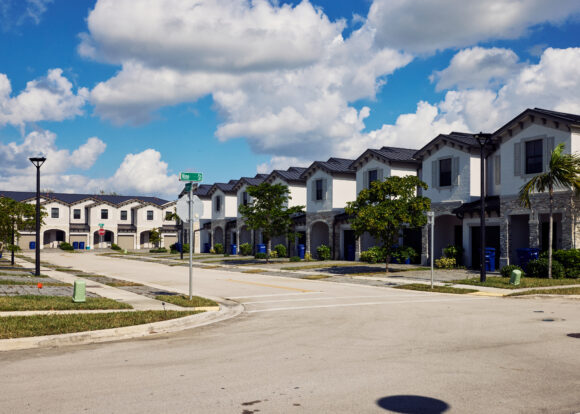
Yet not long after moving in, Billie and most of her neighbors were told by the tribal housing authority that they had to leave because their homes were uninhabitable. Now, rows of townhouses and single-family homes are awaiting repairs, languishing unoccupied in the shadow of the guitar-shaped, neon-lit Seminole Hard Rock Hotel & Casino, about 25 miles north of Miami.
“We’re all spread out now, and that’s not our goal,” said Billie, who is currently living in Minnesota. “We wanted to keep our community together.”
Last year, the Seminoles sued Lennar, claiming defects in more than 500 homes built on six different reservations across Florida, including the one near Hollywood. The suit alleges Lennar failed to repair the problems after being informed of them by the tribe.
Lennar said it is contesting the tribe’s claims and addressing the matter through the legal process and declined to comment on the situation Billie described with her residence. When concerns with Lennar’s homes and communities arise, “we take them seriously and work to address them promptly and in good faith,” the company said in a statement.
Disputes between homebuilders and their clients are nearly always settled behind closed doors because of arbitration clauses in the contracts customers agree to when they buy a new home. But the Seminole tribe’s sovereign status has so far kept their fight in the courts, resulting in a highly visible clash between two powerful players in Florida’s real estate- and tourism-focused economy.
“This is a blockbuster case,” said Myriam Gilles, a law professor at Northwestern University. “The tribe is an incredibly powerful and wealthy entity that I think is doing what they think is the right thing for its members, and it probably really scares the defendant. This is not an individual homeowner coming forward.”
In court filings, Lennar has argued that the dispute should be resolved outside of court in closed-door arbitration because the tribe’s claims arise from warranties that have binding-arbitration provisions. Lennar also said it worked with the tribe for months after the lawsuit was filed, conducting 21 site visits, devoting “thousands of hours” of contractor and expert time, and providing a remediation and improvement plan before the litigation resumed.
Lennar, valued at nearly $21 billion, is the second largest homebuilder in the US by volume. It has built more than a million homes across the US, including roughly 80,000 last year.
The Seminoles are pioneers of modern tribal gaming who operate numerous casinos, nightclubs and hotels and hold sole control over online sports betting in Florida. The Seminoles bought the Hard Rock brand and its more than 120 restaurants for nearly $1 billion in 2007. They hold enormous political clout in Florida, where they lobby for their gaming interests and are consistently among the largest donors to campaigns, giving millions to Governor Ron DeSantis and Byron Donalds, the Republican frontrunner to succeed him, according to state campaign finance records.
“I don’t think Lennar is used to dealing with somebody that’s financially on their level,” said Tina Osceola, the Seminoles’ executive director of operations and the director of the tribal historic preservation office.
Housing affordability is in focus across the state of Florida, with DeSantis proposing a sharp reduction in property taxes for many residents that he has said would shift more of the cost of funding schools and other government functions onto the affluent. Voters will cast ballots on the proposal in November.
While the Seminoles’ businesses have flourished, many in the tribe have struggled to keep pace with Florida’s cost of living. Leaders hoped that building on tribal lands would help address the economic pressure on Seminole families.
“When the tribal council was faced with housing shortages, what better way to provide housing for your people than to take plots of land that are a federal reservation and develop it?” Osceola said.
Tribe members began moving into the homes in 2021, but soon thereafter residents reported issues with water intrusion and mold, according to the tribe’s lawsuit. Experts determined that roofing issues in many homes were so severe they required full replacement, according to the complaint, which also alleged mold and other indoor air-quality problems.
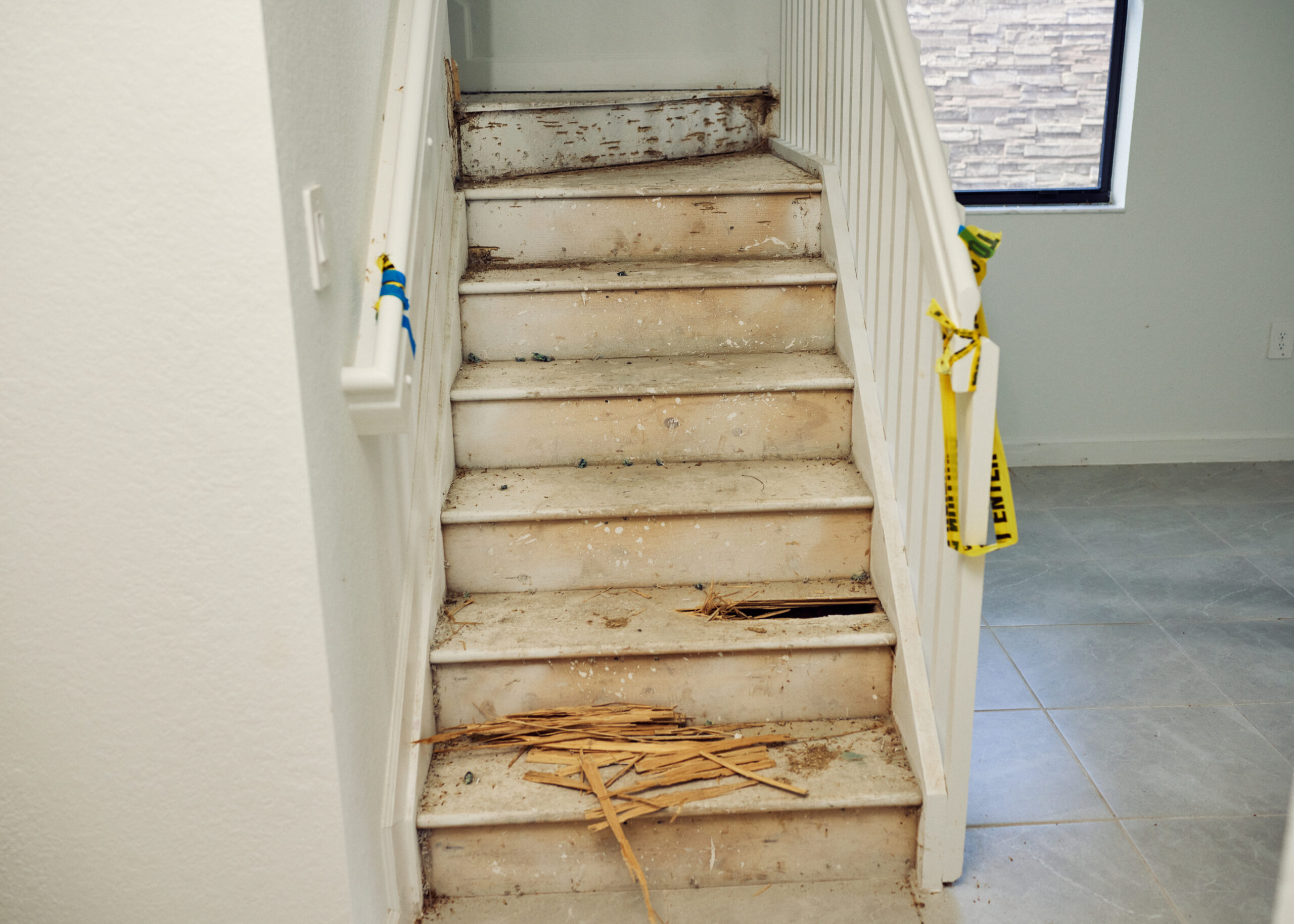
Leaks and water damage are visible in some units at the development near Hollywood, as are loose steps, buckling tiles, crumbling grout and cracks in walls. Similar problems exist at the five other developments where Lennar built homes for the tribe, according to the tribe’s complaint. Ventilation issues, oversized HVAC units and Florida building-code violations are widespread, the tribe claims in its suit.
After trying and failing to get Lennar to address the issues, the Seminoles began relocating members, paying for their moving costs, personal property damages and out-of-pocket expenses, according to the complaint.
Shermeka McSwain, the Seminoles’ director of residential construction and development, said they engaged with Lennar during their warranty period to try to resolve the issues.
“They were noncooperative, and more than that, they were disrespectful,” she said. “At one point they started blaming the problem on tribal members, saying it was because of the way the tribal members live.”
Lennar didn’t respond to a request for comment about McSwain’s description of the tribe’s interaction with the company.
Many companies have arbitration clauses in contracts that prohibit customers from bringing class-action litigation, according to Gilles, the Northwestern University law professor.
The issue has come up in court in the past. In 2020, a South Miami-Dade homeowners association sued Lennar over alleged defects in a 241-home development. An appeals court later ruled the claims belonged in arbitration because the homeowners had signed agreements requiring disputes to be settled that way.
While the Seminoles successfully argued that the tribe’s sovereignty trumped the arbitration clauses with Lennar, the judge in the case ruled in November that about 90 homes are still subject to arbitration since they were bought from the builder by individual tribe members and not the tribe itself.
Bill Scherer, an attorney representing the tribe, expects the case to benefit other homebuyers. Homeowners associations and individuals “can’t take Lennar on, they go into arbitration and it’s confidential, so you don’t know the problems they’ve had,” said Scherer.
Osceola, meanwhile, said the fight with Lennar is about something greater than leaks and mold.
“These houses represent more than just four walls for people to live in,” she said. “These houses represent tribal sovereignty, a safe future for the Seminole tribe and all its citizens, generation after generation.”
Top photo: A neighborhood of homes, built by Lennar for the Seminole Tribe, in Hollywood. (Alfonso Duran/Bloomberg)
Subro-lated: Construction-Defect Subrogation on the Rise But Florida Statute of Limitations Changed in 2023
Topics Florida
Was this article valuable?
Here are more articles you may enjoy.
 Supervisor’s Punching of Employees Enough for Tort Suit, NC Appeals Court Says
  Surplus Lines Leaders Remain Bullish on Outlook in a Shifting Market
  AI Bubble Risks Worst S&P 500 Crash Since 2008, Strategist Says
  All in the Family: Husband, Wife and Daughter Indicted for Insurance Fraud and Bribery

