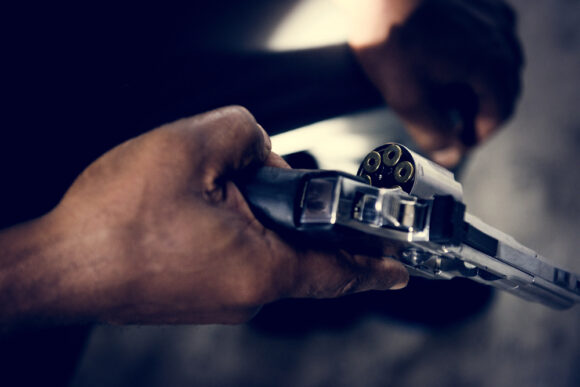
The Florida Supreme Court just made it a little easier for workplace assault victims to claim workers’ compensation benefits, even if it can’t be proven that an attack was work-related.
The high court on Thursday overturned a 2023 ruling from Florida’s 1st District Court of Appeals that had narrowly defined what could be considered a compensable injury. The district appellate court, which handles all Florida workers’ compensation appeals, had erred and had essentially put words in the mouth of lawmakers who drafted the current version of the state’s workers comp statute, the Supreme Court justices wrote in the July 9 opinion.
“Here, in repeatedly framing the act of ‘walking’ as the only relevant ‘work performed’ and in concluding that that discrete task must ‘itself’ have ’caused’ the injury, the First District not only conflated ‘arising out of’ and ’caused by,’ but also misread the statute to say ‘[the task] performed [at the time of injury]’ rather than just ‘work performed,'” reads the Supreme Court opinion in Bouayad vs. Normandy Insurance.
A prominent Florida workers’ comp defense attorney called it the most significant workers’ compensation case of the present time, but one that simply resets the work-relatedness standard to the threshold established by a 1980 court decision known as Strother vs. Morrison Cafeteria.
“This is not a ‘setback’ for industry but really a restoration of the status quo pre–Bouayad,” defense attorney George Kagan said in an emailed bulletin. “The Court makes clear: ‘To be sure … not all workplace assaults are compensable.'”
The claimants’ attorney, Michael Winer of Tampa, could not immediately be reached for comment on Thursday. In 2023, Winer told Insurance Journal that if the 1st DCA’s Bouayad decision had been upheld, it would have created an “absurd” situation, in which workplace accidents are compensated but shootings are not.
The case was seen as highly significant in Florida’s workers’ compensation world, in an age of frequent workplace shootings and assaults. No fewer than four friend-of-the-court briefs were filed, by attorneys with the Workers’ Injury Law and Advocacy Group; Florida Workers’ Advocates; Florida Teamsters and other unions; and the Florida Fraternal Order of Police.
The case stemmed from a 2019 shooting at a hotel near the Orlando International Airport. It was complicated by the fact that the shooter was never identified or charged, and the motive remained unclear.
Mohammed Bouayad was the general manager for Value Car Rental at the Airport Holiday Inn. At the end of his shift late one night, he was walking from the rental car kiosk to an outside office when a man emerged from a darkened area and shot Bouayad at least seven times at close range, the court opinion explained.
Security video showed the assailant did not attempt to rob the victim. When a hotel guest came to Bouayad’s aid, Bouayad told the guest that “Robert shot me,” and to warn police to be on the lookout for a blue Ford Mustang car.
Bouayad survived but suffered severe injuries to his arms, leg, stomach and brain. He later had several strokes, lost a kidney and part of his vision.
He filed a claim for workers’ compensation medical and wage-replacement benefits. But Boca Raton-based Normandy Insurance, the rental car company’s comp carrier, denied the claim. The insurer argued that the shooting stemmed from a simmering conflict between a man known as Robert Aponte and Bouayad’s son. The day before, Bouayad’s son and the youth’s mother had reportedly been physically confronted by Aponte and another person over an alleged debt, the court wrote.
Testimony later differed about whether that was the case and that Aponte was the shooter.
A compensation court judge sided with Bouayad, finding that claimant’s employment substantially contributed to the risk of injury, above what Bouayad would have seen outside of work. The compensation judge said that the assault was a targeted attack, but one that probably was related to the termination of another employee.
Normandy appealed, arguing that Bouayad had failed to show that the shooting was work-related. The 1st District court agreed with the insurance carrier.
 In the decision, the 1st District panel of judges took an unusually narrow view of Florida workers’ comp law. It wrote that the only work Bouayad was performing at the time of the shooting was walking from one place to another. To prevail in the comp claim, the worker would have had to have shown that he was shot as a direct result of the walking, or something arising out of the course and scope of employment, the appellate judges explained at the time.
But the Supreme Court justices refuted that conclusion, noting that the statute does not require that the injury be caused by work performed. The statute speaks of injury or death arising out of work performed, not injury caused by a work task.
“We doubt the Legislature would use such broad language to ultimately mean something as narrow as the First District’s understanding of the statute—i.e., that the discrete job task performed at the time of injury must itself have caused the injury,” reads the opinion, led by Justice Carlos Muniz.
The justices also explained that Bouayad’s expert witnesses had testified that other factors made his employment somewhat risky and hazardous: Late-night hours, a high-turnover hotel in an arguably higher-crime area, a dimly lit area and vegetation that hid the attacker from view.
In making its 2023 decision, the 1st District Court of Appeals also asked the Supreme Court to clarify if, when the act of a third party causes injury to an employee, does that satisfy the occupational causation needed for compensability?
The Supreme Court rephrased the question as: “When a third-party tortfeasor assaults an employee who is in the course and scope of employment, can the resulting injuries be compensable under the Workers’ Compensation Law?”
The answer is, “yes, provided that the workers’ compensation claimant can meet his burden of establishing work-relatedness under the principles we explain in our decision today.”
Claimant Bouayad had met that burden, the high court said, partly by showing that his overall job duties and work environment exposed him to an increased risk of assault.
“Circumstances here clearly indicated that the guy was working when he got shot,” said Orlando claimants’ attorney Geoff Bichler, who helped write an amicus brief in the appeal.
The main takeaway is that a purely non-work-related motive for the shooting has to be demonstrated for a compensation judge to deny the claim, Bichler said. He pointed out that Justice Adam Tanenbaum, who served on the 1st DCA when the 2023 opinion was handed down, recused himself from the Supreme Court opinion. Except for that recusal, the decision this week is unanimous.
Was this article valuable?
Here are more articles you may enjoy.
 All in the Family: Husband, Wife and Daughter Indicted for Insurance Fraud and Bribery
  Travelers Reports Solid Underwriting, Record Investment Income for Q3
  Fisherman Killed by 12-Foot Alligator at Central Florida Lake
  Kroger Plans to Slash 37% of Corporate Jobs in Next Three Years