
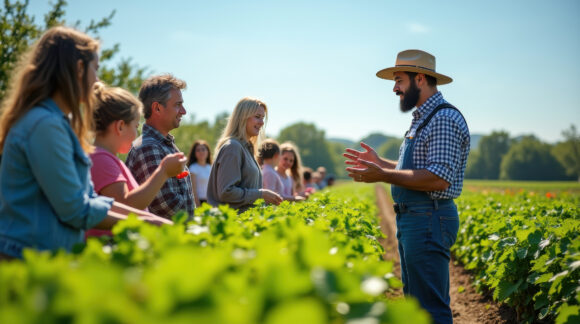
As farmers diversify their operations in the face of volatile markets and unpredictable weather conditions, an agribusiness insurance leader recently told Insurance Journal that he’s seen “meaningful growth” in national agritourism insurance demand.
From farm stays to pick-your-own-produce destinations, the most recent numbers from the USDA’s Census of Agriculture showed that U.S. farms and ranches generated about $1.26 billion from agritourism services in 2022. After adjusting for inflation, that marked a 12.4% increase from 2017. The same dataset shows about 57% of U.S. counties reported some form of agritourism income.
When a farm expands into agritourism, insurance must be reviewed and expanded, said Jeremy Staun, vice president of farm sales and underwriting at Nationwide. These endeavors may start slow, but they can grow quickly–and so can their exposures.
“Across the country, I’d say we’re seeing a noticeable uptick in farmers turning to agritourism for something to stabilize their revenue strategy,” Staun said. “Especially with some economic pressures.”
Roughly a billion dollars of premium are rolled into Nationwide’s farm and ranch book. Staun said the insurer expects the U.S. agritourism market to grow more than 10% annually over the next five years. That aligns with what agents who place coverage with Nationwide and their clients are experiencing, he said.
So, what agritourism offerings seem to be becoming more popular? Some of the fastest-growing segments that Nationwide tracks fall under the umbrella of outdoor recreation.
“That would be things like sunflower trails, orchards, interactive farm operations and experiences,” Staun explained. “That’s a lot of what we’re seeing. We’re also seeing a lot of farm-to-table educational experiences, with consumers wanting to have a better understanding of where their food comes from … and sustainability.”
Given the added risks these offerings introduce, it’s no surprise that most agritourism operations require a specialized agritourism or farm liability enhancement layered onto their standard farm policy.
When farmers welcome visitors onto their land for festivals, workshops, and other on-farm experiences, insurance exposures multiply. Staun pointed to increases in premises liability losses, animal contact incidents, and weather-related property risks tied to temporary event structures and equipment.
“Some of the common overlooked exposures that we see in this space are parking lot liability, temporary structures like those tents or stages, [and] volunteers that aren’t always considered in risk planning,” he added.
What to Know About Agritourism Risk?
Richard Bryant, chief underwriting officer of Prime Insurance Company, said he couldn’t say with certainty whether most agritourism operations are properly insured or underinsured. He did note, however, that Prime often sees a naivety in how operators buy their agritourism insurance.
Farmers are accustomed to buying very cost-effective insurance through farm mutual insurance companies, he explained, “and I think you need some expertise when it comes to writing this type of business to be able to take care of the losses that are undoubtedly going to happen.”
Based in Sandy, Utah, Prime Insurance is an excess and surplus lines company that writes policies in every U.S. state.
Bryant emphasized that losses will follow when farmers bring guests onto their property.
“It’s just a question of how big those losses are going to be,” he said. “Somebody’s going to slip and fall. Somebody’s going to fall off a hay bale. Somebody’s going to go home with a pathogen or allegation of one.”
The list goes on. From a market perspective, Staun said agritourism’s rapid expansion is creating new opportunities for insurers to innovate. At the same time, though, he said markets are becoming more disciplined in their underwriting.
Carriers are tightening terms around high-risk activities, Staun shared, including coverages for inflatables or motorized attractions, alcohol-related events, and weather-exposed structures.
“You’re seeing a lot of that tightening in that space as the agritourism opportunities expand,” he said. “I would say what hasn’t changed, from an insurance perspective, is the appetite for well-managed operations.”
Farms that invest in safety protocols, signage, and structured and organized event planning continue to have access to broad and competitive coverage, Staun added. He encouraged agents and brokers to deeply think through the exposures that their clients’ agritourism operations could present.
“And really think about the claims,” he said. “Because that’s the bottom line. What type of claims or exposure could come from the realities of when you welcome the public into a farm environment?”
Topics Trends Agribusiness
Was this article valuable?
Here are more articles you may enjoy.
 Home Insurance Tops Property Taxes in Squeeze for US Households
  Fisherman Killed by 12-Foot Alligator at Central Florida Lake
  World’s Largest Retirement Community Set to Borrow $180 Million for More Homes
  Jury Awards $6.8 Million in Nursing Home Understaffing Class Action
 From This Issue