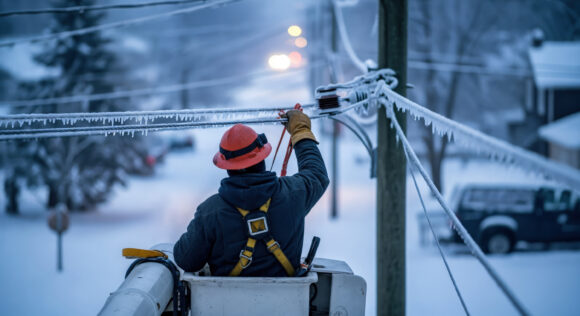
It’s safe to say it’s been a rough start to 2026 in terms of winter storms in the United States. Every winter, the country is at risk of extreme cold and severe weather that tests the limits of infrastructure and community resilience. These winter weather extremes are not new, but as exposure growth puts more people and infrastructure at risk, and more strain on the power grids, the risk of severe damage due to winter storms and cold spells increases dramatically. This growing threat deserves serious attention from insurers, businesses, policymakers, and households alike.
Winter risk is no longer defined solely by snow accumulation or short-lived disruptions. Today’s storms bring a combination of extreme cold, heavy precipitation, ice, flooding, power outages, and extended recovery timelines. These events often span multiple regions at once, stretching response capabilities and compounding impacts across supply chains, transportation networks, and essential services.
Exposure Growth, Secondary Perils
Several forces are driving this change. Exposure growth is one. More people, homes, and businesses are located in areas that were not historically designed for severe winter weather. Infrastructure built decades ago is being asked to perform under conditions it was never engineered to withstand.
Winter storms also highlight the growing importance of so-called secondary perils. For many years, the industry’s focus centered on peak events such as hurricanes or earthquakes. While those risks remain critical, it is the cumulative impact of frequent, severe secondary events that is reshaping loss patterns and challenging planning assumptions. Winter storms belong squarely in that category. They arrive regularly, affect wide geographies, and often generate complex damage that is harder to anticipate and manage.
What makes winter risk particularly challenging is its tendency to cascade. Power outages lead to frozen pipes and business interruption. Transportation disruptions delay critical goods, from medical supplies to heating fuel. Workforce availability becomes strained just as demand for emergency services rises. These knock-on effects underscore why preparation cannot be siloed. Risk management has to account for interdependencies across systems, not just individual assets.
Preparation starts with understanding risk more precisely. Data, modeling, and scenario analysis are essential tools, but they must evolve alongside the hazard. That means stress-testing portfolios and operations against combinations of cold, ice, wind, and prolonged power outages.
Recent experience has proven that winter storms are not confined to traditionally cold states and planning needs to reflect that reality. Multibillion-dollar winter storms have occurred several times in the last five years, which should challenge the industry’s assumptions on likely event frequency as winter storms are not confined to traditionally cold states, and planning needs to reflect that reality.
Mitigation is equally important. Practical measures make a measurable difference. Building standards that account for freeze risk, investments in grid resilience, improved drainage and snow management, and clear continuity plans for businesses all reduce the severity of outcomes when storms hit. For homeowners and small businesses, preparation can be as straightforward as insulation, backup power planning, and understanding how to shut off water systems before damage occurs. These actions may seem modest, but taken together, they materially improve resilience.
Critical Role
The insurance and reinsurance industry has a critical role to play, not just in providing risk transfer but in supporting better decision-making. By sharing insights, encouraging mitigation, and aligning coverage structures with today’s risk realities, the industry helps close protection gaps and strengthens recovery. Public-private collaboration is especially important for winter storms, where infrastructure, emergency response, and private property risks intersect so clearly.
The takeaway from this winter is not simply that storms were severe. It is that the nature of winter risk is changing, and our response must change with it. Preparation is no longer optional, and mitigation is no longer a nice-to-have. They are foundational to managing an environment defined by greater volatility and interconnected risk.
We cannot control the weather. We can control how seriously we prepare for it. The communities, businesses, and systems that invest in resilience today will be better positioned to weather whatever the next winter brings.
Topics Windstorm
Was this article valuable?
Here are more articles you may enjoy.
 All in the Family: Husband, Wife and Daughter Indicted for Insurance Fraud and Bribery
  AI’s Water Strain Includes Surging Demand From Electricity Use
  Report: Auto Insurance Total Loss Frequency Climbs, More Drivers Pay Repairs
  Insurers: French Supermarkets’ Cyber Insurance Unlikely to Cover Food Losses
From This Issue