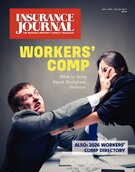

The Occupational Safety and Health Administration (OHSA) reports that acts of violence rank as the third-leading cause of fatal occupational injuries in the country. Research also shows that workplace assaults have been increasing in number, with healthcare workers and teachers most often being the victims.
There are, however, indications that assaults against teachers may be declining.
Workplace violence covers a wide range of behaviors including physical violence, harassment, intimidation, and other threatening behaviors from verbal abuse to physical assaults and even homicide. Workplace violence affects employees, clients, customers, and visitors.
Workplace assaults have risen at an annual rate of 5.3% from 2011 to 2022, according to a recent National Council on Compensation Insurance (NCCI) research brief, titled “Workplace Violence: Part One, Assault Trends, Drivers and Demographics,” which analyzed information from the U.S. Bureau of Labor Statistics (BLS) assault case data.
When compared to broader societal violent assaults, workplace assaults present a growing problem. The workplace assault rate grew by 62% from 2011 to 2022, whereas the national aggravated assault rate grew by 13%, the NCCI brief noted. Workplace assault rates refer only to events severe enough to result in lost work time and those that are formally reported to the BLS.
Among all BLS Days Away From Work (DAFW) data, assaults increased from 1.3% in 2011 to a peak of 2.3% in 2019.
“Whether looking at workplace assault shares, the assaults themselves, or rates, all indicators have shown substantial increases over the 2011 to 2023-24 period,” Matt Schutz, one of the authors of the NCCI research brief, told Insurance Journal. “Even though assaults make up a small portion of workers’ comp claims overall, the number is growing, trending up, and that’s meaningful for our stakeholders.”
The NCCI workplace violence research brief is the first in a three-part series on workplace violence.
Sectors at Risk
When it comes to workplace violence, there are certain sectors of the economy where incidents are more likely to occur. Healthcare ranks as number one.
More than 70% of private industry workplace assault claims occur in the healthcare and social assistance sector, according to NCCI’s analysis of the U.S. Bureau of Labor Statistics data. The number of annual assaults in this sector is 10 times the number of assaults in the next largest sector, retail trade.
Since the beginning of the COVID-19 pandemic, healthcare workers across the country have experienced a sharp increase in incidences of workplace violence, according to the American Hospital Association. Healthcare workers are five times more likely to experience workplace violence than those in other professions despite comprising just 10% of the workforce, according to the BLS.
The BLS reports that of the 5,283 fatal workplace injuries that occurred in the United States in 2023, 740 fatalities were due to violent acts.
Mark Walls, chief marketing officer, Safety National, said workplace violence has been one of the leading causes of loss in the healthcare space for many years.
“It’s a huge problem,” he said. “They deal with people with severe mental health challenges, but it’s beyond that. It’s people on drugs. It’s gang violence in emergency rooms. Even in pediatric courts, they have people that will act up and be violent. It has long been one of the leading causes of accidents and severity in the healthcare space.”
Workplace violence has hit healthcare workers harder than almost any other occupation in the U.S.–not just in frequency but in severity, burnout, turnover, and mental health consequences.
“I’ve talked to some of our clients who have armed securities in their ER waiting rooms. Others have given their security staff tasers,” Walls said. Some healthcare facilities are moving to train staff in self-defense as well. “I know one healthcare facility that puts all their staff through defensive tactical training–how to fight somebody off, how to physically fight somebody off.”
Education
NCCI found that workplace assaults often involve interactions with individuals receiving care, supervision, or direct oversight. This might include, for example, students in educational environments, patients in clinical settings, or other persons “in one’s charge.”
Gallagher Bassett, a third-party insurance claims and risk partner based in Illinois, tracks workers’ compensation claims for student-on-school-employee assault. The firm defines assault claims as those that include being struck or injured by a student, bitten by a student, or any other kind of human violence and alleged assault from a student to a school employee.
Numbers dating back to 2017 show that the student-on-school-employee assault claim count and total incurred costs hit highs during the 2022-23 school year. The claim count reached 1,426 that year, and the total incurred costs landed at $9.7 million.
The number of workers’ compensation claims for student-on-school-employee assault dropped significantly during the 2023-24 school year, Gallagher Bassett reported. Citing client numbers covering approximately 2,000 schools and 1.25 million students across the country, Gallagher Bassett found that such workplace injury claims were down 39% from the 2022-23 school year–with the total incurred claims cost down by almost 50%. This school year’s results have yet to be revealed as the school year’s data runs from July 1 to May 31, annually.
Greg McKenna, national practice leader, Public Sector at Gallagher Bassett, said the decline in student-on-employee assault claims came after two years of increasing claims following the 2020-21 school year.
“In that first full academic year, post-pandemic, we saw the incidents and the severity of these claims go way up,” McKenna said. “Whereas prior to the pandemic, we may have seen maybe one out of every five work comp injuries involving a teacher that was related to physical violence,” he said. However, post-pandemic, that rate jumped to one out of every four work comp injuries involving a teacher were due to physical violence.
“So, we were seeing that very consistent rise–5%, 6%, 7% up,” he said. “Then we were also seeing the average cost of claim or maybe a measure of the severity of the claim going up as well.” There were more claim incidents and higher dollar values on those claims in the first years following the pandemic, he said.
McKenna attributes the significant decline in both frequency and severity of teacher assault claims to good risk management. “I do believe that school districts, school boards, parents, teachers began to try to figure out what they could do to drive down this very dangerous kind of claim because this is not a good environment for anyone–not for the teachers, not for the students, not for the country–because we need to have a healthy educational environment.”
That meant focusing on de-escalation training, additional school resource officers, and additional workflow to help individuals not be alone, McKenna said. “Maybe even some segmentation of classes or recognition that certain individual students needed more personal attention and may have had a history or other factors have led that person to maybe be predisposed to act out more violently. … Just unearthing those fundamentals, I think, helped to bring down the number.”
Even so, McKenna said there continues to be heightened levels of severity with these types of assault claims.
“What we’re seeing is not only the physical altercation resulting in physical harm, but there is this overlay,” he said. “Maybe there are additional benefits owed for psychological trauma, secondary to a physical accident. Maybe there is a period of just not healing fast enough because of the concern of going back.” He said that could be leading to both medical and indemnity cost drivers for these workers’ comp claims.
Rightfully so, he added. “It’s not the same as stepping off a ladder in the wrong way,” McKenna said. It becomes a question of trust for teachers to come back to work after an assault. “Do I feel as though I can trust this environment to not get injured again? Is this a healthy workplace environment for me?”
McKenna said that’s a concern that he hopes to better understand with this data every year.
Workplace violence is a huge issue that educators struggle with daily, Walls added. “In K through 12 schools, in some districts, it’s one of the leading causes of accident severity–students physically assaulting teachers,” Walls said.
One area that people don’t think about is special education. “Some severely developmentally disabled students have a propensity toward violence. Some of the teachers, or the aides that work in that area, say they get hit every day; it’s just part of the job,” he said. Of course, it’s not intentional, but that risk of physical assault is there. “You think of it for law enforcement, but you don’t think of it for healthcare, and you don’t think of it for schools.”
Another area where workplace violence is seeing more activity is in the retail sector, including restaurants, Walls said. “When you interact with the general public, these threats of workplace violence will keep happening, so it’s a huge issue in the workers’ compensation space, especially in some industries, and it just doesn’t get enough attention.”
Other Key NCCI Findings
The NCCI research brief on workplace violence data also noted a few other trends, including:
- About two-thirds of all assault victims are women. The workplace assault rate for women is approximately 2.7 times the rate for men (4.0 compared with 1.5). However, women comprised about 78% of the healthcare and social assistance workforce in 2024, placing a high concentration of women in the highest-risk sector. This inherently raises women’s overall burden even before considering role differences within the sector.
- Workers aged 20 to 34 experience a disproportionate number of assaults relative to their overall presence in the workforce. In contrast, workers ages 35 to 65-plus appear underrepresented in assault cases, though to a lesser degree. This pattern suggests meaningful age-related differences in exposure risk, job duties, or reporting behavior. It may also reflect the greater concentration of younger workers in frontline, caretaking roles where workplace assaults most often occur.
- Hitting, kicking, and beating by another person accounts for nearly 93% of all workplace assaults. Although the remaining assault categories each make up only a very small share of total incidents, they often involve more severe mechanisms, such as shootings, stabbings, or sexual assault. These lower-frequency events can carry substantial per-injury medical, legal, and productivity costs, meaning that even a small number of severe assaults can have an outsized impact on employers and workers.
Taken together, NCCI suggests that the demographic patterns show that workplace assaults are not evenly distributed across the workforce but are shaped by who is exposed and where that exposure occurs. Assault risk is driven less by broad workforce characteristics and more by the sectors and roles where workers are most exposed, Schutz added.
Was this article valuable?
Here are more articles you may enjoy.
 Uninsurable Future: Managing the Climate-Change-Fueled Home Insurance Crisis
  McKinsey Rebukes Partner Who Questioned Challenges Facing Women CEOs
  Gulf Coast on Alert for First Hurricane of 2026
  Union Pacific Railroad Fined $304K for Firing Employee During Severe Weather
From This Issue