
This is the first in a series of three columns about exclusionary or limiting policy endorsements to be wary of. In this column, we’ll talk about several commercial liability forms to avoid or be wary of, followed in the next two months by examples of commercial property and auto forms, respectively.
In my April 2019 column, I wrote about how to prevent your customers’ uncovered losses and, as a result, minimize your E&O exposure. This was the first in a series of a dozen articles based on my book “When Words Collide: Resolving Insurance Coverage and Claims Disputes.”
Prevention involves three phases.
First is identifying and quantifying exposures to loss. This is impossible when insuring with a carrier that says the insuring process takes only 15 minutes (or less).
Second is insuring or risk managing these known exposures. This involves working closely with underwriters (and sometimes the claims department) to match exposures with the proper insurance forms.
Third involves quality-controlling policy deliverables, which is the subject of this and my next two columns.
When reviewing policy deliverables, you certainly want to make sure that all of the coverages ordered or agreed upon are included, but it is important to examine ALL of the forms attached to the policy because it is likely that a number of them will be exclusionary or limiting in some way. You’ve heard of the phrase, “Be careful what you ask for,” but a more cautionary phrase in this case is, “Be careful what you DON’T ask for.”
In many cases, these forms are attached because their inclusion is called for in the carrier’s regulatorily filed policy form rules. However, there are often options for removing these forms or replacing them with less restrictive forms, sometimes with a premium surcharge but not always.
In 2017, I created a webinar with the late, great John Eubank, CPCU, ARM, titled “Raiders of the Lost Coverage: Insurance Jones and the Temple of Exclusions.” In this program, we identified over a dozen classes of non-ISO forms and endorsements to be wary of such as forms limiting coverage to class codes or excluding certain class codes, “Special Condition” or “Contractor Warranty” endorsements, non-ISO additional insured endorsements, etc. But in this series, I’ll focus on ISO forms that are commonly used that you might encounter frequently across a spectrum of customers.
In that webinar, John and I specifically addressed about 40 ISO Commercial General Liability forms. Needless to say, in an article like this, all I can do is provide as many examples as space allows. But there is a general rule for ISO forms, as I explained in my March 2024 column and more specifically in a blog post I made in 2018.
If you are familiar with ISO’s form numbering system, they usually group many exclusionary endorsements in one or more categories. For example, most ISO CGL exclusionary endorsement numbers begin with “CG 21” such as CG 21 49 – Total Pollution Exclusion Endorsement. However, you may also find exclusionary endorsements in other categories, such as “CG 22” and “CG 24.” If you see an endorsement number in these last two categories, be wary. If you see a “CG 21” endorsement, you know with certainty that it could be problematic.
Speaking of the CG 21 49 endorsement, this total pollution exclusion form can be used to illustrate the point I made earlier that an exclusionary form might possibly be replaced with a less onerous form. For example, underwriters, if convinced that the pollution exposure does not warrant an absolute exclusion, might be willing to replace the CG 21 49 endorsement with the CG 21 55 – Total Pollution Exclusion With A Hostile Fire Exception endorsement or, better, the CG 21 65 – Total Pollution Exclusion With A Building Heating, Cooling And Dehumidifying Equipment Exception And A Hostile Fire Exception endorsement.
An example of an exclusionary endorsement outside the “CG 21” category is the CG 22 94 – Exclusion – Damage To Work Performed By Subcontractors On Your Behalf. This is an exclusion that no contractor using subs would ever want on their CGL policy. But, if this is the only market for a particular contractor, you could attempt to negotiate its replacement with the CG 22 95 – Exclusion – Damage To Work Performed By Subcontractors On Your Behalf – Designated Sites Or Operations.
Another construction-related endorsement to avoid is the CG 21 39 – Contractual Liability Limitation. There is no real alternative to this form and, in most cases, it should be avoided at all costs as it almost completely guts the contractual liability coverage added by exception in the CGL policy.
From the standpoint of operations exposures beyond business premises, the current version of the CG 21 44 – Limitation Of Coverage To Designated Premises Or Projects is one to be avoided if at all possible. I explain the reasons for this in my April 2024 column.
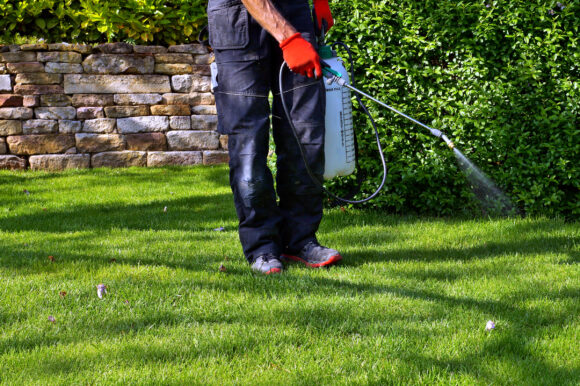
Another example beyond the “CG 21” exclusionary category is the CG 22 64 endorsement often used for pesticide and herbicide application contractors and lawn services. Many agents believe this provides coverage for such activities, but the reality is that there are other work-related exclusions in the CGL policy that often apply to claims involving damage resulting from the application of herbicides and pesticides. I have not written a column about this endorsement, but I did blog about it on my website under the title “When Policy Forms Don’t Do What You Think They Do.”
This is just a sampling of forms to be wary of based on form numbers and titles. Common sense also applies–for example, if you get a quote for a CGL policy with what appears to be a ridiculously low premium quote, pay close attention to the policy forms. I was hiring a tree service to remove storm-damaged trees from my yard and one of the bids came from a newly licensed contractor who had a CGL policy with a premium of less than $800. Examining the schedule of endorsements when I asked for proof of insurance, I found two suspect endorsements, one of which excluded both ongoing and completed operations.
Be vigilant, be conscientious, be smart!
Was this article valuable?
Here are more articles you may enjoy.
 Industry Reacts to Senators’ Letter for Claims Data and Recent Reports
  Agency Network SIAA Acquires MGA Canopy Specialty Insurance
  Viewpoint: The ‘Unbundled’ Insurer Emerges in Age of AI as Value Chain Fragments
  Hordes of Teens on E-Bikes Force Suburbs to Rewrite Road Rules
From This Issue