

In last month’s column, I made the case for carefully reviewing policy deliverables in order to identify exclusionary forms and, if possible, remove or replace them with less onerous endorsements. That column focused on examples of ISO Commercial General Liability (CGL) forms.
This month, let’s examine some ISO Commercial Property (CP) forms. Unlike ISO’s CGL forms, ISO’s CP forms really don’t have a specific form number category for exclusionary forms, so identifying problem endorsements is a little tougher.
Let’s start with the CP 10 36 – Limitations on Coverage For Roof Surfacing. This form was introduced in ISO’s 2012 countrywide filing, so agents should be very familiar with it, along with many other insurer variations on the theme. This form, governed by CLM Division 5, Rule 28, is used to alter coverage on roofs in one or both of the following ways (the cosmetic exclusion, in particular, isn’t approved in every state because of conflicting state laws).
The schedule can change the valuation basis of roof surfacing from replacement cost to actual cash value as of the time of loss or damage for any covered cause of loss and exclude cosmetic damage to roof surfacing caused by wind or hail. “Cosmetic damage” refers to visual changes in roof surfacing appearance that arguably do not result in functional degradation in keeping the elements out of the house.
Needless to say, with predicted severity increases in storm damage, roof surfacing, which has a limited functional life and, thus, replacement cost valuation, is prone to increased exposure to damage. For ACV valuation, the potential issue is not coverage but loss valuation. What constitutes cosmetic damage is likely a more debatable issue, especially given that it may be months before a deterioration in function becomes apparent.
A related exposure often involving roof surfacing has to do with “matching” issues where only part of the roof has direct physical damage, but replacing somewhat worn or weathered damaged shingles with new ones results in a mismatch with the rest of the roof that impacts market value. If there is an interest in this issue, perhaps we’ll devote an entire column to that in the near future. Even more so than cosmetic damage, a number of states have laws impacting matching issues.
Another endorsement of concern is the CP 12 32 – Limitation On Loss Settlement – Blanket Insurance (Margin Clause). Print space does not allow for a detailed discussion of the issues surrounding this form, so I’ll refer you to a Big “I” article that also links to an article by the late, great Don Malecki, CPCU, ARM. Simply do an online search for “Margin Clauses and Blanket Insurance” by Mike Edwards and it should pop up early in the list of hits. Margin clauses effectively reduce the value of blanket coverage by essentially reinstating per structure caps on coverage. If a margin clause cannot be removed, it’s important that the insured understand this and not communicate to business partners that full blanket coverage is available when certifying coverage.
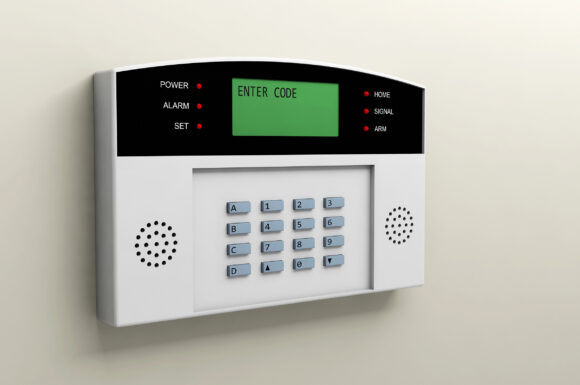
The CP 04 11 – Protective Safeguards and CP 12 11 – Burglary And Robbery Protective Safeguards endorsements make the maintenance of particular protective safeguards a condition of coverage. In reviewing court cases involving claim denials for impaired or inoperable protective systems, such forms are often considered warranties and not representations, meaning they may be interpreted literally even if the resulting denial is nonsensical.
For example, an insured’s building was protected by a burglar alarm system that had not been maintained in sound operating condition. One night, burglars stole several thousand dollars’ worth of property, not from inside the building but rather from the yard behind the building. Although the burglar alarm system did not extend to the yard, the claim was denied because the system was inoperable.
Sometimes removal of these endorsements is possible if not mandated by applicable rules. If not, the insured should be aware of the importance of maintaining these systems and, as warranted, advising the insurer if they are temporarily out of order to the extent that such notice is required.
These are just a few examples of the many exclusionary or limiting endorsements that one may find on a commercial property policy. Does your agency maintain a list of such ISO endorsements to avoid, negotiate, or be wary of? What about non-ISO endorsements used by your insurers?
In last month’s column, I introduced this 3-month series of articles by identifying three phases of preventing uncovered claims for customers. First was identifying loss exposures. Third was quality-controlling policy deliverables by seeking to remove or replace exclusionary or limiting endorsement, the primary subject of this series of columns. Second was properly insuring the loss exposures found in Phase 1, which often involves asking for the attachment, rather than removal, of a particular endorsement. Sometimes coverage can be clarified by endorsement, as we’ll see in next month’s column.
To illustrate using a Commercial Property coverage scenario, I wrote about this five years ago in my column titled “Logic and Language and Forms and Facts: Preventing Coverage Gaps.” A Minnesota agent insured a waterfront property that included several portable docks under a CP 00 10 form that excluded, under Property Not Covered, “Bulkheads, pilings, piers, wharves or docks.” He believed that this excluded damage to real, not personal, property and that the portable docks, being, in his opinion, personal property, were not subject to the exclusion since they were removed from the water and stored on land during the winter.
He might very well have a point, but why pin coverage to his arguable interpretation? The preferred method would be to cover the docks by scheduling them on the ISO CP 14 10 – Additional Property Coverage endorsement and moving them to the Covered Property class.
Next month, we’ll take a look at some exclusionary or limiting Commercial Auto endorsements. And, just like the CP 14 10 example above, we’ll also talk about some endorsements you might consider always asking for because they often resolve arguable coverage issues in advance of claims.
Was this article valuable?
Here are more articles you may enjoy.
 Supervisor’s Punching of Employees Enough for Tort Suit, NC Appeals Court Says
  Industry Reacts to Senators’ Letter for Claims Data and Recent Reports
  Banking Watchdogs Ramp Up AI Scrutiny as Stability Fears Mount, Sources Say
  ‘Unusual’ Isaias Brings Winds, Downed Trees But Fewer Claims Than Expected
From This Issue