
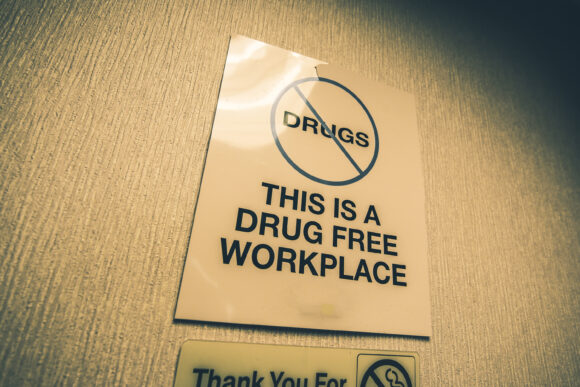
Employers’ attitudes toward cannabis are changing, but not solely by their choice.
More employees are testing positive for marijuana use in the workplace today than five years ago, according to the 2026 Quest Diagnostics Drug Testing Index. Fewer employers are concerned, however. Some have stopped pre-employment cannabis screenings altogether, even in states where they are still permissible. Some are concerned they will not be able to compete for top talent. Others believe their policies won’t change employee behavior seen as increasingly mainstream.
When employers relax their stance on cannabis, they increase the risk of workers’ compensation and liability claims. Agents and brokers bear the responsibility of educating employers about marijuana’s potential dangers and working with clients to develop strategies that protect their workers and companies.
Mainstream Marijuana
Despite remaining federally illegal, research from the Substance Abuse and Mental Health Services Administration (SAMHSA) shows that more than 21 million Americans use cannabis daily, or nearly daily. Marijuana is currently legal for recreational use in 24 states and Washington, D.C., with 40 states allowing it for medical purposes. Additionally, FDA-approved marijuana products and state-licensed medical marijuana were reclassified to a less dangerous Schedule III category in April 2026.
As state laws ease, drug testing policies are becoming increasingly lax. New York, for example, prohibits pre-employment testing for marijuana for most job applicants. Some major employers have removed pre-hire cannabis screenings.
This patchwork of laws and testing bans dilutes the reality that marijuana use on the job can create a cascade of negative consequences for workers and employers. It is also creating a generational gap. Older workers who grew up during a time when cannabis use was banned across all 50 states view the risks differently than younger workers who may be more prone to believe that marijuana use is not overtly dangerous unless they are in a safety-sensitive job, such as airlines or trucking.
From a workers’ compensation standpoint, injuries related to workplace marijuana use can quickly escalate into complex, long-tail claims.
Cannabis Workers’ Comp Complexities
To understand the risks of cannabis use in the workplace, consider the example of an employee who gets hurt on the job. If the company operates in a state that allows drug testing, the worker may test positive for marijuana use after the incident. In many states, however, a positive drug test alone is not enough to deny an employee from receiving workers’ compensation benefits. That’s because marijuana can remain in a person’s system for up to a week.
If the employee denies using cannabis in the past seven days, is not a regular user, and was not high on the job, the workers’ comp claim can snowball. The worker will likely hire an attorney, who will put the burden of proof on the employer. Further, if the employer cannot prove beyond a reasonable doubt that the worker was high on the job at the time of the incident, the employee will become compensable.
Liability Beyond the Injured Worker
A single workers’ compensation claim may create broader liability exposures if it results in injuries to customers, property, and other third parties.
Take the example of a security guard on fire watch who uses marijuana during a break and then falls asleep. If a fire breaks out while the worker is impaired, the entire plant could burn to the ground, and the security guard agency will face litigation. The situation is even worse if employees are in the building at the time of the fire.
Similarly, a pest control company could face multiple liabilities from a single incident. If a worker holding a ladder is impaired, and an employee doing bee eradication work falls from the ladder and suffers serious injuries, the pest control firm could face a workers’ compensation claim, along with lawsuits from the homeowner or property owner where the work was being conducted.
Mitigate Cannabis-Related Risks
Marijuana use can increase workers’ compensation and liability risks, so it is important for employers to establish clear workplace cannabis policies to protect employees and safeguard their businesses. Business owners should consider discouraging workplace cannabis use to limit claims. It is incumbent on agents and brokers to share the risks and potential mitigation steps with their clients.
Consider starting with an open and honest discussion. Explain that while cannabis may be legal and socially acceptable in certain states, business owners are free to set their own rules to address employee behavior. Employers who discourage or ban cannabis use are at less risk of workers’ compensation claims than employers who do not discourage or ban its use. Those that fail to clearly communicate marijuana use policies could face increased liabilities and become uninsurable.
Agents can also recommend clients include strict drug-and-alcohol policies in their employee handbook. The policy should include clear details about drug testing for cannabis, assuming it is permitted in your state. It should also detail the actions to be taken if an employee is found using cannabis on the job. A clear policy will give the employer a certain level of protection from liability.
Both agents and brokers should keep abreast of changing state laws regarding cannabis use and drug testing so they can educate their clients. They should also explain the worst-case scenario, so clients understand the potential downstream risks of workplace marijuana use.
Agents can also encourage employers to follow the counsel of human resources and loss control professionals when it comes to marijuana use.
Laws Have Changed. The Risks Haven’t.
Do not assume the risks of marijuana use have lessened just because legal restrictions have been rolled back. Cannabis’ effect on absenteeism and workplace accidents is well documented. Agents and brokers who share these facts with their clients can help keep workers safe and prevent workers’ compensation and liability claims from spiraling out of control.
Topics Commercial Lines Workers' Compensation Business Insurance Liability
Was this article valuable?
Here are more articles you may enjoy.
 Oaktree’s Deal to Buy A-Cap Insurer Crumbles, Spawning New Talks
  How One Hacker Used AI Agents, a Few Thousand Dollars to Break Into Websites
  KCC Says Isaias Insured Losses to Be $3 Billion; AM Best Calls Storm an Earnings Event
  Home Insurance Tops Property Taxes in Squeeze for US Households
From This Issue