

The tanker captain summoned his years of experience when he saw the blast in front of him. He veered his 300-meter-long ship around the vessel ahead and could see a fire had started. He called the US Navy to tell them of the attack.
The maneuver in the Strait of Hormuz with drones and missiles overhead is the sort of quick thinking that’s proving vital to getting oil supplies to the global market as Washington and Tehran fail to reach agreement on reopening the waterway to regular traffic.
The account of the incident, told to Bloomberg by a captain in his early 40s who declined to be identified while discussing commercially sensitive journeys, shows how and why those flows from the Middle East are rising largely under the watch of the US military.
His vessel is among the ships engaged in shuttle runs through the strait, ferrying barrels often at night and with strict instructions about what equipment can be used — no lights, no phones and with only one radar.
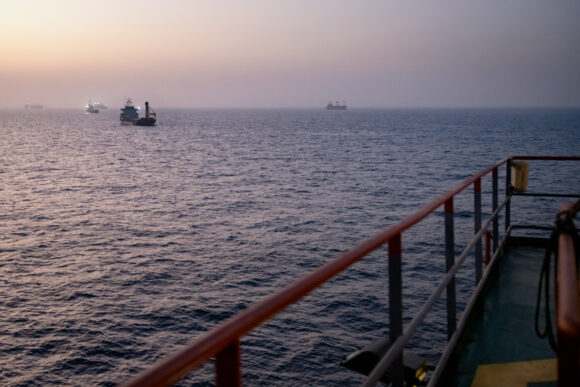
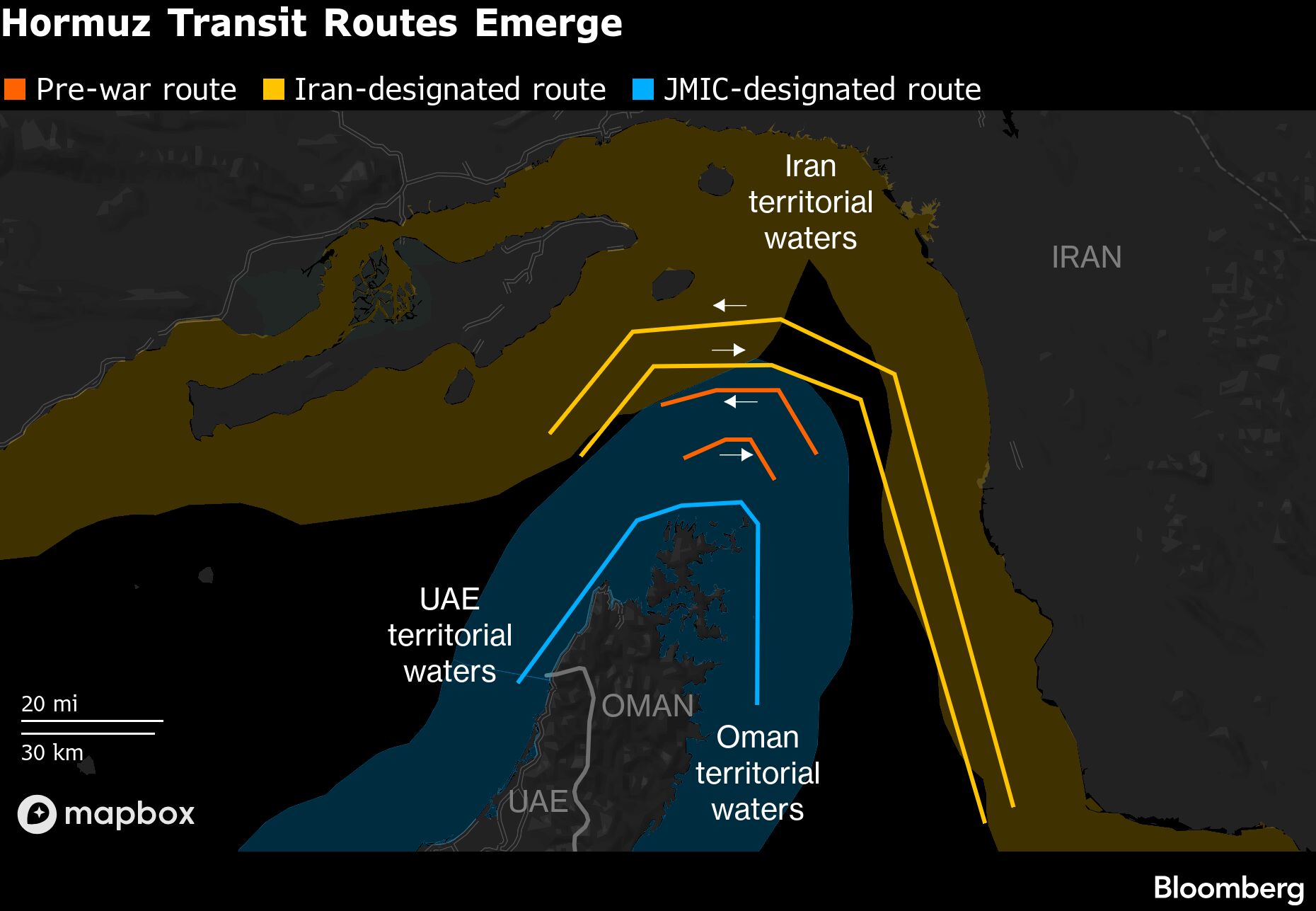
They were often just a mile from the coast of Oman, though the depth of the sea there is about 100 meters, more than enough for even the biggest supertankers to sail through. The captain said he and his crew got their bearings by using the coast and lighthouses as a reference.
“I’m just lucky because I still remember the traditional navigation, the old school,” he said in an interview from the Philippines, his home country where he is now on vacation after a three-month stint largely shuttling in Hormuz. “They required no navigational lights. It’s quite challenging.”
The transits are a lifeline to gulf energy producers and a boon to shipowners and commodity traders who stand to reap billions of dollars from the trade. There’s also the prospect of a handsome payday for crewmembers willing to brave the crossing.
US banks JPMorgan Chase & Co. and Goldman Sachs Group Inc. reckon crude oil flows from the Middle East are returning toward pre-war levels, propelled by the Hormuz shipments. JPMorgan estimated daily flows through the Gulf were 17.5 million barrels.
The US has been quietly coordinating with shippers since early summer to plot routes and avoid Iranian mines. American forces “have assisted thousands of ships through the Strait of Hormuz in recent months by providing coordinated protection,” US Central Command said in a statement. “We remain laser-focused and will continue working with US interagency partners, regional countries, and the shipping industry to increase the maritime traffic flow.”
The captain would often be told of the military support that was keeping watch over him and could see it overhead. On one occasion he saw what he described as a jet plane flying above them, and also a helicopter.
The radio silence while crossing Hormuz made his time at sea even more unusual, he said. The lack of noise on the radio was only punctuated by the chatter of more people than usual manning the bridge to watch out for attacks.
Another captain on a liquefied natural gas tanker that has traversed Hormuz said that the journey begins by shutting the breaker that connects to the ship’s location transponder, or AIS, to mask their whereabouts as they hug the Omani coast. Then they begin barricading the main decks with sandbags with the assumption that they could be attacked by drones or a missile.
These gas carriers, which are fewer in number than oil tankers, have been more cautious. But at least eight LNG ships have traversed the strait in the last two weeks with safety assurances from the US, the captain said.
Iran has its own blacklist for tankers engaged in the trade. But shipping executives estimate about a one in 20 chance of being hit while crossing Hormuz, with the ships under the watch of the US military.
The oil tanker captain’s most recent contract was a month shorter than usual because he knew the voyage “is not easy.” He still received a multiple of his usual salary to transit.
Bloomberg previously reported that one shipowner was offering its crew an extra six months of pay to shuttle through Hormuz. The amounts on offer would be significant for anyone, and much of the world’s tanker crews are from lower-income countries like the Philippines and India.
With two million barrels of oil on board, American forces had been watching over the captain’s tanker, part of a strict monitoring process that requires regular check-ins.
After he saw the blast ahead, the captain was told by the US Navy that other vessels beyond his were managing to continue on their journeys, and that he should do the same. On another occasion, the captain’s ship was the one that came under attack, but there was no damage and no injury to the crew. It was one of many near-misses.
Even when his transits concluded without incident, the signs of danger in Hormuz were never far away. “It can happen any time,” the captain said. During the offloading of cargo to another ship outside Hormuz, he and his crew heard vessels broadcasting that they were under attack near Hormuz.
Ultimately, the decision to transit rests with a ship’s captain. As long as they are willing to cross, then millions of barrels of oil a day will keep hitting global markets. The International Maritime Organization estimates that 24 seafarers have died in attacks across the region since the war started.
Much of the time crossing Hormuz is spent talking to the US Navy. The captain interviewed by Bloomberg said the Americans provide the route and give ships waypoints to cross throughout the voyage. Vessels report to the military every 30 minutes to confirm how the passage is going and whether they’d seen any missiles on their way.
Throughout his crossings, the captain and his team prepared for the worst. Like on the LNG ship, they would place sandbags and drums filled with water near the bridge as a precaution. The oil tanker’s emergency fire pump kept running for the entirety of the transit and there were always emergency fire hoses at the ready near the accommodation area.
“Tankers are always at risk all the time,” the captain said. “It’s a very dangerous vessel.”
He said his children had been waiting for his contract to finish and for him to come home to the Philippines safely. But he says he’s always ready to go back on board. “My family is quite scared, but I told them that I can handle the situation,” he said. “I’m very proud. I enjoy my job, actually.”
Photograph: Oil tankers and cargo vessels off the coast of Oman; photo credit: Elke Scholiers/Getty Images Europe
Was this article valuable?
Here are more articles you may enjoy.
 Alabama Pharmacy, Not Agent, at Fault for Not Reading Policy Before $5M Judgment
  All in the Family: Husband, Wife and Daughter Indicted for Insurance Fraud and Bribery
  Chubb CEO Greenberg: Industry Has to ‘Put Arms Around’ AI Liability
  Home Insurance Tops Property Taxes in Squeeze for US Households

