

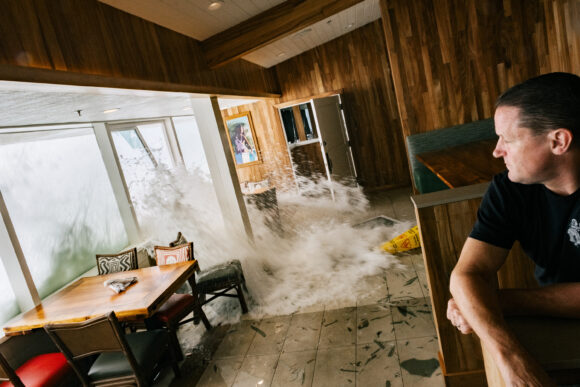
Duke’s Malibu has endured one disaster after another. The famed restaurant perched over the Pacific narrowly survived last year’s Palisades Fire, though smoke left it badly damaged. Five weeks later, a mudslide forced it to close for 13 months.
Last weekend, waves came crashing through its windows.
Related: Don’t Sweat the Heatwave, El Niño Is Cooking up Some Raucous Weather for California
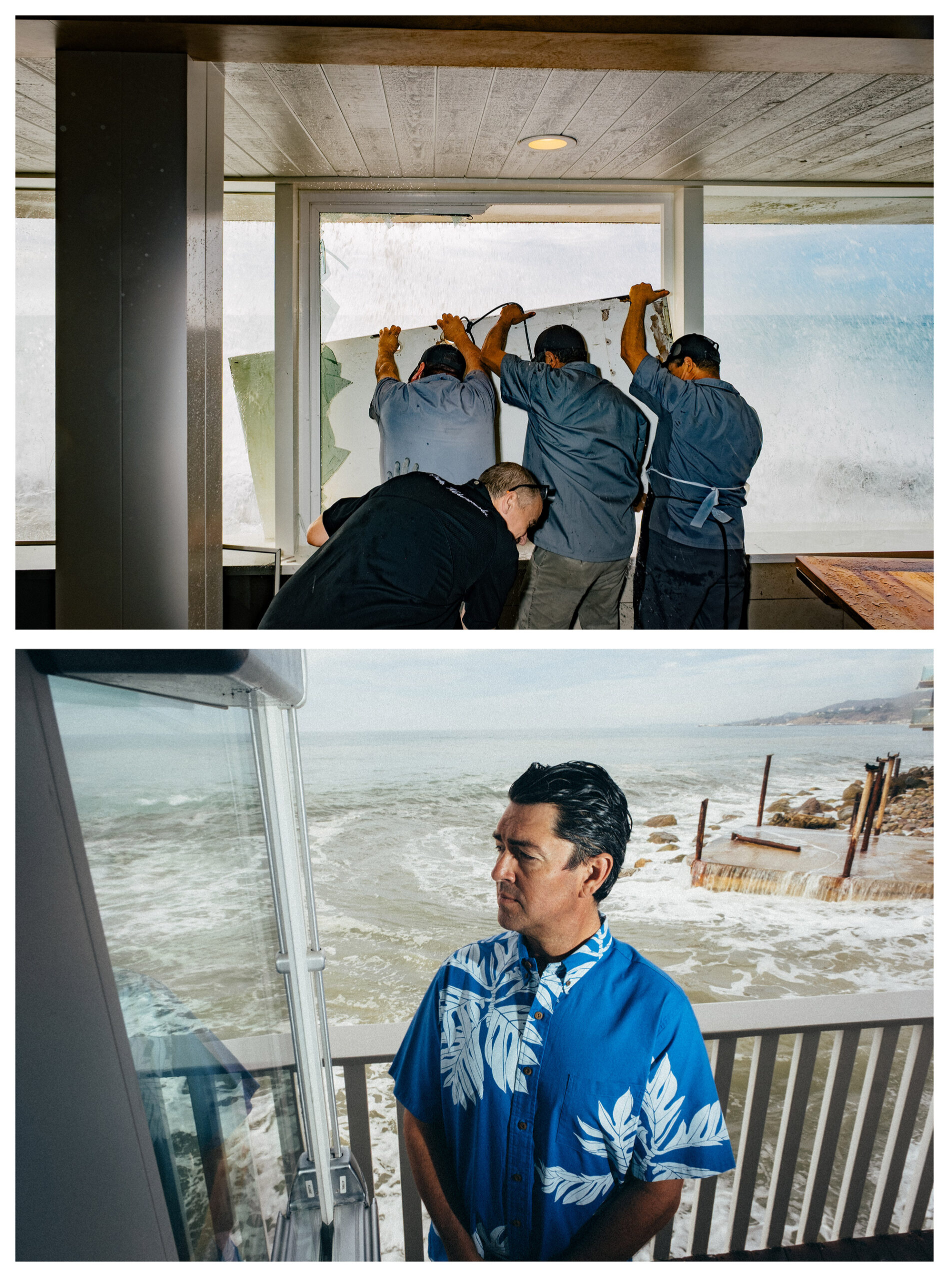
Workers scrambled to board up the openings as water surged into the building. An old door used as a barricade snapped in half, and when the flooding finally receded, broken glass littered the floor — a reminder of the hazards bearing down on one of America’s most expensive stretches of coastline.
Malibu, a billionaire haven and symbol of beachfront paradise, has long contended with the disaster risks that stalk Southern California, while remaining a highly sought-after refuge. But almost two years after the Palisades Fire destroyed approximately 700 homes in the city, properties are sitting empty and burned lots are struggling to find buyers. Now, the powerful El Niño weather system is bringing damaging waves and worsening beach erosion to the region.
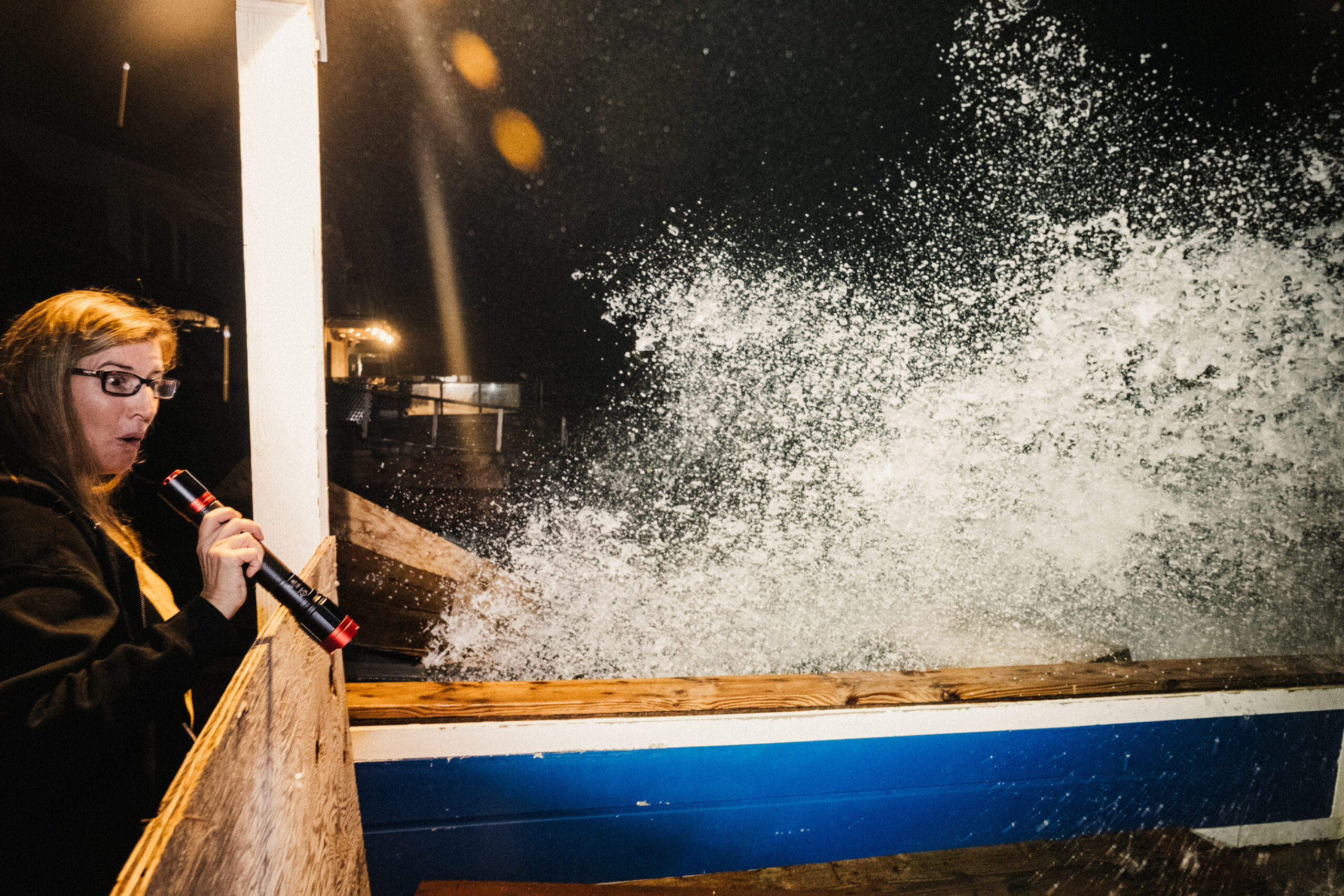
“I’ve never seen the waves that high,” said Duke’s General Manager Jimmy Chavez. He said many of the restaurant’s regulars have left the area since the fires. “The biggest change for us is most of our neighbors are gone, you know?”
The compounding shocks are testing the enduring appeal — and extraordinary prices — of living at the edge of the Pacific. In Malibu, where multimillion-dollar homes have long commanded a premium precisely because they sit steps from the ocean, that proximity is increasingly becoming part of the risk residents are pricing in. This year’s El Niño, which could rank among the strongest since the 1950s, and severe Pacific storms are already battering the coast. High surf and erosion last month opened a massive sinkhole at a $10 million beachfront Malibu house tied to actor Nicolas Cage, rupturing a gas line, compromising the neighborhood’s only access road and prompting evacuation orders for 31 properties.
The destruction has rippled up and down California, flooding boardwalks, closing stretches of the Pacific Coast Highway and damaging homes in Dana Point and Laguna Beach. Governor Gavin Newsom declared a statewide emergency tied to El Niño as the state prepares for more rainfall, landslides and coastal erosion.
What California is seeing now is “decades worth of sea level rise in a month or two,” said Billy Sweet, an oceanographer for the National Oceanic and Atmospheric Administration.
For Malibu, it’s a one-two punch to a community still reeling from January 2025’s devastating wildfires. The city’s population fell more than 9% in the year following the Palisades Fire, to about 6,200 residents as of January, according to California Department of Finance estimates. A Malibu-commissioned study estimated roughly 1,400 residents were displaced by the blaze. Among 39 beachfront lots along a stretch of the Pacific Coast Highway, 14 have seen price cuts since the fires, said Madison Hildebrand, a real estate agent for Compass.
Homes that escaped the flames are now at risk of a “wave uprush,” when waves surge farther up the shoreline and reach beachfront structures, Hildebrand said. At residences built atop caissons or pilings, water could rush underneath the structures, slamming into the bank behind them and shooting upward, eroding exposed land and potentially breaking through construction materials. One of his clients has put plans to sell a Malibu property on hold until the full impact of the high tides becomes clear.
Longer term, even more homes are at risk. A 2019 US Geological Survey study found that by the 2040s, the combination of 10 inches of sea-level rise and an extreme storm could expose more than 150,000 California residents and over $30 billion in real estate to coastal flooding.
“We’ve already seen some significant impacts in the state, but it’s most likely going to get significantly worse in terms of erosion and flooding and wave impacts and damage,” said Patrick Barnard, research director at UC Santa Cruz’s Center for Coastal Climate Resilience. “It’s lining up to be a really significant winter for California.”
For some homeowners, that warning is already a reality. Natalie Driessen bought her dream home on Beach Road in Dana Point around two and a half years ago. Now, she’s watching the Pacific Ocean slowly eat it away.
Driessen had been fixing up the home so she and her 20-month-old daughter could move there full time. Over the past month, she has watched waves as tall as her two-story house engulf her backyard. Together with a neighbor, the plastic surgeon estimates she has spent around $400,000 to pump more sand, put wood back up and set up emergency barriers. Residents have been asking the California Coastal Commission for more than a year to replenish the sand protecting their homes, she said.
“When I bought the home, there was probably 40 feet of sand in front of my house,” said Driessen. “I bought it with my Realtor telling me my seawall has been the same seawall since 1970. And my home has been there since 1956.”
Just 10 minutes down the coast, San Clemente is confronting much of the same. Gary Ward, a surfer turned real estate agent, has been catching waves every morning for the past 50 years. He’s watched the shoreline near his home retreat firsthand, with a stretch of sand once as wide as a football field disappearing entirely.
El Niño has made surfing “phenomenal,” Ward said, but it’s also making him wonder whether he should get waterproof business cards.
“I live at a spot where everybody wants to live the beach dream,” said Ward. “So people are super concerned and if we don’t fix the sand issue, we’re going to see prices decrease based on not having the beach access that we’ve always had.”
In Malibu, fires have left the coastline even more exposed. “There was an entire coast of seawalls there, and now they are partially destroyed,” said Mayor Bruce Silverstein, pointing to burned-down beachfront properties that have yet to be rebuilt. Some homeowners have asked the city for help with repairs or other financial assistance, but Silverstein said that’s ultimately “outside the realm of what a city can do.”
“You really shouldn’t own a house on the beach unless you can afford insurance and ultimately afford the chance that your house is going to disappear at some point in time,” he said.
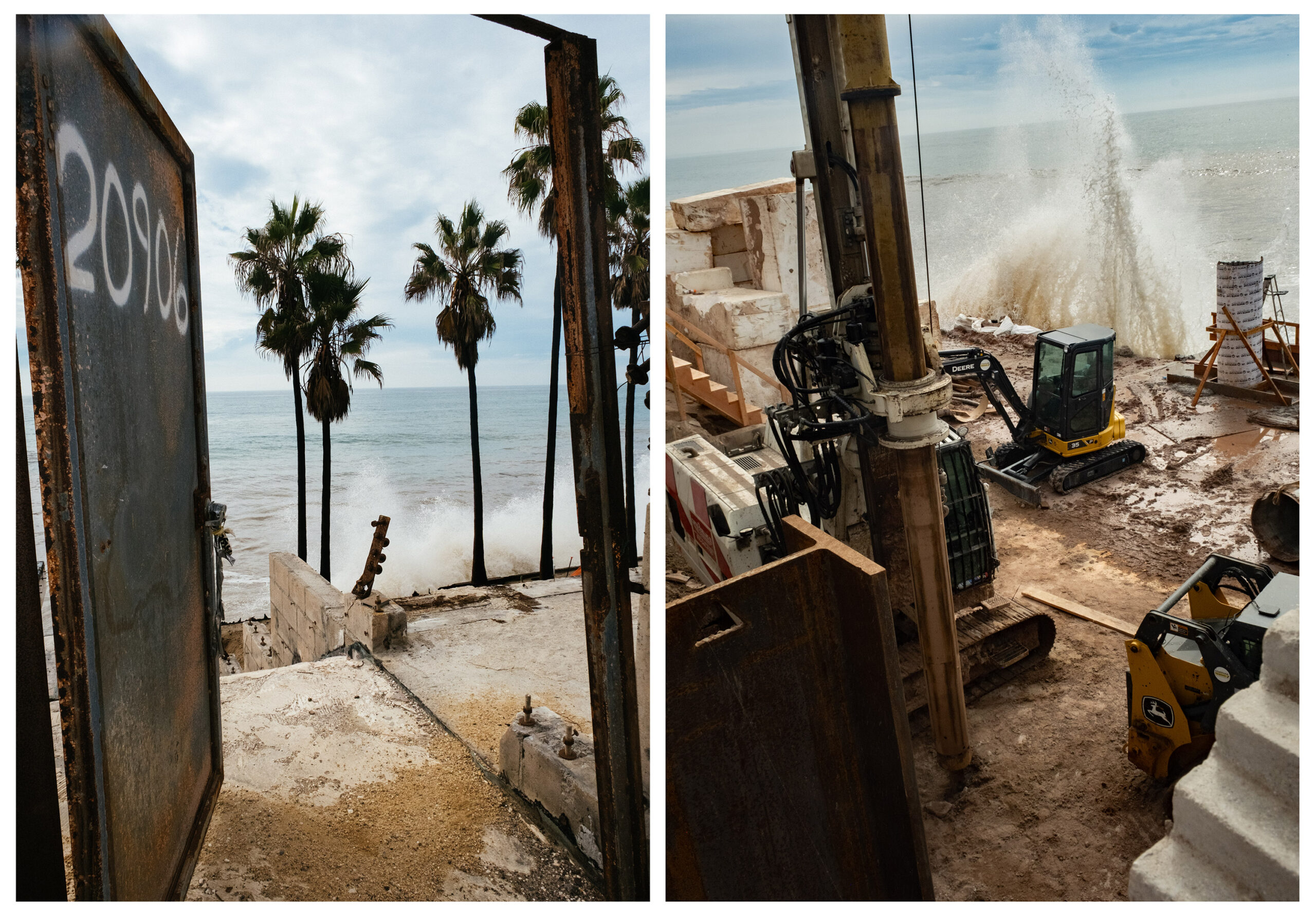
Defending against the sea can come with a steep price tag. Alpha Structural, an engineering firm based in Southern California, is completing emergency repairs on a 14-foot timber seawall in Malibu, using large sacks of cement and sand to absorb the force of the waves. Crews have excavated behind the wall to keep it from leaning and installed temporary drainage systems. The work has cost more than $80,000, said Executive Vice-President Kyle Tourjé.
Permanent repairs can run into seven figures, Tourjé said, adding that his firm is seeing increased demand from homeowners who deferred maintenance only to watch their seawalls get completely destroyed. Part of the problem is age: Many coastal properties were built between the 1940s and 1970s, under different building codes and with foundation designs that didn’t anticipate rising seas.
Malibu’s real estate market was already facing a reset after the 2025 fire. This year through September, 19 single-family beachfront properties sold in the wealthy enclave, at a median price of $8.5 million, according to data compiled by Hildebrand, the Compass real estate agent. In the same time period in 2024, 27 sold at a median price of $13.5 million.
Some burned-down properties are having a hard time drawing buyers. At 20802 Pacific Coast Hwy stood a beachfront home that used to fetch tens of thousands of dollars for a weekend rental, according to real estate agent Steve Lewis. The house was destroyed by fire and the empty lot is now sitting on the market for $5.7 million. So far, it hasn’t drawn a lot of interest, Lewis said.
“The truth is, whoever buys that property, I believe is going to be a professional,” he said. “It’s not going to be somebody that remodeled the kitchen once and thinks they could do it.”
For Malibu die-hards, the floods are just another hazard to endure. Janus Cercone has lived through several El Niños and fires since moving to Malibu more than three decades ago. On a recent Tuesday, she got up and swam in the ocean, worked during the day, then walked the beach with her husband and a glass wine before dinner.
“Malibu is a brand,” said Cercone, a developer who lives in a beachfront home. “Can you get a little black dress off the rack? Yes. But if you can afford a Dior, why would you not buy the Dior?”
“It’s going to cost you more,” she said. “It’s inconvenient to get, but it’s the best.”
Top photo: Lead server Matthew Ammons watches as a wave breaks through a window at Duke’s in Malibu, flooding the interior. Bloomberg.
Was this article valuable?
Here are more articles you may enjoy.
 Florida Supreme Court Approves Board Certification in Insurance Law
  Rider Dies, Others Hurt on Six Flags Roller Coaster in Georgia
  Friend of Suspected FBI Data Thief: ‘Crazy’ Teen Warned Not to Hack Bureau
  AI’s Water Strain Includes Surging Demand From Electricity Use

