

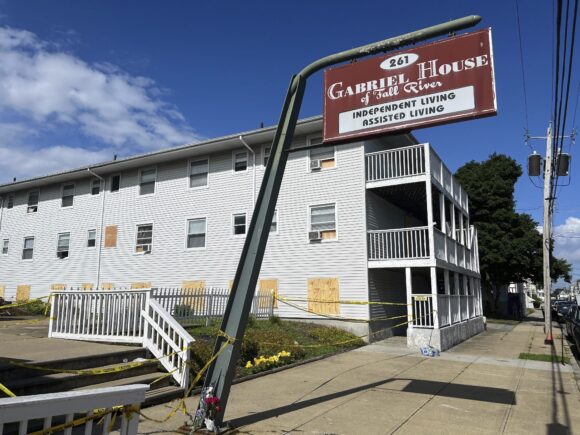
One year after the tragic fire at Gabriel House in Fall River claimed the lives of 10 residents and injured dozens more, Massachusetts has finalized a set of new safety regulations to better protect those living in assisted living residences across the state.
The new regulations implement recommendations from the Assisted Living Residences Commission, incorporate public feedback, and set stronger standards for fire safety, emergency preparedness, resident protections and accountability by the industry.
The state conducted a survey on safety of all 272 assisted living residences (ALRs) in the state as part of the effort to develop the regulations.
The safety reforms are in addition to new assisted living consumer protection regulations recently issued by Attorney General Andrea Joy Campbell.
Smoking or Oxygen Machine Eyed as Possible Causes of Assisted Living Home Fire
“The Gabriel House fire was a heartbreaking tragedy that forever changed the lives of so many families and the Fall River community,” said Governor Maura Healey. “Over the past year, we’ve worked closely with residents, families, firefighters, first responders, advocates and providers to make sure we learn from that tragedy and take meaningful action. These reforms will strengthen safety, improve emergency preparedness and give families greater confidence that their loved ones are living in safe, well-prepared communities.”
The final regulations include significant new requirements, including:
- Annual fire inspections conducted by local fire departments.
- Annual fire safety instruction for staff.
- Quarterly fire drills and annual simulated evacuation exercises on every shift.
- Enhanced emergency preparedness plans developed in coordination with local fire departments and state emergency management officials.
- Automated external defibrillators (AEDs), naloxone and epinephrine at every residence, with CPR- and AED-certified staff available at all times.
- Stronger resident protections through overnight safety checks in Special Care Residences, emergency response performance standards, improved incident tracking and documentation, and clearly posted evacuation procedures throughout each residence.
Deadly Massachusetts Fire Highlights Assisted Living Regulation, Staffing
The regulations address implementation of basic health services in assisted living residences. Residences that choose to offer basic health services must meet new certification standards and maintain licensed nursing coverage on-site for at least 16 hours each day.
The final regulations will take effect on July 31, 2026.
Attorney General Campbell announced consumer protection regulations for assisted living residences (ALRs) to protect residents from unfair and deceptive acts and practices, including misrepresentation of available services, improper fees, and unlawful evictions. The regulations are the first of their kind under the state’s consumer protection law.
The new regulations focus on key areas of consumer protection, including financial protections and billing transparency, protection against misrepresentation of services, contractual and eviction protections, and complaint and reporting mechanisms.
Among other rules, the new consumer protection regulations state that:
- ALRs should have straightforward service agreements that clearly disclose the cost of services provided in the residence, as well as guidelines for when those costs may increase.
- Residents should have transparent information about what may happen if they cannot afford to remain in the ALR, or if they require advanced care that the ALR cannot provide.
- ALRs should provide clear information about the availability of nursing care at the residence.
- Residents in ALRs have the same rights as other tenants, including protections related to fees, eviction, and other tenancy matters.
These consumer protection regulations will become effective on July 17, 2026.
The Gabriel House tragedy triggered wrongful death and other lawsuits by residents and a dispute over liability between the owner and a fire safety company.
In January, a judge blocked the facility’s owners from accessing certain insurance proceeds from a $6 million property policy. The hold on the proceeds was requested by a man whose mother died in the fire.
The owners received about $550,000 in insurance claims payments after the fire and before the attachment that they said they used to pay taxes, mortgage and salaries. They argued that not having the remaining insurance funds from the $6 million policy would mean the business would likely fail and the building deteriorate and lose value.
One unusual turn in the case has been the discovery that Gabriel House had no liability insurance for the business.
Photo: Boards cover the windows of the Gabriel House assisted living facility, where a fire on Sunday killed several people, Tuesday, July 15, 2025 in Fall River, Mass. (AP Photo/Kimberlee Kruesi)
Topics Massachusetts
Was this article valuable?
Here are more articles you may enjoy.
 New Jersey Employers Should Prepare Now for Oct. 1 Independent Contractor Rule
  Town Denied Insurance for $11M Judgment Over the Political Closing of Quarry
  Cornell Backs Probe Into Fraternity Sexual Assault Allegations
  Takeaways From AP Analysis on the Flaws in National Flood Insurance

