

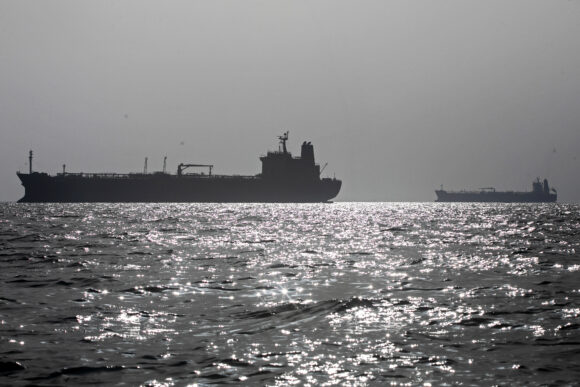
The US attacked more Iranian oil tankers overnight, with the worsening tensions over control of the Strait of Hormuz sending Brent crude beyond $100 a barrel.
The American military said it “destroyed” five vessels in response to Iran’s Islamic Revolutionary Guard Corps targeting one of its warships.
The American vessel “successfully evaded the attempted Iranian attacks,” Central Command, which oversees US forces in the Middle East, said. “No American personnel were harmed.”
Centcom said it hit four tankers in the Gulf of Oman and one near Kharg Island, which sits within the Persian Gulf and is Iran’s main oil-export terminal.
“American forces directed the crews to abandon ship before the vessels were struck and rendered inoperable,” Centcom said, without clarifying if the ships were carrying oil or were empty.
The US has destroyed at least eight oil tankers since Saturday. It’s unclear what proportion of Iran’s energy fleet that represents.
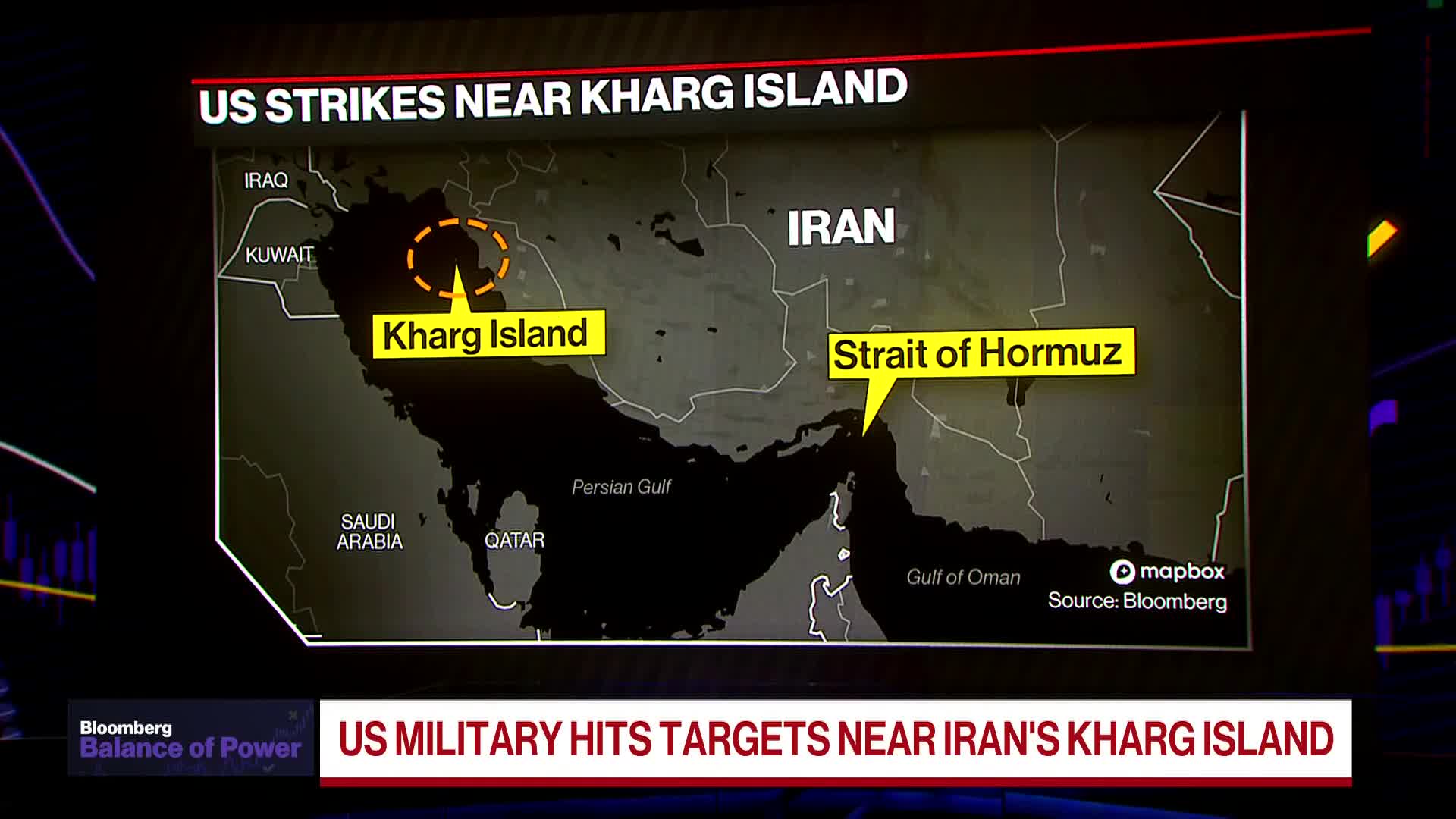
The latest US strikes probably won’t, on their own, make a big dent in Iran’s ability to delivery crude oil. Only one of the five ships was a so-called very large crude carrier, which can carry 2 million barrels and is the main type of vessel engaged in transporting the nation’s crude to customers in places such as China.
Two of them were Aframax-class tankers, which can carry roughly 750,000 barrels, while the others were smaller ships that transport refined petroleum and gas.
Jordan Attacked
Iranian media said Tehran retaliated by targeting two other US warships and eight oil tankers in the Persian Gulf. There was no immediate confirmation of those attacks or any reports of damage.
The IRGC also fired ballistic missiles at Al-Azraq Air Base in Jordan. The Arab country’s government said it intercepted 18 missiles and another two fell in uninhabited areas.
Brent rose 2.5% to above $100 a barrel on Wednesday. That extended its rise to 65% for the year, adding to political pressure on US President Donald Trump ahead of midterm elections on Nov. 3.
Diesel pump prices in America reached a record high last week, with the conflict preventing most ships from traversing the Strait of Hormuz and curbing global supplies of energy and other commodities such as aluminum.
“When they try to hit US naval ships, they will get hit themselves,” US Secretary of State Marco Rubio told reporters, when asked about Iran. “The back and forth is pretty straightforward. For every time they do that, or try to do that, they’re going to lose tankers.”
The tit-for-tat strikes underscored the difficulty for the US as it tries to avoid intense hostilities with the Islamic Republic and focuses on squeezing its economy, all in a bid to get Tehran’s leaders to reopen the strait and restart negotiations.
The US is maintaining a naval blockade that is preventing Iran from exporting oil and importing vital goods, and contributing to inflation accelerating to almost 90%. The Iranian rial is weakening heavily and is now down about 20% against the dollar in the past two months, according to bonbast.com, which tracks the currency’s black-market rate.
Trump and his defense officials have repeatedly said Iran’s military is effectively incapacitated, while Treasury Secretary Scott Bessent recently said the pressure campaign “means that likely there will not be a large-scale kinetic restart.”
Still, Iran’s leaders believe they can withstand the pressure for at least months, Bloomberg has reported, and keep up attacks on commercial vessels as it seeks to control traffic through the Hormuz strait.
Iran is in talks with Oman for a deal to manage traffic through the waterway. While they are still negotiating, any agreement is likely to state Iran has the right to determine which ships can enter the Persian Gulf and possibly charge fees. The US and its allies would likely oppose any pact that restricts free movement through the strait, which they regard as an international waterway.
Elsewhere, tensions remain high between Saudi Arabia and the Houthis in Yemen. The Iran-backed group claimed attacks on energy sites in southern Saudi Arabia on Tuesday, most of them used for distributing fuel to the domestic market.
Saudi authorities issued air-warning alerts in the southern town of Khamis Mushait on Wednesday, but quickly said the danger had passed. They didn’t report any damage or casualties.
Photo: Ships anchored in the Strait of Hormuz earlier this year. Photographer: Majid Saeedi/Getty Images
Was this article valuable?
Here are more articles you may enjoy.
 NYC Restaurants Shut Off Air Conditioning, Close on Sundays as Costs Surge
  Europe’s Insurers Cut Coverage of Weather Losses, Report Says
  Harbor Emerges From Stealth with $10M Funding to Handle AI-Agent Risk
  ‘Unusual’ Isaias Brings Winds, Downed Trees But Fewer Claims Than Expected

