

A powerful coalition of tech companies backed by the White House’s artificial intelligence chief appears to have failed to persuade lawmakers to use a must-pass defense bill to block state governments from regulating artificial intelligence, a key congressional Republican signaled Tuesday.
House Majority Leader Steve Scalise told reporters the defense bill “wasn’t the best place” for a provision preempting state AI laws. “But we’re still looking at other places, because there’s still an interest,” he added.
The House and Senate Armed Services Committees, which are negotiating a final bill, did not immediately respond to requests for comment.
The defeat marks the second time this year that tech giants have been thwarted in their efforts to override state AI regulations by tucking a provision into broader legislation on a fast track to pass Congress.
The loss is a letdown for large AI companies including Meta Platforms Inc., OpenAI, Alphabet Inc.’s Google and venture capital giant Andreessen Horowitz, all of which had argued in favor of a federal standard that would preempt state AI regulations.
White House AI czar David Sacks, backed by Republican congressional leaders, led the eleventh-hour push to add the AI language into the National Defense Authorization Act despite resistance from lawmakers on the defense committees in both chambers.
“The White House is working with senators and House members to try to come up with something that works but preserves states’ rights,” Senate Majority Leader John Thune said earlier on Tuesday. “Both sides are kind of dug in.”
The provision pushed by Sacks and others would have halted emerging state-level regulatory efforts that would hold companies accountable for harms caused by AI products. Some proposals circulating on Capitol Hill would have replaced those state efforts with a narrow set of federal standards.
President Donald Trump, who has developed close relationships with the chief executives of leading AI companies, last month urged Congress to block state-level AI regulation and suggested incorporating a provision in the defense bill.
The tech industry has vigorously fought state regulation of artificial intelligence, arguing such limitations slow progress and risk ceding ground to Chinese competitors. They have particularly focused their lobbying firepower on AI regulations under consideration in New York and California, arguing they are too heavy-handed.
The Senate overwhelmingly rejected a similar measure limiting state AI regulations in a 99-1 vote just months ago. It’s likely lawmakers will attempt to bring up the issue again next year.
House Armed Services Committee Chair Mike Rogers said he’s planning to release the massive compromise defense measure on Thursday.
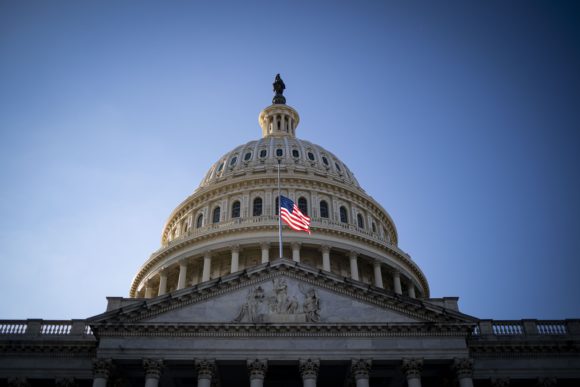
Photo: Photographer: Al Drago/Bloomberg
Was this article valuable?
Here are more articles you may enjoy.
 Oaktree’s Deal to Buy A-Cap Insurer Crumbles, Spawning New Talks
  Chubb CEO Greenberg: Industry Has to ‘Put Arms Around’ AI Liability
  Roofer, Insurance Producer Charged in Separate Fraud Cases in the Carolinas
  Home Insurance Tops Property Taxes in Squeeze for US Households

