

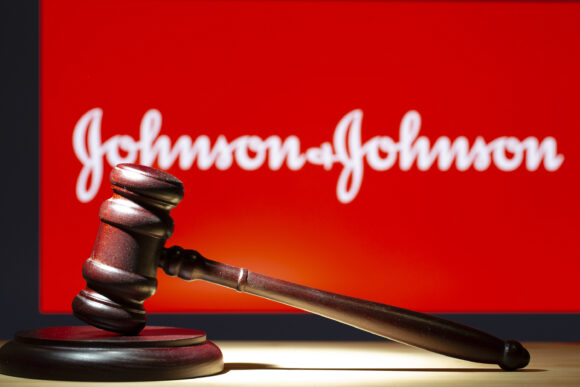
A Baltimore jury ordered Johnson & Johnson and its subsidiaries to pay over $1.5 billion to a woman who claimed decades of exposure to asbestos in the company’s talc-based products caused her peritoneal mesothelioma, a form of cancer.
Jurors in the Circuit Court for Baltimore City, Maryland, on Monday found the company, two of its subsidiaries and spinoff Kenvue liable for failing to warn plaintiff Cherie Craft that its baby powder contained asbestos.
Johnson & Johnson said it will appeal the jury’s decision, which the plaintiff’s law firm said was the largest-ever sum awarded against J&J for a single plaintiff.
The award to Craft, who was diagnosed with mesothelioma in January 2024, includes $59.84 million in compensatory damages and punitive damages of $1 billion against J&J and $500 million against Pecos River Talc – a J&J subsidiary, according to court documents. The case follows a California jury decision earlier in December that awarded $40 million to two women who said the company’s baby powder was to blame for their ovarian cancer.
Peritoneal mesothelioma is a rare cancer that develops in the lining of the abdomen and abdominal organs. It is most often linked to asbestos exposure. While there is no cure, treatments such as surgery, chemotherapy, and palliative care can help manage symptoms and improve quality of life.
“Cherie Craft runs a non-profit where she pours her life into helping others. Her cancer was preventable. She used Johnson’s Baby Powder every day of her life until she was diagnosed with cancer,” said Jessica Dean, a partner at Dean Omar Branham Shirley, which represented Craft. “J&J refused to accept any responsibility and fought at every turn.”
Johnson & Johnson called the ruling “egregious” and “patently unconstitutional.”
“We will immediately appeal this verdict,” Erik Haas, J&J’s worldwide vice president of litigation, said in a statement, arguing the decision resulted from “gross errors” by the trial court and was “squarely at odds” with most talc cases in which the company has prevailed.
Haas reiterated J&J’s position that its talc products are safe and do not contain asbestos, citing decades of studies. “These lawsuits are predicated on junk science,” he said.
The company faces lawsuits from more than 67,000 plaintiffs who say they were diagnosed with cancer after using its baby powder and other talc products, a claim J&J has consistently denied. It has previously sought to resolve the litigation through a proposed bankruptcy settlement that would allocate billions of dollars to claimants, but those efforts have been rejected by courts.
J&J stopped selling talc-based baby powder in the United States in 2020 and globally in 2023, switching to cornstarch-based alternatives.
The Maryland verdict adds to a series of large awards against J&J in talc cases, though many have been reduced or overturned on appeal. The company has set aside billions for litigation costs and settlements as it continues to fight claims in courts across the country.
(Reporting by Mrinmay Dey in Bengaluru; Editing by Muralikumar Anantharaman)
Was this article valuable?
Here are more articles you may enjoy.
 Travelers Reports Solid Underwriting, Record Investment Income for Q3
  ‘Unusual’ Isaias Brings Winds, Downed Trees But Fewer Claims Than Expected
  World’s Largest Retirement Community Set to Borrow $180 Million for More Homes
  Report: Auto Insurance Total Loss Frequency Climbs, More Drivers Pay Repairs

