

Americans are leaving some of the nation’s most flood-prone communities at an accelerating pace, suggesting that climate concerns are beginning to influence migration decisions alongside more traditional factors such as housing costs and quality of life.
High-flood-risk US counties — those classified in the top 10% for their share of homes that are very vulnerable to flooding — lost a net 63,357 domestic residents from mid-2024 to mid-2025, nearly double the outflow recorded over the previous 12-month period, according to an analysis released Wednesday by real estate brokerage Redfin. In 2024, flood-prone counties collectively posted a net population loss for the first time in five years.
Meanwhile, counties with relatively low flood risk gained nearly 70,000 residents on net, the largest increase since 2018.
The findings come as climate and weather risk is increasingly becoming part of the affordability equation for many homeowners, particularly as insurance and maintenance costs rise in vulnerable regions.
The new analysis combines US Census Bureau data on domestic migration with flood-risk assessments from the climate analytics firm First Street. Redfin also drew on results of a survey conducted by Ipsos in May of roughly 1,000 Americans planning to move within the next year, to better understand the motivations behind relocation decisions.
“Affordability is still the primary reason people move, but affordability and climate risk are becoming more tightly linked,” Redfin Chief Economist Daryl Fairweather said. Rising insurance premiums and homeowners association fees, and maintenance costs associated with extreme weather, are increasing the cost of owning a home in flood-prone areas, she said.
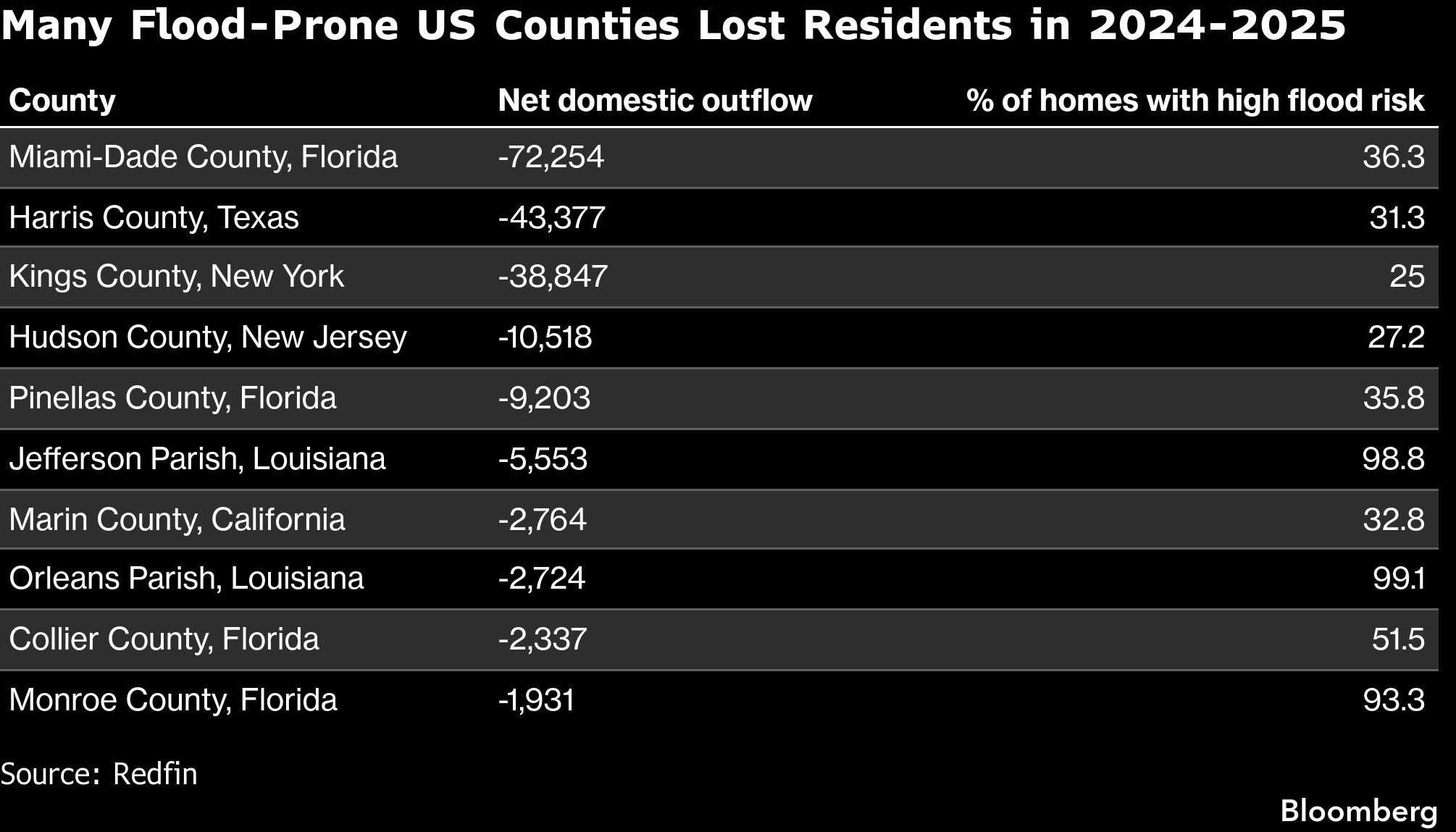
Florida’s Miami-Dade County saw the largest net domestic outflow among flood-prone counties, losing more than 72,000 residents, the biggest loss on record for the county. Florida is the most expensive US state for homeowners insurance, with average annual premiums topping $8,000 after jumping 18% last year, according to Insurify, the online insurance shopping site.
Harris County, Texas, home to Houston, ranks second with a net loss of more than 43,000 residents. Kings County, New York; Hudson County, New Jersey; and the San Francisco Bay Area’s Marin County also factor among the biggest population losers.
But not every flood-prone county in the US is losing residents. More than half of high-risk counties analyzed still recorded net inflows, particularly in relatively affordable parts of Florida, Texas and North Carolina. St. Johns County, Florida, just south of Jacksonville, posted the largest gain.
The data marks a reversal from the pandemic years, when low mortgage rates and remote work fueled migration to many coastal and Sun Belt destinations despite growing climate risks. From 2020 through 2023, flood-prone counties generally gained residents. That dynamic may be changing back to the outflow seen in the years before the Covid-19 pandemic. But 2017 was a major hurricane year with three devastating storms: Harvey, Maria and Irma. Last year’s outflow occurred even with no named storms making landfall in the US.
The financial consequences of climate exposure have become more visible in recent years. Insurance premiums have surged in many coastal real-estate markets, while repeated storms and flooding have driven up repair and maintenance costs. In some areas, homeowners have also faced difficulty obtaining or renewing insurance coverage.
Survey responses suggest those concerns are increasingly influencing relocation decisions. Sixteen percent of those planning to move within the next year cited concern about natural disasters or climate risks as a reason. Among those planning an interstate move, the share rose to 21%.
What surprised Fairweather about the survey results was how climate and weather concerns compared with more traditional motivations for moving. “People ranked concern for natural disasters more often than moving for a new job,” she said.
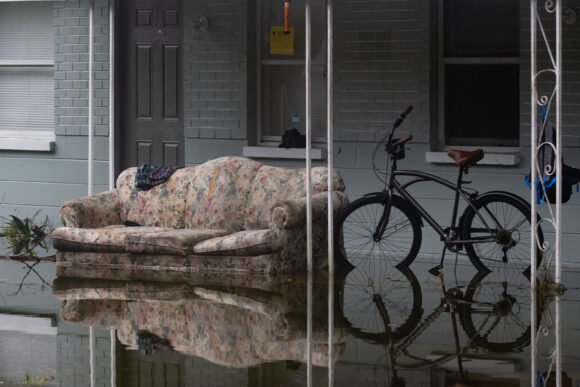
Photo: Floodwaters from Hurricane Idalia surround a home in Crystal River, Florida on Aug. 31, 2023. Photographer: Christian Monterrosa/Bloomberg
Topics Flood
Was this article valuable?
Here are more articles you may enjoy.
 Home Insurance Tops Property Taxes in Squeeze for US Households
  Alabama Pharmacy, Not Agent, at Fault for Not Reading Policy Before $5M Judgment
  Chubb Q3 Net Income Down Slightly on More Catastrophe Losses
  Chubb CEO Greenberg: Industry Has to ‘Put Arms Around’ AI Liability

