
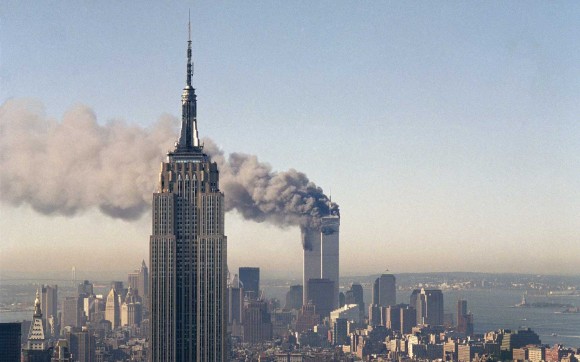
Prior to September 2001, terrorism was covered by a standard commercial insurance policy. Either as a direct mention in the policy wording or by its omission, it was covered.
But the attacks on 9/11 changed everything. Today, an insurance industry that looks much different than 25 years ago continues to try to urge federal lawmakers to renew what is essentially a reinsurance program that allows insurers to cover terrorism risk.
The terrorism attack of 9/11 shook the industry’s understanding of the risk immediately, as the nation came to grips with what happened and as workers and investigators shifted through the wreckage. Terrorism’s potential to cause catastrophic loss of life, injury, and property was laid before us.
“In addition to the tragic loss of life, the 9/11 attacks had a devastating impact on our economy as, for the first time, we were faced with a catastrophic loss caused by intentional human acts, and the risk of future attacks,” said Jimi Grande, senior vice president of federal and political affairs for the National Association of Mutual Insurance Companies (NAMIC).
The industry also grappled with a new epiphany it knew but never needed to contemplate in the manner that 9/11 prompted. Historical data is scarce. Terrorism is not random, or accidental. The accumulation of risk is high. The potential severity of loss is much higher than other lines of insurance.
In the immediate months to follow 9/11, insurers filed requests to exclude terrorism coverage from policies, and by early 2022 most state regulators granted the requests. This left a void threatening the very thing the country yearned to do – rebuild. The knock-on effects of no available terrorism coverage would include a standstill in lending and construction.
By the end of 2002, the government stepped in to pass the Terrorism Risk Insurance Act (TRIA), a private-public partnership by which required privately-insured risk would be backstopped by the federal government. The program goes into effect when an act of terrorism is certified by the Secretary of the Treasury, and an act causes at least $5 million in losses. It also includes insurer deductibles and copays but TRIA has never been triggered by a certified terrorism event.

The program has needed reauthorization and has undergone adjustment throughout the years. TRIA has been reauthorized in 2005, 2007, 2015, and 2019 – and it is set to expire Dec. 31, 2027.
The insurance industry has wasted no time in pushing for another reauthorization. The lobbying thus far has worked. The U.S. House of Representatives in June overwhelmingly passed legislation to extend the public-private partnership through 2034.
“Twenty-five years after the terrorist attacks of September 11, the Terrorism Risk Insurance Act remains a cornerstone of our nation’s economic resilience,” said Sam Whitfield, senior vice president of federal government relations for the American Property Casualty Insurance Association (APCIA). “TRIA helps ensure that businesses, communities, lenders, and employers can access terrorism risk coverage and make long-term investments with confidence.”
The legislation still needs the attention of the Senate, but the insurance industry hopes it finds its way to the president’s desk by the end of the year.
At the end of July, a large group of organizations including APCIA, the National Association of Mutual Insurance Companies, the Independent Insurance Agents & Brokers of America, the Reinsurance Association of America, the Wholesale & Specialty Insurance Association, the Council of Insurance Agents & Brokers, and the Vermont Captive Insurance Association sent a letter to Senate leaders urging them “to avoid market disruptions and continue the economic certainty provided by the program.”
“Congress has repeatedly recognized the importance of this successful public-private partnership through bipartisan reauthorizations, and it should do so again before the end of the year,” Whitfield said.
“The Terrorism Risk Insurance Program has successfully kept insurance coverage for terrorism-related losses available and affordable,” Grande added.
Waiting until 2027 to reauthorize TRIA “brings uncertainty to the insurance market,” said the groups. “Insurers and policyholders are beginning to negotiate policies that extend beyond the program’s current expiration…and past delays have led to widespread conditional exclusions that eliminate terrorism insurance coverage for policyholders if the program has not yet been renewed.”
Photo: (AP Photo/Marty Lederhandler, File)
Topics Catastrophe Natural Disasters
Was this article valuable?
Here are more articles you may enjoy.
 Insurer Rolls Out Policy to Protect Data Centers Against Growing Backlash
  Viewpoint: Beware These Commercial Auto Endorsements!
  AM Best: Social Inflation Drives Surge in Commercial Auto Liability Claims
  Chubb Q3 Net Income Down Slightly on More Catastrophe Losses