

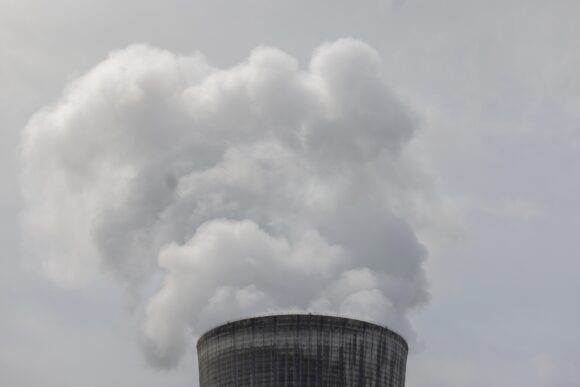
Solstice Advanced Materials, the corporate owner of a nuclear fuel facility at the heart of President Donald Trump’s push for a nuclear renaissance, has agreed to pay $80 million to settle claims that the plant for decades spewed radiation over an Illinois town, sickened residents and contaminated properties.
Built in the 1950s on the outskirts of tiny Metropolis, the plant is the only facility of its kind in the US, transforming finely milled uranium ore into a gas called uranium hexafluoride, or UF₆, the key ingredient in nuclear fuel. As part of the conversion process, the plant emits radiotoxic material that litigants alleged have accumulated on homes, buildings, parks and playgrounds, causing property damage and an increase in brain, lung and other cancers.
Solstice took over operations of the Metropolis plant last year after Honeywell International spun off its advanced materials and chemicals business into an independently-traded public company. The terms of the agreement, as described by plaintiffs’ attorneys and according to documents seen by Bloomberg News, still need to be finalized by the federal judge overseeing the litigation in the Southern District of Illinois.
The tentative agreement settles property damage lawsuits filed by Metropolis and Massac County, where the plant is the largest employer; a proposed class action from residents living within three miles of the plant; and pending or unfiled claims by several individual residents who blamed their illnesses on chronic leaks of UF₆ and radioactive dust.
State data from 2023 cited in the litigation showed the incidence of brain cancer in the county was 45% higher than the state average and lung cancer 52% higher. Honeywell previously settled several personal-injury cases tied to the Metropolis plant since the first lawsuits were filed in 2018.
In a statement, Solstice said it continued to deny the allegations in the underlying lawsuits and did not admit wrongdoing in the course of reaching the agreement. The company said the settlement will “improve the lives of the citizens of Metropolis.”
“Solstice has determined that resolving the matter at this time is in the best interests of its shareowners and stakeholders, allowing it to avoid the expense, uncertainty and distraction associated with prolonged litigation, which dates back to 2018,” the company said.
Kevin Thompson, the lead lawyer who represented both the town and individual plaintiffs said: “What the $80 million gives this community is a chance to mitigate the cancer that has ravaged the town for decades. People want to be seen and want to be believed. They would like the company to admit responsibility, but that’s not going to happen. A significant monetary settlement is the next best thing.”
The agreement does not provide money to fully clean up existing contamination throughout the community, which was among the original demands of the city’s lawsuit. It also does not impose new safety requirements on the plant. Still, it brings to a close a fraught chapter for the plant at a pivotal moment.
Solstice, based in New Jersey, is aiming to ramp up production at the Metropolis plant in response to the Trump administration’s calls to expand domestic nuclear fuel production. Last year, Trump signed a series of executive orders that directed agencies to cut red tape, roll back regulations and infuse government funds into various nuclear projects.
Alongside those White House directives, the Department of Energy last year agreed to provide the Metropolis facility with $187.5 million in government funding to help pay for the expansion. The agreement, a copy of which was obtained through a Freedom of Information Act request by Bloomberg News, also states that the funds may be used to reimburse the company for attorneys’ fees and settlement costs tied to the Metropolis litigation.
The unredacted portions of the agreement don’t specify how much of the money can go to the $80 million settlement, but taxpayer funding of any portion of a private company’s litigation costs is unusual, government budget experts say. The DOE did not respond to a request for comment.
The agreement creates a so-called qualified settlement fund for residents, which plaintiffs’ lawyers estimate will include at least 1,600 households nearest the plant. A portion of the money will also go to a public health initiative administered by a small local hospital, as well as for new equipment so residents don’t have to go to nearby Paducah for their chemotherapy, according to Don Robbins, chief executive of Massac Memorial Hospital.
“Not going to lie, I would like to have seen it be a little bit more,” said Robbins, noting that the hospital would like to implement screening of residents for future cancers. “At the end of the day, we’re a half mile from the facility and there is reputable evidence that our community has been impacted.”
Ten million dollars from the settlement is allotted for more than two dozen individuals who claim that radioactive dust and toxic emissions from the plant caused their illnesses or contaminated their property.
The settlement is unlikely to enhance the safety of the plant, plaintiffs’ lawyers say. That’s because federal regulation of nuclear facilities doesn’t allow for litigants or a judge to amend plant operations, including imposing new safety requirements.
Former workers deposed as part of the litigation described aging equipment that constantly leaked or malfunctioned. In 2010, Honeywell submitted a site characterization to the Nuclear Regulatory Commission that said in the event the plant is decommissioned nearly 900,000 cubic feet of radioactive soil around the facility would need to be removed and six contaminated buildings dismantled.
Richard Kruger, a local attorney who has worked with Thompson on the lawsuits since 2018, said the settlement won’t entirely repair a rift that has developed between the community and the plant. “In an ideal world, there’s a whole list of things I would like to see this plant do and that I know they could do better,” Kruger said.
Solstice has said it plans to expand production at the Metropolis plant as global demand for UF continues to rise.
Photo: Photographer: Lauren Petracca/Bloomberg
Topics Lawsuits
Was this article valuable?
Here are more articles you may enjoy.
 Broad AI Exclusions in Insurance Policies Could Create Uncertainty, Marsh CEO Says
  Harbor Emerges From Stealth with $10M Funding to Handle AI-Agent Risk
  ‘Unusual’ Isaias Brings Winds, Downed Trees But Fewer Claims Than Expected
  Europe’s Insurers Cut Coverage of Weather Losses, Report Says

