

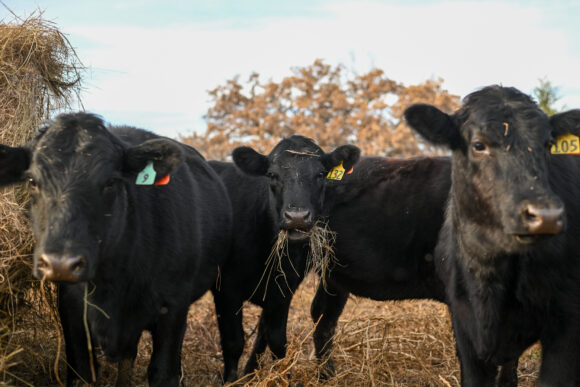
A deadly cattle parasite was confirmed in the US for the first time in nearly a decade, posing the latest threat to a US herd already at its lowest level in 75 years.
The US Department of Agriculture confirmed late Wednesday that a suspected case from South Texas tested positive for the New World screwworm. The affected animal, a three-week-old calf in Zavala County, is the only case that the agency is tracking right now, Agriculture Secretary Brooke Rollins said on a call with reporters.
The agency is implementing quarantines, movement controls and surveillance in a 20-kilometer (12-mile) zone around the detection, and has also expedited the release of sterile flies to prevent the pest’s spread. Zavala County, while it is not situated within the main cattle production areas of Texas, still has a prominent livestock industry and was estimated in 2022 to contain more than 38,000 cattle.
There is “no reason to believe” that this will result in an establishment of the pest in the US, Rollins said. The USDA also said the food supply is safe as screwworm does not infest meat or other food sources.
Still, the detection of the parasite comes at a dire time for the US beef and cattle industry, with a smaller herd having already sent consumer prices to record highs.
Shares of Tyson Foods Inc. and JBS NV were higher in premarket trading Thursday, after slumping a day earlier on reports of the possible infection, which at the time was unconfirmed. Feeder and live cattle futures in Chicago both fell Wednesday.
The primary risk is presently to livestock, not to meatpackers or consumers, said Corbitt Wall, a livestock market analyst at DV Auction, adding that most calves are still on pasture at this time of the year and aren’t being sold.
While the screwworm’s detection should be supportive to cattle prices because it threatens supply, it also gives the consumer “pause whenever they reach into that meat case,” Wall said. “It’s always a downer. That’s one reason that we’re seeing it as a negative.”
The confirmed case “should not be cause for panic, but rather time for the full deployment of the next phase of the whole-of-government response USDA has been planning for months,” Senate and House Agriculture Committee Chairmen John Boozman and GT Thompson said in a statement.
The US has been trying to contain the spread of the pest, which can kill an animal within days, as cases across the Mexican border posed a threat. The USDA paused imports of live Mexican cattle and built new facilities to disperse sterile flies. Still, the number of cases has recently accelerated in Mexico, with the closest detection in a goat about 25 miles away from the US border, according to the USDA.
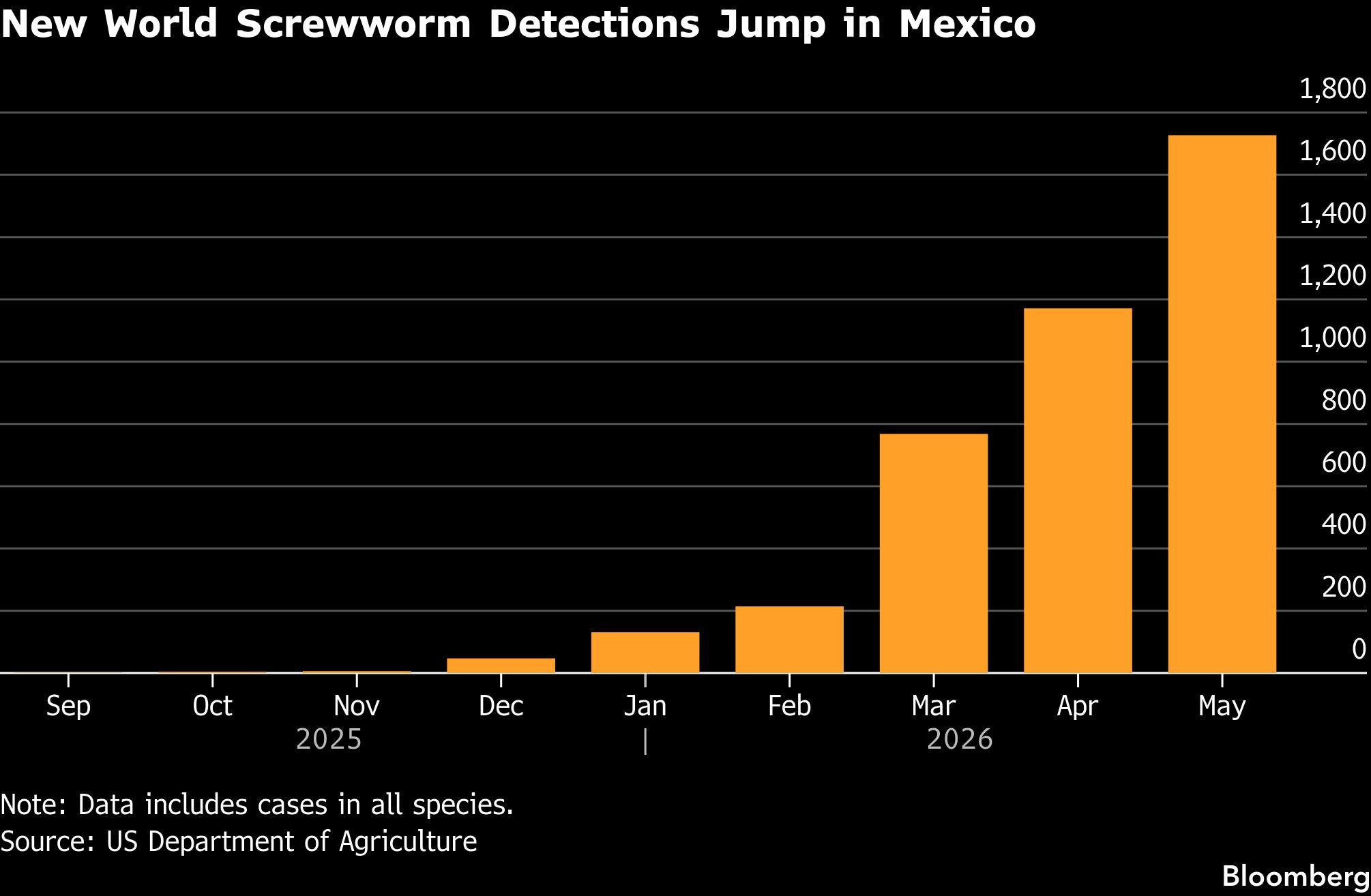
The screwworm’s presence in Mexico and the ensuing halt to the live cattle trade has exacerbated the supply tightness for US meatpackers, who have been facing operational losses as they pay for fewer and costlier animals. That shortage has also sent consumer beef prices to all-time highs, challenging President Donald Trump’s promise to ease grocery prices.
The US Meat Export Federation said it doesn’t expect any disruptions to US beef exports, but will “monitor the situation carefully for any trading partner actions that could interrupt beef trade.”
The screwworm was last detected in the US in 2016 among deer in the Florida Keys, before being eradicated by early 2017, according to the USDA. The most recent occurrence involving infected cattle came in a 1976 outbreak that impacted Texas’s economy by as much as $375 million in non-inflation-adjusted dollars, the agency said.
While the risk to humans is low, the US confirmed one case of the parasite last year in an individual who had traveled from Central America.
The USDA in its previously prepared plan said in the event of a localized outbreak, it would initiate movement restrictions for animals in and out of an infested zone. A larger outbreak spanning multiple counties would require the use of animal drugs, which the US Food and Drug Administration has already issued emergency use authorization for. Rollins said on the call with reporters that a plane is already headed to South Texas with a “lot of that treatment stockpile.”
Shares of Elanco Animal Health Inc., which makes one of those treatments, settled at the highest in nearly a month on Wednesday, and Zoetis Inc. shares also rose. Both companies extended those gains in early trading Thursday.
The companies stand to benefit if the outbreak becomes more severe as a potential lowering of US cattle inventory would be “more than offset by increased spending of livestock drugs,” KeyBanc Capital Markets analysts Steve Dechert and Scott Schoenhaus wrote in a note.
Topics USA
Was this article valuable?
Here are more articles you may enjoy.
 McDonald’s Hit With Class Action Alleging AI-Powered Menu Price-Fixing
  Town Denied Insurance for $11M Judgment Over the Political Closing of Quarry
  Hackers Breached Propulsion System of US-Bound Oil Tanker
  Zurich Insurance Completes Acquisition of Beazley, Names New Beazley CEO

