

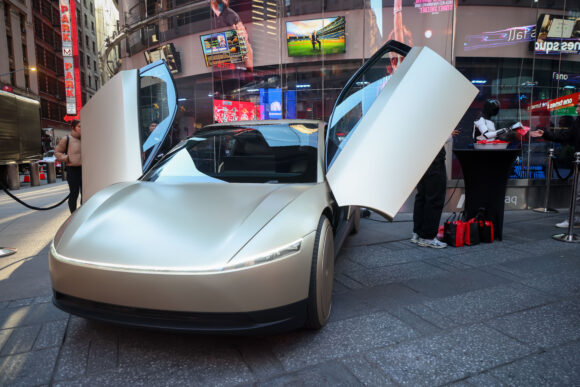
In late 2024, Elon Musk took the stage on a Hollywood studio lot to unveil the Cybercab, a vehicle with no steering wheel or foot pedals that he promised would revolutionize car travel across the country.
Almost two years later, he’s about to do something similar again.
Tesla Inc. is set to reintroduce the purpose-built driverless car at a launch event Thursday in Austin, this time to formally add it to the company’s robotaxi service. The vehicle, which has been in testing in multiple US cities in recent months, is seen as a key piece of Tesla’s plan to evolve beyond a maker of electric vehicles into a pioneer of artificial intelligence products.
Musk, the automaker’s chief executive officer, touted the car in a series of overnight X posts ahead of the event, including one saying simply, “A storm of Cybercabs.”
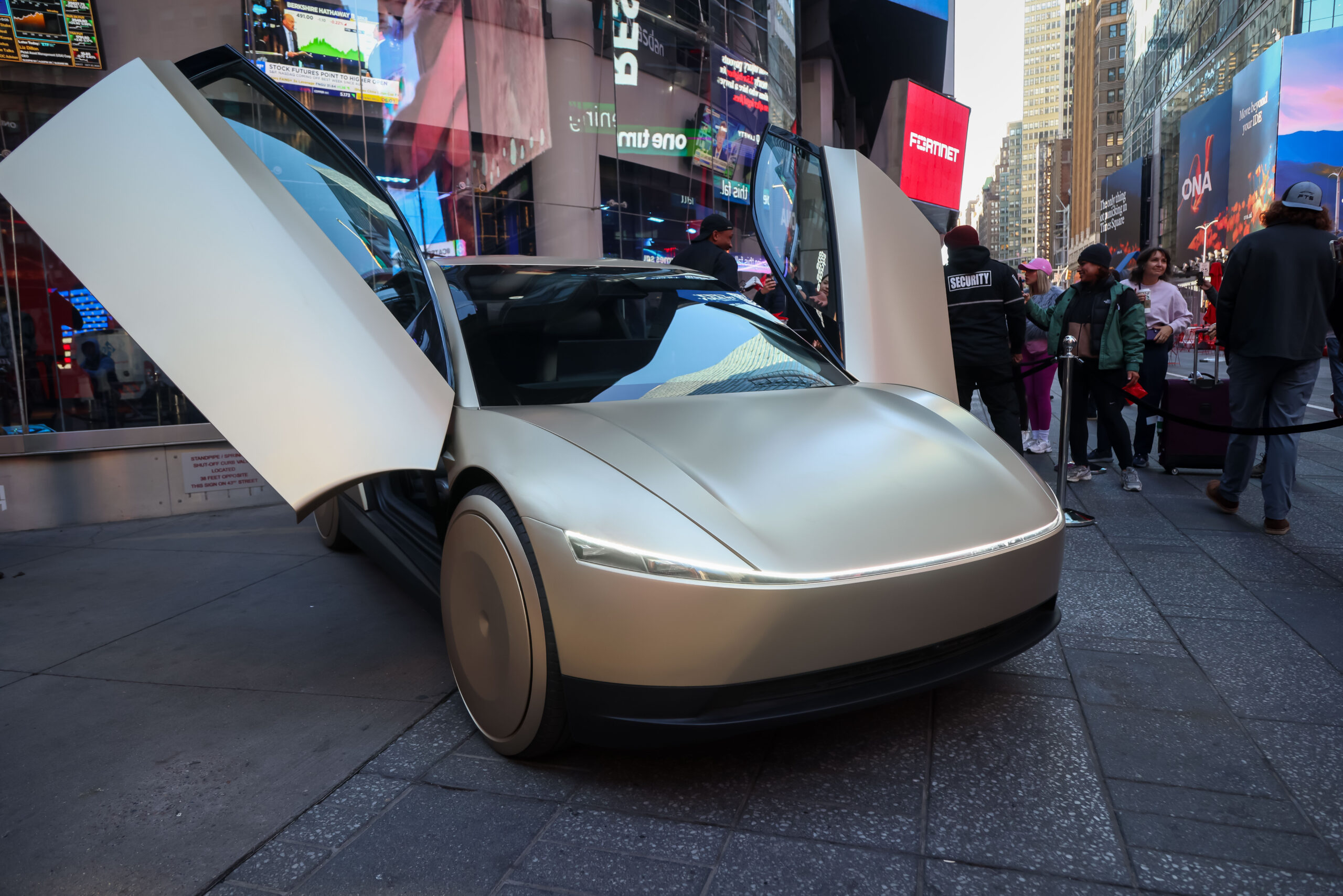
Yet key questions remain unanswered ahead of the invite-only event for Tesla fans and social media influencers. It’s unclear, for example, whether the company plans to immediately deploy the vehicles for broad commercial service, or take a more measured approach, such as by offering demonstration rides in specific areas.
“If Thursday’s event is merely an unveiling with limited vehicles committed to the road, we expect the stock to sell off,” Andrew Percoco, a Morgan Stanley analyst, said in a note. “Conversely, a broader rollout that has a material impact on the Tesla robotaxi fleet size” could excite investors.
Tesla’s stock could use a boost, having fallen 21% this year through Wednesday, while the S&P 500 Index rose 12%. The company’s shares have rallied somewhat in the weeks leading up to the event, rising 20% since July 29.
Musk has pitched the Cybercab as the eventual backbone of a vast Tesla robotaxi fleet reaching most of the US, vowing to deploy thousands of the cars.
That grand vision has yet to materialize. Using versions of its Model Y SUV, Tesla began its long-awaited autonomous ride-hailing service last year in Austin and has since grown to six cities in Texas and Florida. In some instances, the rides include human safety monitors in the vehicle.
The company had registered 45 Cybercabs with authorities in Texas as of late Wednesday. That suggests Tesla is preparing for a larger-scale rollout, Percoco said.
With the Cybercabs, Tesla’s Texas fleet consists of 420 robotaxis, mostly Model Y vehicles. That’s less than half of the nearly 1,000 vehicles that Alphabet Inc.’s Waymo, the leader in the robotaxi market, has registered in Texas.
Regulatory Issues
Uncertainty surrounding the event extends to the Cybercab itself: It’s unclear how Tesla has approached potential regulatory hurdles posed by the Cybercab’s lack of traditional driver controls.
Federal rules typically require all vehicles to have several human-centric design features such as a brake pedal and side mirrors. Although US auto safety regulators have proposed changes to remove unnecessary barriers for autonomous cars, those plans have not been finalized.
Tesla also hasn’t followed the same path as Zoox, Amazon.com Inc.’s autonomous vehicle unit. The company in July secured an exemption from several federal safety standards to allow the commercial deployment of its own purpose-built robotaxi. The exemption was granted after Zoox faced issues attempting to self-certify its vehicle as compliant with federal motor vehicle standards.
As of Wednesday, Tesla had not filed an exemption request for the Cybercab with the National Highway Traffic Safety Administration. The agency said it’s in touch with the company and monitoring the situation.
Topics New Markets Tesla
Was this article valuable?
Here are more articles you may enjoy.
 National Flood Insurance Program’s Authority to Expire in December
  McKinsey Rebukes Partner Who Questioned Challenges Facing Women CEOs
  ‘Unusual’ Isaias Brings Winds, Downed Trees But Fewer Claims Than Expected
  Warren, Hawley Press Insurers Over Closed, Unpaid Claims

