
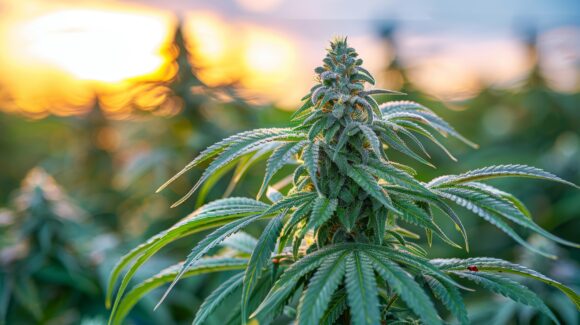
I have been writing about the insurance risks of intoxicating hemp products since 2021, when delta-8 THC gummies first started showing up in convenience stores and gas stations across the country. Back then, our message to the cannabis, hemp and insurance industries was simple. These products violate the spirit, if not the actual letter, of the 2018 Farm Bill, and the cannabis and hemp industries and their insurers should be wary of a government response. Well, a response from Congress took more than five years, but the response has teeth.
The Federal Ban
Congress rewrote the federal definition of hemp in legislation passed in late 2025. The changes were originally set to take effect on Nov. 12, and they are sweeping. Congress has since approved a delay of most provisions to Dec. 11, but synthetic and lab-converted cannabinoids like delta-8 and HHC remain excluded regardless of dose and are subject to the Nov. 12 ban as scheduled.

The new law imposes a “total THC” standard that counts all forms of THC, not just delta-9, and caps finished hemp products at just 0.4 milligrams of total THC per container. Industry estimates suggest roughly 95% of hemp-derived cannabinoid products currently sold will become federally unlawful under the new definition. Products that exceed these limits will be classified as marijuana under the Controlled Substances Act.
The Hemp Industry Fights Back
The hemp industry is not going quietly. Both litigation and legislative efforts are underway to prevent the ban from taking effect, and Texas has become ground zero for the courtroom fight. In early August, hemp industry groups sued the Texas Department of State Health Services in federal court after the agency reclassified delta-8 and other hemp-derived THC compounds as Schedule I controlled substances. The plaintiffs argue that the state’s ban is preempted by the 2018 Farm Bill, violates due process and imposes an unconstitutional burden on interstate commerce. They sought a temporary restraining order to halt enforcement. A federal judge, however, declined to block the ban, finding the industry challengers unlikely to prevail on their constitutional claims.
A separate state-court challenge is pending before a Travis County judge over related smokable hemp rules, and additional lawsuits have been filed alleging the ban has created a monopoly for the state’s medical marijuana program. Similar battles are playing out in Missouri, where the hemp industry is challenging that state’s intoxicating hemp ban as unconstitutional.
On the legislative front, several bills are moving through Congress aimed at softening or delaying the ban. The most notable is the Hemp Planting Predictability Act, a bipartisan effort to push the effective date back by two years to November 2028, giving the industry and regulators time to develop a workable framework. Other proposals seek to carve out non-intoxicating CBD products or raise the 0.4 mg cap to a more commercially viable threshold. There is real momentum behind some of these efforts, and even the White House has signaled support for protecting non-intoxicating hemp products from the ban’s overreach.
Related: Delta-8 Among Products Banned as Texas THC Suit Continues
The most concrete development happened on Aug. 8, 2026, when the U.S. Senate passed H.R. 6500 by a 90-6 vote, with a provision that would delay the ban on naturally derived hemp THC products from Nov. 12 to Dec. 11. On Sept. 1, the U.S. House of Representatives gave the bill final congressional approval by a bipartisan 370-48 vote, sending it to President Trump’s desk.
The delay provision was based on the bipartisan Hemp Planting Predictability Act, introduced by Senators Amy Klobuchar (D-MN), Rand Paul (R-KY) and Jeff Merkley (D-OR). Synthetic cannabinoids continue to face an immediate November 12 ban, while naturally derived hemp THC products get a one-month reprieve to December 11. That delay is modest and does not change the underlying law. The President’s signature is expected but remains pending.
We expect more lawsuits and more bills. We also expect most of the litigation to fail. The constitutional arguments are creative, but Congress has broad authority under the Commerce Clause to define what qualifies as a controlled substance, and the new definition is clear about its intent.
The 2018 Farm Bill’s derivatives loophole, which facilitates products containing delta-8, delta-10, THC-O, THCA flower, and even delta-9 THC extracted from hemp, was never intended by Congress. It took Congress more than five years to close the loophole, but it has now acted. Courts are generally reluctant to second-guess that kind of legislative correction.
The industry’s longer-term legislative goals remain uncertain, including the standalone Hemp Planting Predictability Act (H.R. 7024), which would push the date back by three years. Whether Congress can enact a more comprehensive regulatory framework before Dec. 11 is far from assured.
Companies and Insurers Must Act Now
Our advice is don’t wait. Congress has provided a brief reprieve, but hemp companies and the insurers that cover them should be preparing now for Dec. 11, not hoping that a federal judge or another last-minute act of Congress will ride to the rescue. A one-month delay is not a solution. Waiting is the worst possible risk management strategy. The practical fallout from this ban will be felt across nearly every coverage line.
Start with product liability and property. When the ban takes effect, inventory that was perfectly legal yesterday becomes a controlled substance today. Product liability policies that were written to cover hemp-derived products may suddenly be covering the sale or distribution of federally illegal marijuana.
That raises immediate coverage questions. Does the policy contain an illegal acts exclusion? Is there a controlled substance exclusion? If the insured continues to sell these products after Dec. 11, what happens to the coverage? Underwriters need to be reviewing policy language now and deciding how to address this.
Cargo and stock-throughput programs are directly implicated as well. Wholesalers, distributors, and brands that straddle the marijuana and hemp product categories should expect complications in coverage terms, exclusions, and transit insurance for inventory that may be reclassified mid-shipment. If a product leaves a warehouse as legal hemp and arrives at its destination as federally illegal marijuana, who bears the risk? These are not hypothetical questions. They must be answered by Dec. 11.
Beyond the insurance policy itself, the collateral risks are diverse. Companies with existing leases may face landlord disputes if the premises are being used to store or sell newly illegal products. Contracts with suppliers and customers must be revisited to understand how risk and loss are apportioned. E-commerce platforms may delist products, cutting off revenue streams overnight.
Existing product liability claims related to hemp products may take on a different complexion when the underlying product becomes illegal. Loans secured by hemp inventory could go into default. Investors who backed hemp companies expecting continued legality may pursue claims against management. All this increased uncertainty will likely result in more claims and litigation, which may trigger a policy response.
One important nuance to understand is that some states have laws that expressly permit the sale of hemp-derived THC products, and those laws don’t automatically disappear because the federal definition has changed. Where a state continues to allow legal hemp product sales, we recommend that insurers and operators treat those situations similarly to the regulated intrastate marijuana model that has been operating successfully for years. The risk management playbook is similar—know your customer, know your state’s regulations and maintain compliance.
There is also a tax dimension that companies cannot afford to ignore. If a hemp company continues selling products that are now federally classified as marijuana, it should expect Section 280E of the Internal Revenue Code to apply. That means most ordinary business deductions vanish, effective tax rates skyrocket, and the economics of the business fundamentally change. The regulated cannabis industry has been living with 280E for years, and it is brutal. Hemp companies that are new to this reality should get tax counsel involved immediately.
The intoxicating hemp market was always on borrowed time. We said as much when delta-9 THC gummies started being sold as “legal hemp” out of convenience stores while regulated cannabis operators next door were paying through the nose for compliance. That imbalance was unsustainable. Now the correction is here.
The smart move for hemp operators is to diversify, pivot to compliant products or, where state law permits, participate in the regulated cannabis market. For insurers, it’s time to audit your book, update your forms and make sure you know exactly what you’re covering when December 11 arrives.
Stewart is cochair of Wilson Elser’s Cannabis Law Practice and the regional managing partner of the firm’s Los Angeles and Orange County offices.
Was this article valuable?
Here are more articles you may enjoy.
 Industry Reacts to Senators’ Letter for Claims Data and Recent Reports
  Business Interruption Claims Approach $1M Average, Says Allianz
  Viewpoint: The ‘Unbundled’ Insurer Emerges in Age of AI as Value Chain Fragments
  Florida Supreme Court Approves Board Certification in Insurance Law