
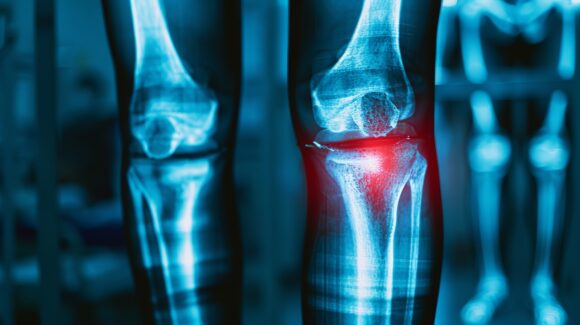
It’s an age-old question that continues to come up for workers’ compensation insurers around the country: When is an injury an aggravation of an existing condition, and when is it compensable, perhaps requiring expensive surgery and more?
The Tennessee Supreme Court on Monday weighed in on the question, finding that a truck driver was due knee-replacement surgery after a minor accident – despite her pre-existing arthritis in both knees. The court overturned the Tennessee Workers’ Compensation Appeals Board and reinstated a lower court’s award of medical coverage and disability benefits to the driver.
The Supreme Court justices held that an aggravation injury under workers’ compensation law “does not require proof of a permanent change or a permanent worsening of conditions to be compensable. Instead, an aggravation injury is compensable when an employee shows, to a reasonable degree of medical certainty, that the aggravation injury primarily arose out of and in the course and scope of employment.”
The ruling means that, under state statutes and previous court rulings, the employee must prove that the aggravation contributed at least 50% to the disablement or need for medical treatment, Justice Mary Wagner wrote in the Dec. 22 opinion in Jo Carol Edwards v. Peoplease.
The disagreement began in 2020, when the truck Edwards was driving blew a tire and crashed into a bridge. Her knees struck a panel under the dashboard, the court explained. It wasn’t until a month later that Edwards said she felt pain and stiffness in both knees.
Under Tennessee comp law, the employer provides the names of three treating physicians, and the employee chooses one. Edwards’ chosen physician, an orthopedic surgeon, found that she had arthritis and that the work accident was not responsible for her knee injury. A second doctor found a fracture in her left knee that he said resulted from the truck accident.
That second physician, Dr. Timothy Sweo, recommended total knee replacement for her left knee, a surgery she received a few months later.
At a Court of Workers’ Compensation Claims hearing, judges observed Edwards limping and using a cane, and found her testimony credible, the Supreme Court noted. Dr. Sweo testified that replacements of both knees were needed and were most likely “greater than 51%” caused by the accident.
The comp court also found that the first treating physician, Dr. Jason Hutchinson, misinterpreted Tennessee comp law by concluding that the exacerbation of an existing condition was not compensable.
The compensation court judges ordered Peoplease to reimburse the cost of Edwards’ left knee replacement, authorize the right knee replacement, pay past and ongoing temporary total disability benefits, and reimburse her for mileage, the high court explained.
Peoplease appealed and the Workers’ Compensation Appeals Board reversed the lower court, denied most benefits for Edwards and remanded the case to the lower court for further action. On remand, the comp court heard from other doctors who performed independent medical examinations (IMEs) and who disagreed on the extent of the accident-caused injuries.
On final appeal, the state Supreme Court overruled the Appeals Board: “Upon review, we agree with the Trial Court that Ms. Edwards met her burden of showing permanent total disability,” the justices wrote. The doctor she had hired in a second IME appeared to be most convincing by noting that the woman had no history of limited range of motion or knee pain prior to the accident.
“We conclude that the evidence does not preponderate against the finding of the Trial Court that Ms. Edwards is permanently and totally disabled,” the justices wrote. “Accordingly, we reinstate the Trial Court’s determination on this issue.”
The 18-page opinion can be seen here.
Topics Personal Auto
Was this article valuable?
Here are more articles you may enjoy.
 Surplus Lines Leaders Remain Bullish on Outlook in a Shifting Market
  Viewpoint: The ‘Unbundled’ Insurer Emerges in Age of AI as Value Chain Fragments
  Two Past Hurricanes, OIR Data Give Idea of What to Expect From Isaias in Florida
  Hordes of Teens on E-Bikes Force Suburbs to Rewrite Road Rules