

Florida legislative committees approved two bills this week that could impact property-casualty insurance in the state. One would put some restrictions on litigation financing and the other would force more transparency on insurers’ payments to managing general agencies.
The bills’ chances of surviving both chambers are far from certain.
Senate Bill 1396, passed by the Senate Judiciary Committee by a vote of 8 to 2, would bar third-party lawsuit funding firms from directing the course of legal proceedings, would prohibit financiers from taking a larger share of awards than is recovered by plaintiffs, and would disallow the securitization or assigning of litigation financing agreements.

The bill, introduced by state Sen. Colleen Burton, R-Winter Haven, also would require the existence of finance agreements to be disclosed in litigation if a foreign person or sovereign wealth fund is involved, a legislative analysis explains. The specific terms of the agreements would not have to be revealed.
If passed by both chambers and signed into law, the measure would take effect July 1. The bill now awaits action in the Senate Rules Committee. A similar House bill is still in committee. Legislatures in at least eight other states have put some types of limits on third-party lawsuit financiers in the last two years.
Also this week, the Florida House Commerce Committee advanced House Bill 1399, by Rep. Kimberly Berfield, R-Clearwater. It would require property insurers in the state to submit documentation to regulators to show that payments to affiliates are “fair and reasonable.”
Affiliated companies would have to register with the Florida Office of Insurance Regulation, and the OIR would be tasked with reviewing dividend payments and asset transfers to affiliated companies, the bill reads. Agreements between insurers and affiliates would have to expire in no more than three years.
Carriers would also have to notify OIR at least 30 days before pledging capital transfers to affiliates, and the office could nix the agreements or require refunds to carriers if the agreements are not in the insurer’s best interest, an analysis of the bill explains.
Payments to affiliates, including managing general agencies, have been a hot-button issue in Florida for the past several years, with a number of Democrats in the House arguing that the transfers had sapped some carriers’ reserve funding and triggered insolvencies. Tampa and Miami news reports have called the practice “profit-shifting.”
Florida insurance advocates have said that MGAs are a valid means of managing business for carriers. Paul Handerhan, president of the Federal Association for Insurance Reform, based in Florida, said last year that MGAs already are tightly regulated by OIR, and that some lawmakers have misunderstood their purpose.
HB 1399 has been placed on a special-order calendar in the House and could see a floor vote as soon as next week. Lobbyists have said the bill is unlikely to pass the Senate, however.
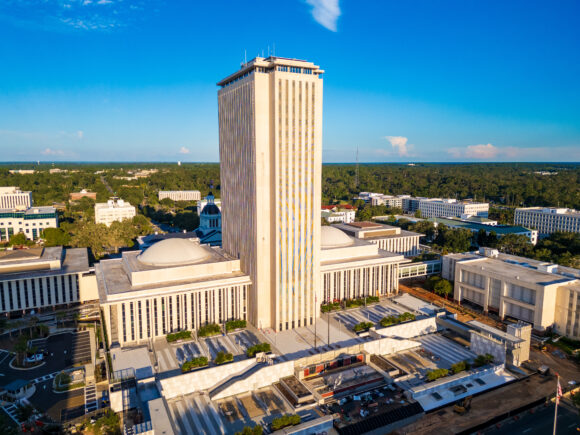
Top photo: The Florida Capitol building (AdobeStock)
Related: Florida Report on MGAs Fell Through the Cracks, Commissioners Say
Topics Lawsuits Mergers & Acquisitions Florida Insurance Wholesale
Was this article valuable?
Here are more articles you may enjoy.
 New Jersey Employers Should Prepare Now for Oct. 1 Independent Contractor Rule
  Zurich Insurance Completes Acquisition of Beazley, Names New Beazley CEO
  Industry Reacts to Senators’ Letter for Claims Data and Recent Reports
  Another Crane, Then Another, Collapses Onto Home in Fort Lauderdale

