
It’s been called one of the most unusual medical malpractice cases and one that has raised questions for organ donors, organ recovery centers and their insurance carriers.
Paula Denison, age 57, was taken to the emergency room at Anderson Regional Medical Center in Meridian, Mississippi, late one afternoon in 2022. She showed signs of an aneurysm, brain swelling or a stroke. She was found to be drowsy and confused but with coherent speech, according to court documents.
Within a few hours, the woman was pronounced “brain dead” by a physician, then “legally dead.”
Denison’s family arranged for her to be transported to the Mississippi Organ Recovery Agency, or MORA, a nonprofit center in Flowood, about an hour away, where her organs could be recovered and donated to patients in need.
About 2 a.m. the next morning, nurses at the recovery center started tests, including a surgical liver biopsy. Later that evening, Denison “began showing medical signs inconsistent with human death, such as ‘spontaneous respirations, a reactive pupil, and the presence of coughing and gag reflexes,'” the Mississippi Supreme Court recounted in an opinion handed down last week.
The woman was taken back to the hospital, where, a day later, she was pronounced dead—again. Denison’s daughter, Brooke, filed two lawsuits, one as administrator of the estate, against the organ recovery agency, the hospital and physicians involved, charging negligence. Brooke Denison also sued in her own name, seeking bystander recovery, arguing that she had suffered emotional distress and mental anguish upon learning of her mother’s situation.
The circuit court in Meridian agreed with the organ center and defendant physician and dismissed the estate’s suit on the grounds that the Uniform Anatomical Gift Act, a model law adopted by Mississippi and most other states, provides immunity to the organ center. The trial court also dismissed the daughter’s lawsuit, noting that Brooke did not meet the statutory requirements because she had not actually witnessed the organ center’s treatment of her mom. (The daughter did not file a wrongful death suit, based on the conclusion that Denison likely would not have survived, anyway.)
On appeal, the daughter’s attorney, Michael Jaques, argued that the law provides immunity only for actions taken by an organ center on a deceased person. But Denison was not dead. Jaques declined to comment while the case is still pending, but his appeal brief argued that the organ recover agency performed surgery on the living woman without anesthesia, something the immunity law does not apply to.
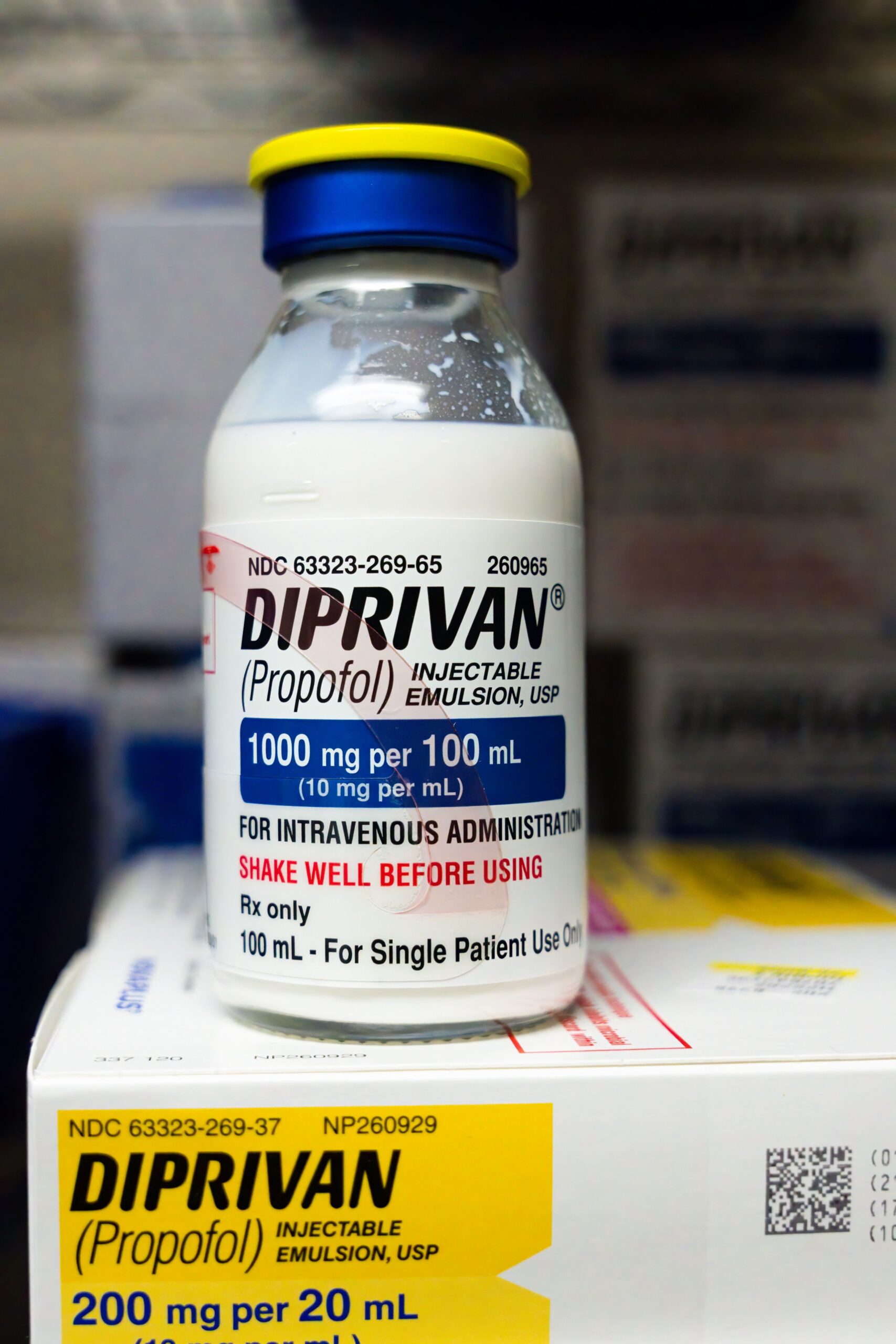
Later, after realizing Denison was not quite deceased, the center staff administered significant doses of propofol, Brooke’s team wrote.
Propofol is a powerful sedative and anesthetic. The organ center said it was ordered for sedation, but it also has been used as part of a euthanasia cocktail in Canada, the plaintiff’s brief notes. Propofol was famously determined to be the drug overdose that killed pop star Michael Jackson in 2009, according to news and medical reports.
The Mississippi organ center never obtained the woman’s permission nor the family’s consent before giving the dosage, the plaintiff’s brief argued. It also kept Denison at the center for more than a day before notifying the family.
 “At no time on March 18 was any member of her family advised that she was ‘alive,'” Brooke’s lawyer wrote. “At no time did the MORA representatives obtain consent to medically treat her as a ‘live’ patient, or to give her propofol or any other drug to treat any illness or disease.”
The daughter’s attorney also contended that the trial court’s notion that she did not witness the negligent acts is misplaced. She was present at the hospital during some events, and observed procedures indirectly, even if she did not see them firsthand.
In the end, the state Supreme Court, which had consolidated the two suits, upheld the dismissal of the daughter’s bystander liability claim. The justices remanded the other claim to the trial court on procedural grounds: The circuit judge had granted the organ center’s motion to dismiss the suit by considering information that was not part of the initial complaint, including medical records and an authorization form giving the center permission to harvest Denison’s organs.
Because of the procedural issue, the justices declined to opine on the big question of legal immunity for the organ agency. In a dissenting opinion, though, Justice Kenneth Griffiths gave an idea of how that question may ultimately be decided: He wrote that the law is clear that the center and its director enjoy full immunity from tort actions.
“Simply no authority exists for the majority’s conclusion that ‘the record is not fully developed at this time for us to adequately address whether MORA should be granted immunity or not,'” Griffiths wrote.
It’s likely that on further proceedings, the trial court will grant immunity. But the case has raised issues about how the 58 organ agencies in the United States handle not-so-deceased patients, and whether liability insurance policies might exclude negligence toward or medical treatment of living persons at the centers.
Several companies offer liability insurance for organ recovery operations, including Liberty Mutual’s Ironshore, Homewood Insurance and others. But it was unclear if those carriers’ policies exclude actions taken on people who are not yet deceased. The Mississippi center’s director, Kevin Stump, could not be reached Tuesday. The lead lawyer for the Mississippi organ center, hired by the agency’s insurance company, is Whitman Johnson, of Flowood. He declined to talk about the case or name the carrier. His reply brief in the appeal is here. The Association of Organ Procurement Organizations’ director of communications said liability coverage varies by organization.
Finding that organ-donor candidates are still alive is rare, but not unheard of. In 2024, a 36-year-old man in Richmond, Kentucky, was declared dead after a drug overdose. Later, he began thrashing around on a gurney, and the family was told those were merely reflexes. Eventually, the organ harvesting was cancelled, and the man was returned home, NPR News and other sites reported.
The Kentucky case and others like it were highlighted in a hearing held by a U.S. House committee examining organ procurement and oversight. Others, including Thaddeus Pope, a professor at Hamline University School of Law in Minnesota, has charged that organ centers have engaged in “widespread violations” of death determination protocols, sometimes attempting to harvest organs before death is certain.
The Mississippi Supreme Court opinion can be seen here.
Was this article valuable?
Here are more articles you may enjoy.
 Two Past Hurricanes, OIR Data Give Idea of What to Expect From Isaias in Florida
  Hordes of Teens on E-Bikes Force Suburbs to Rewrite Road Rules
  AI Bubble Risks Worst S&P 500 Crash Since 2008, Strategist Says
  Another Crane, Then Another, Collapses Onto Home in Fort Lauderdale