

Depopulating Citizens Property Insurance may be good for the free market, but it also has meant that many homeowners likely dropped flood insurance after the coverage was no longer required by law, leaving properties exposed to recent flooding across central and eastern parts of the state.
“Florida law requires property owners insured by Citizens to also carry flood insurance. As Citizens has been depopulated, property owners may have cut back on flood insurance if it is no longer required,” an AM Best insurance rating firm senior analyst said in comments posted Tuesday, Nov. 24.
Florida lawmakers in 2022 required Citizens’ policyholders to also purchase flood insurance. At the worst of Florida property insurance crisis, in which the state-created Citizens had ballooned to become the largest carrier in the state, the requirement was seen as a way to discourage homeowners from continuing to flock to Citizens, where rate increases are limited by law.
But as some homeowners have turned to other carriers in the last 18 months, as market rates have stabilized and new insurers have entered the state, flood policies were likely dropped. Citizens’ policy count has shrunk from a high of 1.4 million policies in 2023 to just above 200,000 this month.
“Less than 20% of Florida property owners have flood insurance and even among those that do, that share is not constant by region,” AM Best analyst Christopher Graham wrote.
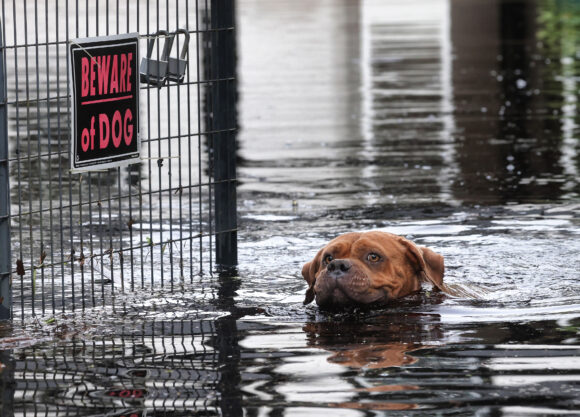
That’s unfortunate for parts of east Florida, which have been hit with more than 30 inches of rain in just a few days. A flood watch remained in effect in northeast Florida through Wednesday, Nov. 25.
With the ground already soaked from heavy rain in November, the rainfall from Nov. 18 through Nov. 21, on par with that of a tropical system, couldn’t be absorbed, leading to heavy flooding, AM Best noted. The St. John’s River set a record, cresting at more than 18 feet in Cocoa, Florida. Forecasts called for the river to remain at flood stage for three weeks. More areas will be flooded as the river flows to Jacksonville.
“While it is likely that calendar-year results will show a higher loss ratio than what we see through third quarter, the full extent of the losses is not yet known,” Graham wrote.
More flooding was also expected in the Miami area, as heavy rains and possible tornadoes were forecast through Thanksgiving, the Miami Herald reported. This week’s rains followed what weather forecasters called a “rain bomb” that dumped 15 inches on parts of south Florida. A tornado this week hit part of Palm Beach county, damaging homes and trees at a country club.
The Federal Emergency Management Agency this week approved a disaster declaration for much of Florida already inundated by floods, freeing up some $500 million in aid for recovery projects, news outlets reported. Florida Gov. Ron DeSantis said he is planning to request another major disaster declaration for coastal areas.
The flooding comes at a scary time for property owners who do plan to buy or renew National Flood Insurance Program policies. The NFIP is set to expire Dec. 11—when another partial government shutdown is expected—if Congress does not approve a stopgap appropriations measure.
If the program is frozen, NFIP will stop issuing new and renewal policies.
“As a result, property owners whose NFIP policy lapsed during this period will need to decide whether to forgo coverage altogether or seek a policy through the private market,” the AM Best analyst explained.
Photo: A dog seeks higher ground in Geneva, Florida this week after nearby Lake Harney rose. (Joe Burbank/Orlando Sentinel via AP)
Related: Flood Insurance Gap Will Squeeze Local Governments, Homeowners, Moody’s Says
Topics Flood
Was this article valuable?
Here are more articles you may enjoy.
 Insurance Loss Estimates for Microsoft Outage Range From $100M to $700M: Reports
 FM to Send Workers to Massachusetts as Part of Headquarters Relocation
 Aon Completes $17 Billion Acquisition of USI
 Viewpoint: Captives Weren’t a Hard Market Moment; They’re a Permanent Shift


