

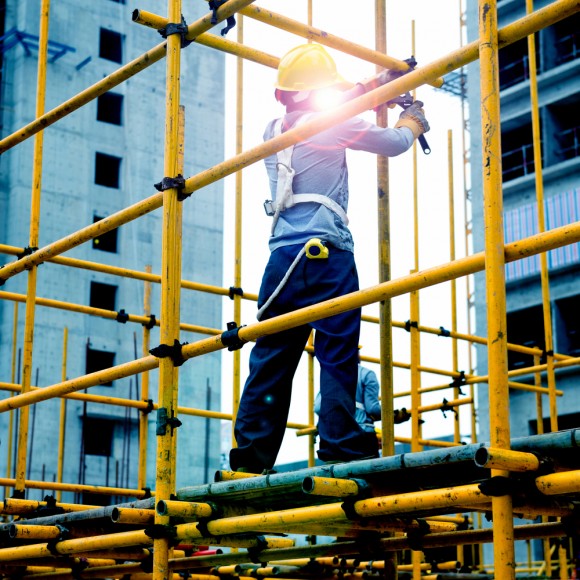
New York’s construction contractors and insurance associations have been aggressive in their criticism of the state’s Labor Law 240, popularly known as the “Scaffold Law,” and have been lobbying hard for repeal or amendment.
This law holds builders financially responsible for the safety of their employees, and imposes liability in instances of injury or death on construction sites.
Opposing reform, building trades unions and organizations that advocate for non-union construction workers applaud the existing legal framework. They point out that New York’s construction industry safety record is better than the national average, attributable, at least in part, to the Scaffold Law.
In my view, a recently publicized study misuses sophisticated statistical techniques and produces results that are inaccurate. (See “Study Says N.Y. ‘Scaffold Law’ Drives Up Building Costs, Causes Injuries” in the March 10th issue of Insurance Journal East) The analysis was conducted by the Rockefeller Institute, a branch of the State University of New York, with a Cornell University professor serving as a consultant.
In my opinion, they erred particularly in the equations that serve as a foundation for the estimate of increased injuries supposedly caused by the Scaffold Law. Even the basic hypothesis may be flawed; it proposes that liability for injuries associated with the law ‘blunts employer incentives to invest in worker safety.’ This is counterintuitive. If employers are financially liable for injury and death, would they not be more likely to invest in safety?
As a Cornell University economist who specializes in the study of worker organizations and labor law, I am skeptical of the veracity of the study’s conclusions. My personal opinion is that New York should retain the Scaffold Law, not sacrifice safety in the pursuit of profits.
Topics New York Construction
Was this article valuable?
Here are more articles you may enjoy.
 Hormuz Could Be ‘Redundant’ in Five Years, Replaced by New Routes, HSBC CEO Says
  AM Best: Social Inflation Drives Surge in Commercial Auto Liability Claims
  World’s Largest Retirement Community Set to Borrow $180 Million for More Homes
  Chubb CEO Greenberg: Industry Has to ‘Put Arms Around’ AI Liability
 From This Issue