
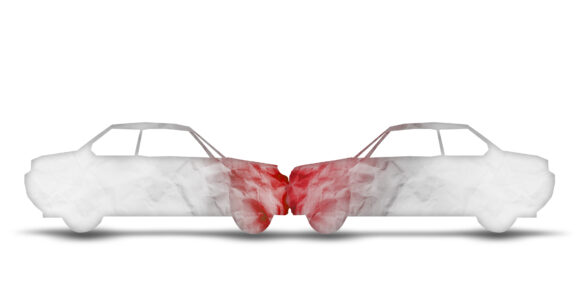
Farrukh Hussain, 37, of Eastvale, California, was arraigned on 14 felony counts of insurance fraud after allegedly stealing consumers’ identities to file 14 fraudulent insurance claims with six different insurance companies using a “paper collision” scheme – meaning most of the accidents never occurred and only existed on paper.
The California Department of Insurance launched an investigation after multiple insurance companies flagged claims that they had received. An investigation reportedly found that Hussain stole his victim’s insurance information and posed as that person to report accidents where he was the other party involved.
While posing as his victims, Hussain would allegedly admit fault to the accident and request their contact information be updated to his own phone number so the insurance company would contact him regarding the claims instead of the real policyholder in order to get away with the scheme.
Detectives reportedly discovered Hussain obtained his victims’ insurance information while their vehicles were being worked on at a stereo and tint shop in Covina where he was previously employed for a short time as a “sales-helper,” and he is suspected of obtaining victims’ information while brokering vehicle purchases for them.
Hussain reportedly used two BMWs, which he owned, that had pre-existing damage and presented the same damage on each claim he filed. Many of the claims were for “paper collisions,” but in one instance, Hussain was reportedly able to obtain one victim’s information from a traffic collision report through a legitimate accident.
Hussain’s alleged actions resulted in a total loss of $17,293 to six different insurance companies.
This case is being prosecuted by the Los Angeles County District Attorney’s Office.
Topics California Fraud
Was this article valuable?
Here are more articles you may enjoy.
 Viewpoint: The ‘Unbundled’ Insurer Emerges in Age of AI as Value Chain Fragments
  Alliant Insurance Acquires New Hampshire’s Melcher & Prescott
  Agency Duties – Legal vs. Ethical
  Hurricane Isaias Reaches Cat 3 Status as Insurers, Adjusters, Property Owners Prepare
 From This Issue